

























































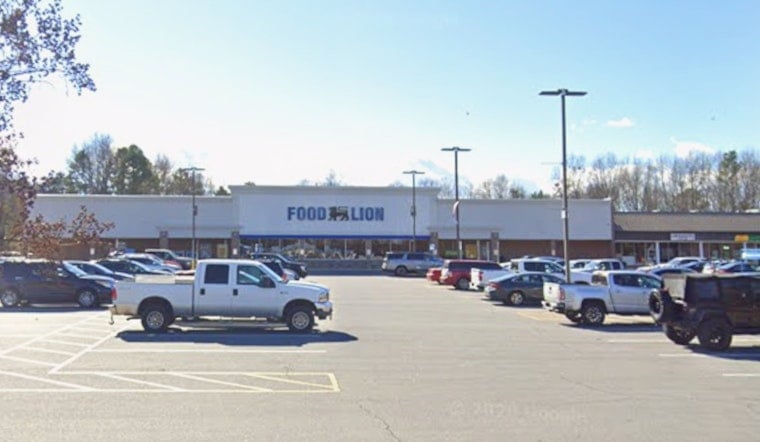
A Food Lion-anchored shopping center in Concord has new owners with big renovation plans, the latest sign that investors are chasing the suburb's fast-growing population. Idlewood Capital and The Morgan Company paid $7.9 million for South Union Shopping Center at 860 Union Street South, according to Cabarrus County property records cited by the Charlotte Observer, and the two firms say significant construction dollars are coming next.
The 80,184-square-foot property will get a complete facade redesign led by Little Diversified Architectural Consulting, according to Shopping Center Business. Plans call for new awnings, updated signage and new storefronts, according to reporting from the Charlotte Observer, which first reported the sale under a byline from Desiree Mathurin. Idlewood Capital and Morgan Co. declined to disclose the total renovation cost but said it would be significant.
Construction Timeline Keeps Food Lion Open
Renovation work is scheduled to begin in the first quarter of 2027 and wrap by summer of that year, the trade publication reports, with all current tenants — including anchor grocer Food Lion, an ABC store and Señor Agave Mexican Grill & Bar — remaining open throughout construction. The Charlotte Observer's reporting confirms the same timeline, noting that South Union's stores will stay open during the buildout even as the exterior gets reworked.
The center's location gives the new owners a built-in customer base. CBRE listing data reviewed by Crexi estimates South Union serves a primary trade area of 28,000 to 32,000 households within five miles, a suburban footprint that has been swelling for years.
Concord's Population Surge Draws Investors
Concord had about 79,000 residents in 2010; the Charlotte Observer reports the city now counts nearly 114,600 residents, citing the latest census data. U.S. Census Bureau estimates put Cabarrus County's total population at 249,725 as of July 2025, up 10.6% from 225,821 in April 2020, with domestic migration cited as the primary driver of that growth. The North Carolina Office of State Budget and Management projects the county will grow another 20.4% between 2020 and 2030, adding more than 46,000 residents.
Much of that growth traces back to Concord's expanding industrial base. Eli Lilly built a new manufacturing facility in the city, investing $2 billion in the 2024 project, and the pharmaceutical giant pulled a $77 million expansion permit for new injectable packaging lines earlier this year, as Hoodline reported in its piece on Eli Lilly's Concord plant makeover. Concord has also attracted Red Bull, which broke ground on a joint beverage hub with partner Rauch at The Grounds at Concord megasite worth an estimated $1.5 billion to $1.7 billion, targeting 3 billion cans of annual production by 2031.
Not Every Megasite Bet Has Paid Off
The industrial boom hasn't been without setbacks. Third megasite partner Ball Corp. lost a $3 million state incentive grant in August after missing its hiring targets, with North Carolina canceling the company's JDIG grant after zero funds were ever disbursed, Hoodline previously reported in its coverage of the lost incentive grant. Still, the broader employment picture has been strong enough that Concord ranked as the fourth-best city for small businesses in North Carolina out of 49 major municipalities in 2025, per a business environment study highlighted in a City of Concord announcement.
A spokesman for Morgan Co. told the Charlotte Observer that the two firms “remain extremely bullish on the Charlotte MSA and Concord,” and Idlewood Capital and Morgan Co. said their continued investment supports the area's long-term future. The sentiment lines up with how each firm has been building its Southeast portfolio. Idlewood Capital, led by George R. Kornegay IV, most recently purchased a property at 2025 N. Davidson Street in NoDa and already owns shopping centers in south Charlotte's Ayrsley neighborhood along with several plazas throughout the Charlotte region.
A Regional Pattern of Grocery-Anchored Bets
Morgan Co., founded in 1977, owns properties in South Carolina and Virginia in addition to its Charlotte-area holdings, including a shopping center in Cramerton — located about 20 miles west of Charlotte — that is slated to receive a new Publix in 2027. The firm's broader Southeast footprint includes projects like the Beaufort Station shopping center in Beaufort, South Carolina.
The South Union deal fits a pattern industry watchers have flagged: grocery-anchored neighborhood retail centers are considered stable, defensive commercial real estate assets, giving developers confidence to sink capital into cosmetic and operational upgrades even amid uneven industrial outcomes elsewhere in the county. It's a strategy Concord has seen before — Hoodline reported in July on Cheesecake Factory's $7M Concord Mills revamp, another sign that the city's commercial corridors are drawing fresh investment as its population keeps climbing.





