

























































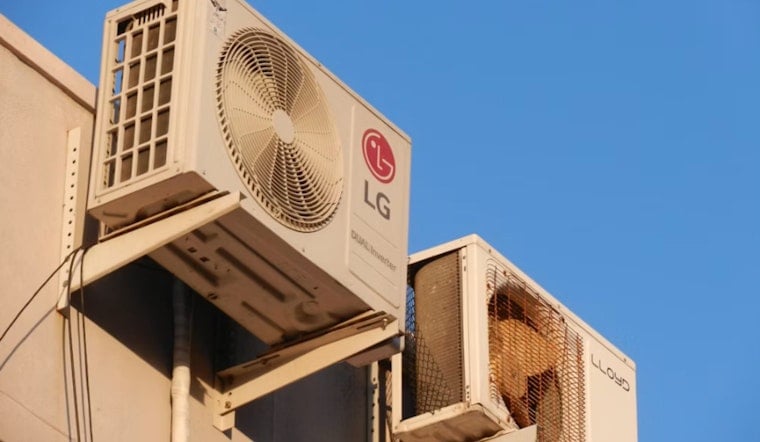
Charlotte City Council members are weighing whether to rewrite the city's housing code to force landlords to install air conditioning in every rental property, a move that would close a long-standing gap between the city's winter heating rules and its summer cooling standards. The idea has been kicked around for years, but rising temperatures and a wave of similar moves in other cities are pushing it back to the table.
According to Queen City News, Charlotte City Councilwoman Lawana Mayfield said the community has discussed requiring cooling in rental units for many years. Charlotte's Minimum Housing Code currently requires landlords to provide heating in rental units, but it does not require them to provide air conditioning, and North Carolina state law does not mandate that property owners install cooling systems at all. City housing committee members are now examining what an air-conditioning mandate would cost landlords financially before moving forward.
A Legal Gray Area
Charlotte city leaders have identified that the city's legal authority to mandate cooling is unclear, since state law is ambiguous about whether municipalities may amend their housing codes to require air conditioning. That ambiguity has real teeth: under N.C. General Statute § 42-42(a)(4), landlords are required only to maintain heating and cooling systems that are already in good working order, not to install them in the first place, according to Legal Aid of North Carolina. State law also does not explicitly prevent municipalities from amending their current housing codes, which leaves the door open for Charlotte to act if council decides it has the authority to do so.
The statutory gap runs deeper than installation requirements. Under N.C. General Statute § 42-42(a)(8), a complete lack of heating during winter months is codified as an imminently dangerous condition requiring immediate remedy, but a lack of air conditioning is left off that list entirely, meaning tenants without cooling cannot access the same expedited code-enforcement remedies available to those without heat. The City of Charlotte's own Chapter 11 Housing Code reflects the same imbalance, requiring central or electric heating capable of maintaining 68 degrees indoors when outside temperatures drop to 20 degrees, while setting no minimum cooling standard whatsoever.
Advocates Point to Aging Housing Stock
Robert Dawkins, Action NC's political director, has reported that many Charlotte neighborhoods contain air conditioners that no longer work. Dawkins said that once an air conditioner is provided to a resident and working, it must remain operational, and Action NC staff have seen particular issues around duplexes and quadruplexes built before 1974. He noted that newly built apartment complexes have not had the same air-conditioning problems, suggesting the issue is concentrated in the city's older rental stock.
Action NC has stepped in to fill some of that gap directly. The organization provided about 200 air-conditioning units last year, continuing that work into 2026, after Charlotte partnered with the group last year to supply units to eligible residents. Ted Fillette, a longtime housing advocate, said Charlotte should lead the effort to require air conditioning in rental properties rather than wait for the state or other cities to act first.
Who Bears the Cost
Mayfield acknowledged the financial tension baked into any mandate. She said an air-conditioning investment could raise rents for smaller landlords or property owners, and that landlords could choose to pass the cost of installing cooling systems on to renters rather than absorb it as a business expense. City leaders may ultimately frame a cooling mandate as necessary to protect residents from dangerous and harmful indoor conditions, but they are still working through how to avoid pricing out the very tenants the policy is meant to help.
The stakes are illustrated by county-level data on who currently lacks cooling. Less than 1 percent of Mecklenburg County households, or about 3,600 households, had no air conditioning in 2023, tying the county for the second-lowest share statewide, while Wake County households were even lower at about 0.5 percent that year. North Carolina has also seen recent stretches of weather exceeding 100 degrees, adding urgency to a debate that had lingered for years without resolution.
North Carolina's Broader Health Toll
The public-health backdrop for the debate is stark. The North Carolina Department of Health and Human Services documented 1,808 heat-related emergency department visits between May 1 and June 28, 2026, exceeding the state's five-year average of 1,363 visits for that same early-summer window. Statewide health monitoring separately logged more than 5,600 emergency department visits for heat-related illnesses across a full summer season, an average weekly rate of 2.6 cases per 100,000 residents, according to the North Carolina Department of Environmental Quality.
Other Cities Have Already Moved
Charlotte would not be breaking entirely new ground. Just weeks ago, the Durham council tightened its housing rules when it unanimously passed sweeping updates to its Minimum Housing Code, including a requirement that any air conditioning a landlord provides be kept in good working order. Maryland took a more sweeping approach, with a statewide law that took effect June 1, 2026 requiring landlords with 10 or more rental units to provide air conditioning capable of keeping indoor temperatures at or below 80 degrees Fahrenheit from June through September, per the Maryland People's Law Library.
Los Angeles County has gone further still, enacting an ordinance capping indoor temperatures at 82 degrees for rental units in unincorporated areas while giving small property owners with 10 or fewer units phased compliance timelines stretching through 2032, according to LA County Public Health. Dallas set an even earlier precedent, requiring landlords since 2017 to maintain indoor temperatures at or below 85 degrees, a model that has served as a reference point for cities nationwide, as reported by Smart Cities Dive.
Charlotte City Council will consider revised policy language and additional information on the potential mandate next month, revisiting a discussion that Mayfield says has already dragged on for years. Whether the city ultimately requires landlords to install air conditioning in every rental property will depend on council members balancing the health risks documented by state agencies against the cost concerns raised by landlords and housing committee members alike.





