

























































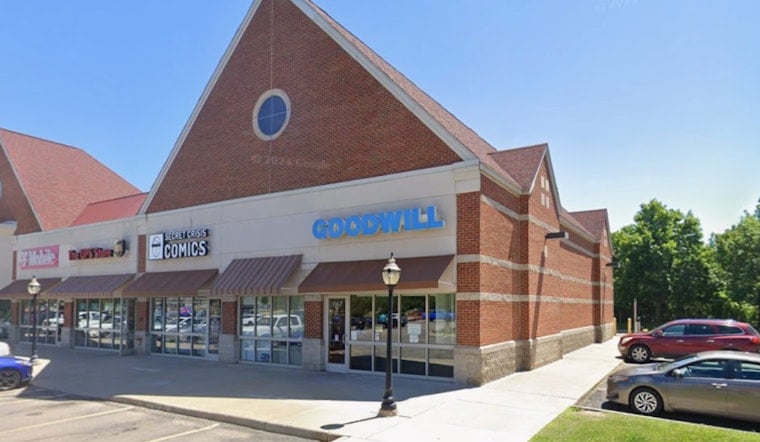
A human skull donated to a Goodwill in Chelsea, Michigan, back in January was not a medical or teaching specimen as some initially assumed, police now say, and forensic testing has determined it belonged to a Black woman between 20 and 49 years old at the time of her death. The case has since been handed off to the FBI for further testing, with investigators still working to figure out who she was and who left her skull at a thrift store donation bin.
The discovery dates back to January 26, when someone reported a suspicious item at the drop-off location behind the Goodwill in the 1100 block of South Main Street, according to CBS News Detroit. Chelsea police responded and found what appeared to be a human skull, wrapped in a shirt and carrying traces of adherent soil. The station describes the skull as well-preserved, skeletonized, and dry.
Store employees initially believed the item might have been a synthetic decorative prop, and Goodwill Industries of Central Michigan's Heartland publicly stated that law enforcement had told them the skull was a man-made artifact rather than real human remains, according to Patch. That early assessment did not hold up. Full anthropological testing later confirmed the skull was authentic human bone, and police now say it was not a medical or teaching specimen either.
Surveillance Footage Shows Two Women Leaving in an SUV
Shortly after the January donation, Chelsea police released details from surveillance footage in hopes someone would recognize the person who dropped off the skull. The footage captured a woman in her late 40s to early 50s with shoulder-length brown hair, wearing black pants, a black coat, and sunglasses, as reported by ClickOnDetroit. She left the store in a dark gray four-door SUV driven by a second woman of similar age and description. Chelsea police are still working to identify the individual who dropped off the skull.
The Washtenaw County Medical Examiner conducted an initial examination before transferring the skull to the University of Michigan Anthropology Department in early February for a deeper anatomical analysis. Forensic experts at the time estimated the full evaluation could take up to 90 days, the station's report noted, accounting for much of the multi-month gap between the January discovery and this week's update. That analysis ultimately determined the woman was Black and between 20 and 49 years old when she died; her time of death remains unknown.
More Than Two Dozen Tips, Still No Identification
Between late January and mid-August, Chelsea police followed up on more than 20 public tips submitted by phone and email, without successfully identifying either the donor or the deceased woman, per The Sun Times News. With local leads exhausted, the skull has now been turned over to the FBI, which will send it to its crime lab in Quantico, Virginia, for additional testing, including DNA analysis.
At Quantico, the FBI Laboratory typically extracts DNA from skeletal remains to query against the Unidentified Human Index within the National DNA Index System, comparing profiles against family reference samples submitted by relatives of missing persons, according to the FBI's own handbook of forensic services. That national database gives investigators a far broader pool of potential matches than local or state resources alone. Anyone with information is asked to call Chelsea police at 734-475-9122.
A Case That Fits a Larger Pattern
Unclaimed and unidentified remains turning up in unexpected places is not unheard of. In September 2023, employees at a Goodwill in Goodyear, Arizona, found a real human skull inside a donation box alongside taxidermy items; medical examiners there ultimately determined it was an ancient, non-forensic artifact unconnected to any modern crime, per CBS News.
Michigan itself carries a significant backlog of such cases. Data from the National Missing and Unidentified Persons System shows the state ranks among the top 10 nationally for unresolved unidentified remains, with more than 330 open cases on record. In neighboring Wayne County, the Medical Examiner's Office processes roughly 3,000 cases involving unclaimed or unidentified deceased individuals every year and maintains a public search database meant to help match physical traits to missing persons reports.
What Michigan Law Says About Handling Human Remains
How the donor came into possession of the soil-covered skull, and whether it ended up at Goodwill by accident during a house cleanout or through some other means, remains an open question that investigators have not resolved. Michigan law does spell out potential consequences depending on how remains are handled. Under Michigan Penal Code section 750.160c, failing or refusing to properly dispose of a dead human body is a misdemeanor punishable by up to 90 days in jail when the delay runs between 60 and 180 days, escalating to a felony carrying up to 10 years in prison if improper possession stretches beyond 180 days.
Separately, Michigan statutory law classifies the unlawful disinterment, removal, or carrying away of a human body or its skeletal remains without proper authorization as a felony punishable by up to 10 years in prison. Hoodline previously covered the initial Chelsea skull search back in February, when investigators were still trying to determine whether the item had been included in the donation by mistake. Seven months later, the forensic identification and the case's move to federal investigators mark the most significant developments since then, though the woman's identity and the full circumstances of how her remains ended up at a Chelsea thrift store are still unknown.





