

























































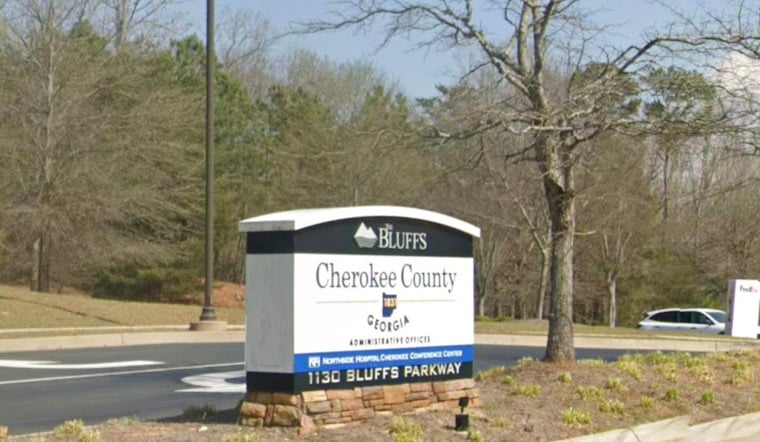
Cherokee County's board of commissioners voted unanimously this week to tack another 180 days onto its data center application moratorium, more than doubling the original 30-day pause and pushing the freeze out to a full 210 days. The extension comes even though the county currently has no dedicated ordinance for data center development and no pending applications for the facilities on file.
The vote, reported by WSB-TV, follows a plan county officials had signaled earlier in August to extend the freeze, giving staff time to research and develop regulations tailored to large-scale computing facilities. Cherokee County first enacted its original 30-day moratorium in July, and Community Development Director Brantley Day told commissioners during those initial discussions that a 180-day extension would give planners and legal staff the runway needed to draft a customized ordinance, according to Citizen Portal. That timeline now stretches the application pause through mid-February 2027.
No Applications, But No Zoning Rules Either
What makes Cherokee's move notable is that it's entirely preemptive. There's no developer knocking on the county's door with blueprints, and no active proposal sitting in a planning queue. County leadership is instead using the 210-day window to build guardrails before anyone applies, a strategy that mirrors moves already playing out across incorporated cities inside Cherokee's own borders. The City of Ball Ground, which maintains independent zoning authority separate from the county, scheduled its own city council vote on a municipal data center moratorium earlier this month, per North Georgia CAN. Because Georgia county-level moratoriums generally only cover unincorporated land, cities within Cherokee have had to pass their own separate measures to avoid gaps in coverage.
Metro Atlanta's Data Center Boom Is Driving the Rush
Cherokee's freeze fits into a much bigger regional pattern. Metro Atlanta closed out 2025 as the second-largest data center market in North America, trailing only Northern Virginia, with 1,459.2 megawatts of wholesale capacity and a vacancy rate of just 1%, according to research from CBRE. Another 2,076 megawatts are under active construction, and hyperscale AI and cloud computing demand pushed Atlanta's inventory up by more than 450 megawatts in 2025 alone. Statewide, Georgia now hosts more than 200 operational or planned data center facilities, according to metrics compiled by Baxtel and reported by Capitol Beat, making it one of the top two data center hubs in the country.
That growth has sent developers scouting outlying suburban and rural counties for land, and several metro Atlanta jurisdictions have responded the same way Cherokee has: with a pause button. DeKalb County commissioners voted in June to extend their own countywide moratorium through September, largely to evaluate water and power infrastructure strain while reviewing a pre-existing 2-million-square-foot proposal, CBS Atlanta reported. Cobb County moved to institute its own 180-day moratorium in unincorporated areas back in February to study noise, water, and power impacts, and Hoodline previously reported on that action in Cobb's push to pause data centers.
Public Pushback Has Already Killed One Mega-Project
The stakes behind these freezes aren't abstract. In Lovejoy, developers withdrew plans earlier this month for a proposed $13 billion, 400-acre data center complex after intense opposition from residents worried about grid capacity and natural resource depletion, a reversal Hoodline covered in depth. Coweta County residents have likewise been fighting a 255-acre data center proposal near Walt Sanders Road, while Roswell has doubled down on its own moratorium and updated land-use codes to slow the pace of new projects.
State Grid Expansion and a Governor's Veto Loom Over the Debate
Much of the local anxiety traces back to what's happening at the state level. The Georgia Public Service Commission approved a $16.3 billion utility capacity plan in December 2025 that allows Georgia Power to build or acquire nearly 10,000 megawatts of new energy generation, with roughly 80% of that expansion driven by projected data center demand, according to CBS News. Consumer advocacy groups have warned that expansion could eventually shift infrastructure costs onto residential ratepayers. The scale of individual projects entering the pipeline is staggering: the commission opened formal scrutiny this month over Georgia Power's agreement to supply 3.2 gigawatts of electricity to a proposed $20 billion OpenAI campus in Effingham County, a load the Atlanta Journal-Constitution notes would be equivalent to the output of three nuclear reactors at Plant Vogtle.
Local governments have been left to fill the regulatory gap partly because the state hasn't moved to rein in the incentives fueling this growth. Governor Brian Kemp vetoed House Bill 1192 in 2024, a bipartisan proposal that would have paused sales tax exemptions for data center equipment for two years, with lawmakers at the time arguing the tax break produced little job creation relative to the grid strain it caused, per WABE. State representatives tried again this year, introducing House Bill 1059 in February, the Data Center Impact Assessment and Development Moratorium Act of 2026, which would create a temporary statewide freeze on new permits and an impact study commission.
For now, Cherokee County's own answer is local: use the 210-day window, running through mid-February 2027, to write rules before any developer shows up with a proposal. Whether that ordinance ends up welcoming data centers with conditions or effectively locking them out, as Lovejoy has vowed to do, remains to be seen.





