

























































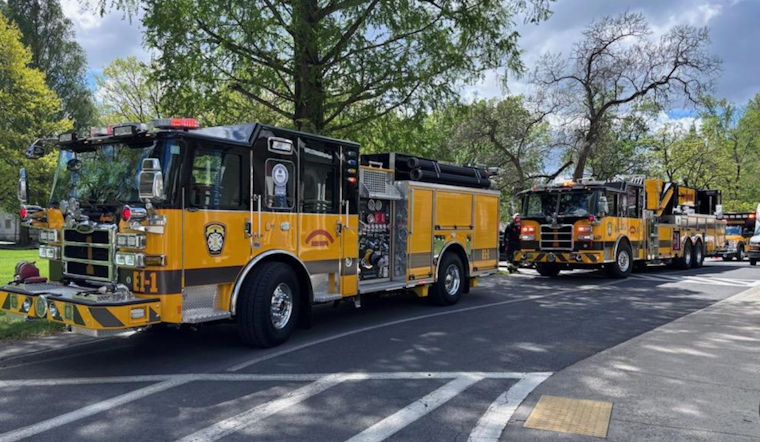
Nine people inside a home in the 900 block of South Fourth Street in Chambersburg fell ill Friday night after chlorine shock was mixed indoors, triggering a hazardous materials response that shut down the block while crews worked to clear the air. None of the nine required hospital transportation, according to the fire department, even as they were evaluated for varying degrees of illness at the scene.
Chambersburg Fire Department personnel responded to the residence Friday night for what officials later determined was a hazardous materials incident caused by chlorine shock mixed inside the home, as reported by fox43. Crews stayed on scene for about an hour, working to ventilate the residence and confirm conditions were safe before reopening the block. The Chambersburg Fire Department runs out of two borough stations, its North Second Street headquarters and a second house on East McKinley Street, staffing both with a mix of career and volunteer personnel who handle fire, EMS, and hazardous materials calls, per Station Boss.
Regional Hazmat Support Arrives
The Franklin County Department of Emergency Services assisted at the scene, consistent with its role overseeing 911 dispatch and countywide hazardous materials response coordination for local fire and EMS agencies, according to Franklin County. A hazmat team from Cumberland County also assisted on scene, the same account notes. That team operates out of Carlisle Fire & Rescue Services in neighboring Cumberland County and routinely deploys specialized hazmat apparatus to help South Central Pennsylvania jurisdictions manage complex chemical releases, according to Carlisle Fire & Rescue Services.
Chambersburg serves as the county seat of Franklin County and maintains the largest municipal operating budget of any borough in Pennsylvania, directly supporting its own utilities and emergency services, per the Borough of Chambersburg. That infrastructure was on display Friday as multiple agencies converged on the residential block to manage the chemical release.
Why Mixing Pool Chemicals Turns Dangerous
Federal guidance from the EPA and CDC explicitly warns against mixing pool chlorine or shock with acids, other sanitizers, or household cleaners, since incompatible combinations can trigger aggressive reactions that release toxic chlorine gas or chloramines, according to the National Pesticide Information Center at Oregon State University. Concentrated hypochlorites in pool shock products degrade quickly and can off-gas when exposed to incompatible agents. Inside an enclosed home, chlorine gas reacts with moisture in airway tissue to form corrosive acids, causing symptoms like coughing, eye burning, chest tightness, and in severe cases pulmonary edema, per the Agency for Toxic Substances and Disease Registry. Because chlorine gas is heavier than air, it can displace breathable air in poorly ventilated indoor spaces — a mechanism that helps explain how nine people inside the same residence ended up experiencing illness simultaneously.
These incidents are far from rare nationally. Improper handling and mixing of pool chemicals sends an estimated 4,500 people to emergency departments across the country every year, with 56% of those injuries happening at residential homes, according to the Centers for Disease Control and Prevention. Children and teens under 18 account for more than a third of those emergency visits, and roughly 65% of all pool chemical injuries occur during the summer swim season between Memorial Day and Labor Day, the same data shows.
A Familiar Pattern for Fire Crews
Indoor chlorine releases have prompted similar hazmat responses elsewhere in recent months. In September 2025, an indoor chlorine gas release tied to pool chemical mixing at a Duluth, Minnesota hotel utility room required a specialized hazmat deployment, a building evacuation, and hours of forced mechanical ventilation before the structure could reopen, as Hoodline previously reported. Chambersburg has also seen its fire department work alongside regional and specialized units before; in April, the department took part in a multi-agency operation in Franklin County that required continuous atmospheric hazard monitoring, following the trench collapse that killed a young Mennonite worker.
Open questions remain about Friday's incident, including the exact chemical compounds combined inside the South Fourth Street residence and whether the property contained a home pool or spa. The current health status of the nine people evaluated on scene has also not been detailed beyond the fire department's confirmation that none needed hospital transport.




