

























































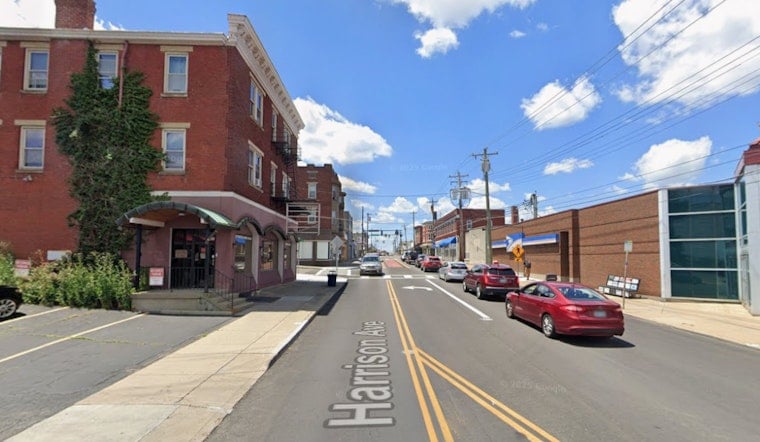
Eight years after her 15-year-old daughter Gabriella was struck and killed by a hit-and-run driver while crossing Harrison Avenue to catch her school bus, Shawna Rodriguez is still showing up at Cincinnati council meetings and community forums, pushing officials to build the safety measures she believes could have saved Gabriella's life. Cincinnati has installed speed cushions on Harrison Avenue, the same corridor where her daughter died, but only four years after the crash that killed her.
Rodriguez lost Gabriella in a 2018 hit-and-run on Cincinnati's west side, according to the Cincinnati Enquirer. She has said she believes Gabriella would still be alive if speed cushions and other pedestrian-safety measures had been in place at the time. Since then, she has pushed city officials for road safety measures to protect other children, and she has said she will continue discussing her daughter's death and fighting for pedestrian safety if it might save another family from loss.
A Citywide Buildout of Small Fixes
Cincinnati has spent $14 million on pedestrian safety and traffic-calming measures over the past six years, per the Enquirer's reporting, adding speed humps, stop signs, crosswalks, roundabouts, and narrower roads across the city. The city has built raised crosswalks at Kilgour Elementary School on Herschel Avenue, at Bramble Park on Bramble Avenue, and in the Mt. Airy business district on Colerain Avenue, while installing speed cushions at Hartwell Elementary on East Galbraith Road and at Sands Montessori on Corbly Street. Cincinnati also reprogrammed crosswalk lights in more than 130 areas to give pedestrians a head start before vehicle traffic gets a green light.
Those individual fixes sit inside a broader policy shift. In late 2022, Cincinnati adopted a policy requiring traffic engineers to consider added pedestrian and cyclist safety measures for every street project, a mandate Sierra Club reported City Council passed unanimously as a Complete Streets ordinance. Cincinnati, Columbus, and more than a dozen other Ohio cities have adopted similar Complete Streets policies requiring streets to be planned, designed, and maintained for everyone who uses them, not just drivers.
Harrison Avenue's Transformation
The four-mile stretch of Harrison Avenue where Gabriella was killed near Sarvis Avenue in 2018 has undergone a $7.6 million safety overhaul that broke ground in July 2025, reducing travel lanes and adding 11 sets of speed cushions, protected bike lanes, and hardened centerlines, as previously reported by Hoodline. Residents had described the corridor as a mini expressway before the redesign. Cincinnati's investments citywide are directed by data on speed, crashes, public transit use, and proximity to schools, parks, and recreation areas.
The results are measurable. Cincinnati pedestrian severe-injury or fatality crashes dropped 28%, from 243 in 2021 to 175 in 2025, according to the Enquirer's reporting. A separate pilot project in College Hill, evaluated in data published in January 2024, found that installing rubber curb bumps, parking buffers, and lane reductions reduced high-speed driving over 50 mph by 90% and cut total corridor crashes by 28%, per WVXU. That project was initiated by local advocates after a fatal 2021 hit-and-run. A separate national case study pointed to a $15,000 quick-build project on Cincinnati's Linn Street near an elementary school, where thermoplastic curb extensions and the removal of a single parking spot reduced vehicle speeding within two days of installation, a corridor where more than 74% of elementary students walked to school.
Statewide Numbers Tell a Mixed Story
Zoomed out, Ohio's trend lines have moved in the right direction over several years, even as recent numbers have alarmed state officials. Ohio pedestrian-crash deaths fell from 172 in 2021 to 127 in 2024, and traffic fatalities overall declined 17% statewide, with pedestrian fatalities down 15%, according to the Enquirer. But Ohio pedestrian-crash deaths rose to 146 in 2025, and the state is on track for about 140 pedestrian deaths in the first six months of 2026 alone. Governor Mike DeWine has said Ohio is seeing concerning pedestrian and vehicle fatality numbers that conflict with the state's longer-term trend.
Ohio Department of Transportation spokesperson Matt Bruning has said engineering, education, and enforcement are all required to achieve road safety. In July 2026, DeWine and ODOT announced $72.1 million in funding for 33 safety projects across 23 counties, including $25.3 million dedicated specifically to pedestrian and roadway-departure safety upgrades, Hoodline reported. Ohio has increased roadway safety spending from $104.5 million in 2018 to $191 million in 2026, an 83% increase that followed a hike in the state gas tax.
Vehicle Size and National Trends
Pedestrian deaths nationwide are shaped by more than road design. Contributing factors include vehicle speed, road design, and the increasing size of trucks and SUVs, and SUVs and pickup trucks accounted for more than half of pedestrian fatalities in 2024, according to Governors Highway Safety Association data cited by the Enquirer. Three in five fatal pedestrian crashes in 2024 occurred in areas without sidewalks. Katherine Swidarski has said roads that look more like highways psychologically encourage drivers to speed.
The United States has one of the highest road mortality rates among 29 developed nations, and pedestrian deaths increased 49% in the United States between 2014 and 2024 even as pedestrian deaths fell 29% across those same 29 developed nations over the same period. There was a bright spot in 2025: U.S. roads saw 7% fewer pedestrians killed by drivers compared with 2024. Cities including Cincinnati continue leaning on road diets, speed cushions, and improved crosswalks to slow traffic and protect pedestrians, part of a Vision Zero approach that seeks to eliminate traffic fatalities and severe injuries entirely.
Another Family, Another Loss
Rodriguez's fight echoes a more recent tragedy. In February 2026, Anastasia Jehorek was struck and killed by an SUV while riding a scooter to her job at Chipotle north of Columbus. Her father, Dean Jehorek, has blamed her death on distracted driving and a lack of sidewalks and protected bike lanes. That crash followed a similarly troubling case reported by Hoodline the same month, in which a driver on Columbus's Route 3 initially fled a fatal pedestrian strike believing they had hit a deer, returning only after emergency crews arrived. State officials have reported roughly 128 pedestrian deaths statewide in 2024.
Regional data compiled in early 2024 by the Devou Good Foundation found Cincinnati recorded more than 4,500 traffic crashes resulting in injury or death in a single year, a figure that has pushed non-profit groups to establish dedicated task forces helping tri-state cities implement Vision Zero frameworks. Advocates cite that volume of crashes to argue that traffic violence is a preventable public health issue, not an inevitable cost of city life. A March 2026 survey conducted by ETC Institute found 54% of Cincinnati households identified pedestrian safety measures as a top priority for new municipal investment, a signal that directly informs the city's biennial budget decisions.
The Legal Weight of Fleeing the Scene
Ohio law treats fleeing a fatal crash as far more than a traffic infraction. Under Ohio Revised Code Section 4549.02, failing to stop after a motor vehicle accident on a public road that results in death is classified as a third-degree felony, carrying a mandatory driver's license suspension of six months to three years and prison terms ranging from nine to 36 months. Ohio law sharply escalates hit-and-run penalties, moving from a misdemeanor for property damage to a felony once serious injury or death is involved.
The gap between that legal reckoning and the years-long process of redesigning a dangerous road remains a central tension in Rodriguez's advocacy. Traffic projects can take years to study, fund, design, bid, and build, even after a death exposes exactly where a fix is needed. Cincinnati's 34-mile Cincinnati Crown loop of bike paths and routes is now more than half built, part of the same long arc of infrastructure change that finally reached Harrison Avenue nearly seven years after Gabriella died there. For Rodriguez, the work continues one meeting, one crosswalk, and one policy fight at a time — measured against a timeline she never wanted to be part of.





