

























































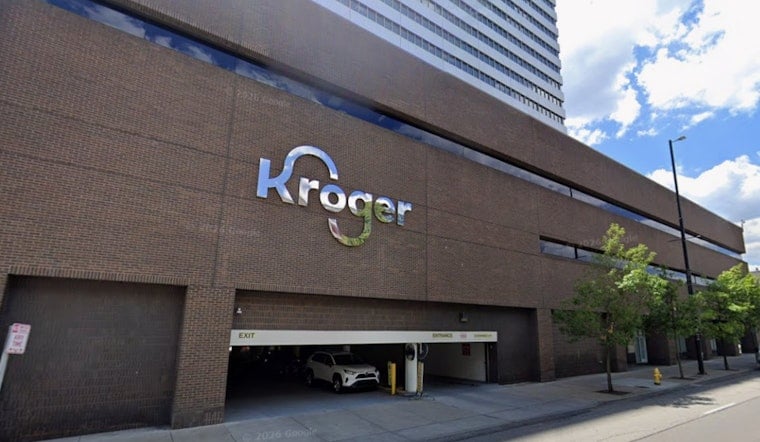
Cincinnati officials have brokered a deal that limits daily animal-rights demonstrations outside Kroger's downtown headquarters to a three-hour afternoon window, following months of noise complaints from nearby businesses and residents on Court Street. The agreement restricts protests to between 2 p.m. and 5 p.m., bans sirens, horns, whistles and sound amplification, and permits only megaphones using unamplified voices.
The compromise was brokered by Cincinnati City Councilmember Mark Jeffreys, who in an August 17 letter to Animal Equality President Sharon Nunez laid out the operational terms after mounting complaints from Court Street businesses and downtown residents, according to the Cincinnati Business Courier. As WKRC reports, Jeffreys brought the protesting parties together for a neighborhood meeting to hash out the terms, and he said his interest was the quality-of-life impact on people living and working near the demonstrations rather than the broader issues Animal Equality has raised about Kroger's egg sourcing.
Animal Equality began demonstrating at Kroger's front door in Cincinnati in May, calling on the grocer to raise its hens cage-free. Before the new rules, activists showed up twice daily during morning and afternoon commute hours — between 8 and 9:30 a.m. and again from 3:30 to 5:30 p.m. — using drums, whistles and megaphones, according to the same report from the Cincinnati Business Courier. Protesters intentionally timed the demonstrations to reach corporate employees arriving at and leaving the Vine Street headquarters.
A Cafe Owner's Patio Goes Quiet
Janine De Iorio, who owns Brewd nearly next door to Kroger's headquarters with her husband, told WKRC the protests intensified over time and affected both her business and her staff. She said the noise had prevented her from using her outdoor patio, a key selling point of the cafe's spot on Court Street Plaza. Brewd opened just weeks before the daily demonstrations began, according to earlier Hoodline coverage of the corridor's dining scene, which also includes Pata Roja Taqueria, Court Street Kitchen and Frontera Cuisine.
De Iorio said the parties had followed the new agreement for two days as of her interview, and she did not dispute the protesters' First Amendment right to demonstrate. She was also sympathetic to the underlying cause, telling WKRC that animals raised for food spend their entire lives in cages so small they cannot even turn around.
Kroger's headquarters sits adjacent to Court Street Plaza, a $5.5 million pedestrian promenade opened in June 2021 by 3CDC and the city that converted a vehicular street into a corridor built around outdoor dining and retail. That design, meant to link the Central Business District with Over-the-Rhine, is precisely what made sustained daily noise such a threat to the patio-dependent businesses that moved in.
What Sparked the Campaign
The dispute traces back to a 2022 policy reversal. Kroger had originally pledged in 2016 to move to a 100% cage-free egg supply chain by 2025, but revised that target to roughly 70% cage-free sales by 2030, citing slower customer demand growth, supplier transition constraints and affordability concerns, according to trade publication Feedstuffs. Kroger operates nearly 2,700 stores across 35 states and ranks as the second-largest egg seller in the country.
Animal Equality estimates the delay leaves up to 40 million egg-laying hens per year confined to battery cages, with each bird given less space than a single sheet of paper. The group has pointed out that competitors including Target and Costco, along with major food corporations like McDonald's and ConAgra, have maintained or fulfilled their own commitments to eliminate caged eggs, framing Kroger as an outlier among peers with the market share to shift agricultural supply chains.
Kroger said in a statement that it respects organizations' First Amendment right to peacefully protest. Sharon Nunez, Animal Equality's president, is seeking a direct sit-down meeting with Kroger's executive leadership and has said demonstrations will continue indefinitely until the company agrees to negotiate a timetable for eliminating caged-hen eggs. The group has run similar multi-month pressure campaigns in Europe, finishing one such effort earlier this year.
A Truce, Not a Resolution
Cincinnati's municipal noise code already restricts sound-producing or amplifying instruments that emit raucous sound or disturb neighborhood peace, while explicitly exempting reasonable political speech — a tension that likely pushed the city toward a voluntary arrangement rather than risking a First Amendment fight in court. The new schedule and equipment limits are the product of that negotiation, not a judicial order.
It is also not the end of Kroger's recent run of public scrutiny in the region. In July, the company settled a wrongful-death lawsuit involving a former manager at its Milford store, a dispute that had previously drawn demonstrations outside the Hamilton County Courthouse, as Hoodline reported. That settlement closed a five-year legal dispute over alleged workplace harassment without a court finding of liability.
For now, the deal outside Kroger's Vine Street headquarters addresses only the noise. Whether Animal Equality and city officials stick to the unamplified 2-to-5 p.m. window over time, and whether Kroger ultimately grants the executive meeting Nunez is demanding, remain open questions.




