

























































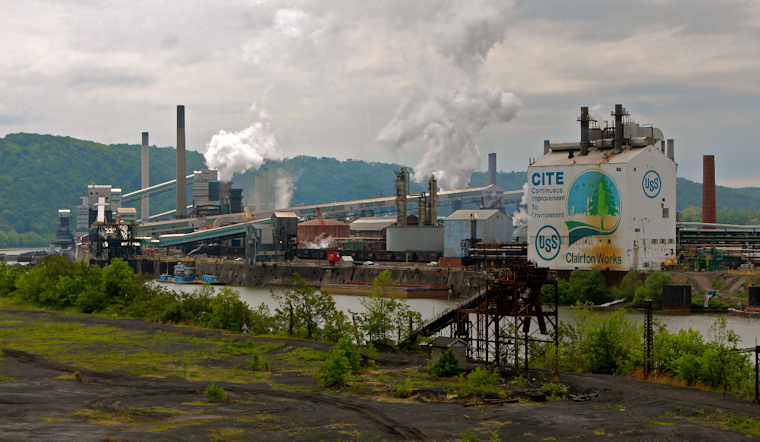
A yearlong federal investigation into the explosion that killed two workers at U.S. Steel's Clairton Coke Works has reached a blunt conclusion: it should never have happened. The U.S. Chemical Safety Board released its final report on the disaster, pointing to years of workers incorrectly cleaning an aging valve with pressurized water, and to occupied buildings sitting directly above hazardous piping as the root causes of the catastrophe.
The explosion killed Timothy Quinn and Steven Menefee and injured 11 others on August 11, 2025, according to CBS News. Quinn and Menefee were located in or near control rooms positioned above the coke oven piping when the blast tore through the facility, the outlet reported. Emergency crews from 14 fire departments and 20 EMS companies converged on the 293-acre plant for a multi-hour search and rescue operation after the initial blast at approximately 10:45 a.m., according to TribLIVE.
At the center of the failure was an 18-inch cast iron gate valve, originally manufactured in 1953 and refurbished in 2013, that workers had been cleaning with water for years instead of the low-pressure steam once used historically for the task. The valve was rated for only 50 pounds of pressure, but the water pump truck used during the cleaning was capable of producing far more, and workers significantly overpressurized it — trapping water inside at up to 3,000 PSI, 60 times the valve's maximum rating, according to findings reported by CBS News. Because the valve had to be closed or nearly closed for the failure to occur, the trapped water had nowhere to escape before the valve broke, coke oven gas ignited, and it exploded.
A Practice Management Knew About, But Never Formalized
U.S. Steel management was aware of and endorsed the practice of using water to clean the valves, the Chemical Safety Board found, yet the company never developed a formal, written procedure for doing it safely. The report identified the absence of a formalized procedure, along with an ineffective process safety management system overall, as contributing to safety issues. Sylvia Johnson, whose comments are cited in the CBS Pittsburgh report, said workers routinely performed the task incorrectly over a period of years until it led to a catastrophic explosion.
Separately, OSHA's investigation found that contractor MPW Industrial Services failed to equip its high-pressure water system with a pressure relief valve, which would have let built-up pressure escape safely during the flushing process. That finding, reported in February 2026, came alongside federal penalties: OSHA cited U.S. Steel for 10 safety violations totaling $118,214 in proposed fines and MPW Industrial Services for nine violations totaling $61,000, according to TribLIVE. Both companies formally contested the penalties later that month.
Break Rooms Built Above the Danger Zone
The Chemical Safety Board also identified the proximity of employee buildings to dangerous processes as a contributing factor in the deaths. Federal investigators determined that U.S. Steel routinely operated occupied, non-blast-resistant control and break rooms located less than 20 feet directly above active high-hazard coke oven piping systems, according to The Allegheny Front. The break room where workers were stationed sat above that same coke oven piping.
U.S. Steel did not act to address facility-siting risks because it believed such action was not required by regulation, and the company had previously declined to conduct a formal facility-siting risk analysis at Clairton despite a July 2010 explosion at the same facility that injured 20 workers, the outlet's reporting shows. The Chemical Safety Board recommended evaluating distances between buildings and hazardous processes going forward, along with developing a written procedure for washing valves with pressurized water and building out a comprehensive process safety management system.
Damage, Lawsuits, and the Road to Accountability
The Chemical Safety Board's final report estimated the multi-explosion incident caused $52.5 million in physical property damage, according to TribLIVE Local. In February 2026, the surviving families of Quinn and Menefee filed separate wrongful death lawsuits against U.S. Steel in Allegheny County Common Pleas Court, alleging severe negligence and structural hazards, according to the Group Against Smog and Pollution. That litigation remains pending.
A U.S. Steel spokesperson said the company aims to protect workers and keep safety central to its operations, and the company said it would thoroughly review the Chemical Safety Board's recommendations. U.S. Steel has said it strengthened standardized best practices for valve cleaning, improved its management of change program, and now requires workers to complete comprehensive training related to management changes.
The Clairton Coke Works remains the largest coke manufacturing facility in the United States, producing coke and flammable coke oven gas by baking coal at 2,000 degrees Fahrenheit for 18 hours at a time, per The Allegheny Front. U.S. Steel plans to lower flags and hold a moment of silence to mark the anniversary of the explosion, and workers will gather for safety discussions as part of the remembrance. Hoodline previously covered early CSB findings in the weeks after the blast, and U.S. Steel has since made local investments in Clairton, including a $500,000 donation toward Tyler Boyd Stadium upgrades and STEM initiatives announced last November.



.jpg)