

























































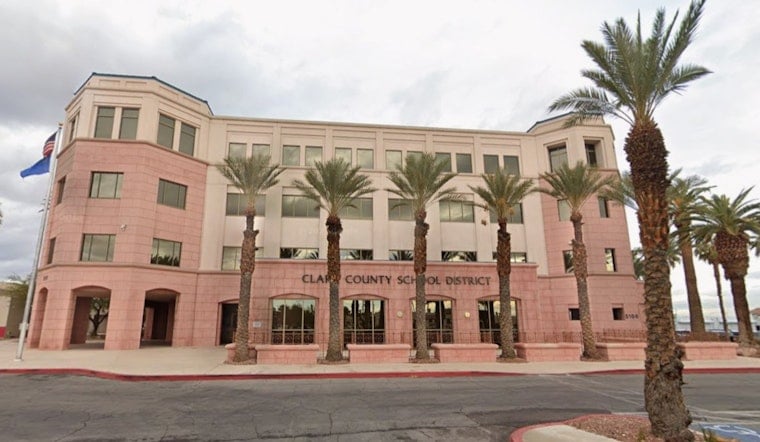
Clark County School District trustees voted this week to spend the district's only two legislative bill requests for 2027 on a pair of long-simmering financial headaches: an underfunded special education mandate and a budgeting process that district staff say disrupts classrooms every year. The two proposals, if passed by Nevada lawmakers, could cost the state at least $480 million over the coming two-year budget cycle.
The vote came at the board's August 13 meeting, where trustees formally signed off on the district's two allotted bill draft requests for the 2027 legislative session, according to a Clark County School District meeting recap. One proposal targets special education funding; the other would change how the state calculates school enrollment for budgeting purposes. As reported by the Las Vegas Sun, the combined price tag for both requests runs to at least $480 million statewide over the biennium, with the special education piece alone estimated at $240 million per year.
Under Nevada Revised Statutes Section 218D.205, boards of trustees in counties with populations of 700,000 or more — a threshold that applies only to Clark County — are capped at two legislative bill draft requests per regular session, according to FindLaw's compilation of Nevada law. That statute is also why the district faces a hard deadline: CCSD government relations staff will submit the bill draft request forms to the state by September 1, per the Sun's reporting, and the district's government relations team will then work with the state to develop the actual bill language.
Why Special Education Costs Keep Draining the General Fund
Individualized education plans, the legally binding documents that spell out a special education student's learning goals and accommodations, are required under federal law regardless of whether the money to pay for them exists. Clark County School District Chief Financial Officer Justin Dayhoff said the district has to provide those services no matter the funding level, the Sun reported. Because IEPs are not fully federally funded, CCSD ends up covering the gap with general state funds — this year alone, the district transferred about $176 million from state-allotted general funds to cover special education costs.
That local shortfall echoes a decades-old national pattern. When Congress passed the original predecessor to the Individuals with Disabilities Education Act in 1975, it pledged the federal government would eventually cover up to 40 percent of the average per-pupil cost of special education. Federal appropriations have never come close, hovering between 12 and 15 percent nationwide, according to the office of U.S. Senator John Fetterman. Nationwide, that shortfall has produced an IDEA funding gap estimated at $38.66 billion in recent school years, according to the same source, a gap that forces districts across the country — not just in Nevada — to redirect general operating dollars toward mandated special education costs.
Dedicated special education funding at the state level would relieve pressure on CCSD's general fund, freeing that money for other classroom needs, per the Sun's account. The district plans to request full state funding for IEPs, though the proposed special education bill is not expected to include an explicit $480 million price tag written into the legislation itself. Nevada Superintendent of Public Instruction Jhone Ebert said the proposal is not a wish list, telling the Sun that districts already spend money on special education and can identify exactly where newly dedicated funding would go.
A Statutory Loophole Lawmakers Could Close
The second bill takes aim at language buried in Nevada's Pupil-Centered Funding Plan, the weighted per-pupil funding model that replaced the state's 1967 Nevada Plan starting in fiscal year 2022 under Senate Bill 543, according to a Nevada Department of Taxation report. Key statutory provisions governing that plan, including NRS 387.1214 and NRS 387.12455, require inflation adjustments and state education appropriations only as practicable — legal wording that gives governors and lawmakers discretion to fund education below recommended targets during lean budget years, the same report notes.
CCSD's proposed process bill would strike the phrase as practicable from the statute and establish a statutory minimum funding level for public education regardless of economic conditions, according to the Sun. District staff say in-year budget fluctuations create severe operational challenges that disrupt classrooms, and the same bill would also change how enrollment is counted for budgeting purposes. Instead of adjusting district budgets to match quarterly enrollment swings during the current school year, the proposal would base funding on the prior year's October enrollment count — a recommendation from district staff aimed at letting schools plan budgets reliably rather than reconciling projected figures with actual enrollment each fall.
A Tough Political Sell in a Small State Budget
Nevada Board of Education member Bradley Keating suggested putting the entire special education funding goal into a single bill and then negotiating with lawmakers from there, per the Sun's reporting. Keating also acknowledged the scale of the ask, saying nearly half a billion dollars is a lot to request within Nevada's relatively small state budget. He said lawmakers might initially make just $15 million available for students with disabilities — a fraction of the $240 million per year the district says the funding gap actually costs.
CCSD staff have said passing a major funding increase requires significant political capacity in Carson City, where the 84th Regular Session of the Nevada Legislature convenes on February 1, 2027, for its constitutionally mandated 120-day biennial session. Nic Ciccone clarified that the $480 million figure represents the probable value of full funding rather than a direct special education appropriation baked into the bill itself, according to the Sun's reporting.
The requests are not without legislative precedent. During the 2025 session, Nevada lawmakers passed SB 460 and AB 398, which made structural changes to the Commission on School Funding's duties, district accountability reporting requirements, and teacher pay structures within large districts, according to a Nevada Department of Education guidance memo. That track record shows the state's K-12 funding statutes remain very much open to legislative revision.
The Scale Behind the Ask
The size of CCSD's request reflects the size of the district itself. Clark County School District is the fifth-largest in the United States, running 379 public schools for roughly 280,000 to 300,000 students and educating about 64 percent of all public school students in Nevada, according to Public School Review. Whatever Carson City decides about special education funding and budgeting timelines will shape the finances of a district that touches nearly two-thirds of Nevada's public school children.
The legislative push comes as CCSD heads into the 2026–2027 school year with nearly 99 percent of employee positions filled and only 170 teacher vacancies districtwide, even as it continues to navigate a $50 million budget shortfall from earlier this year and long-term projected enrollment declines, as Hoodline previously reported on the district's growth plans. District officials say the staffing gains make budget stability all the more important, since sudden midyear funding shifts risk undoing that progress through disruptive staffing and program cuts.
The district's back-to-school welcome event on August 10 at Matt Kelly Elementary School in Las Vegas drew Superintendent Ebert, U.S. Senator Catherine Cortez Masto, and school board members Shondra Summers-Armstrong and Tameka Henry, with the event photographed by Wade Vandervort for the Sun. Whether the legislative requests survive the budget negotiations that follow the session's February 1, 2027 start remains an open question, one that will play out over the coming months as CCSD's government relations team works with state officials to draft the final bill language.





