

























































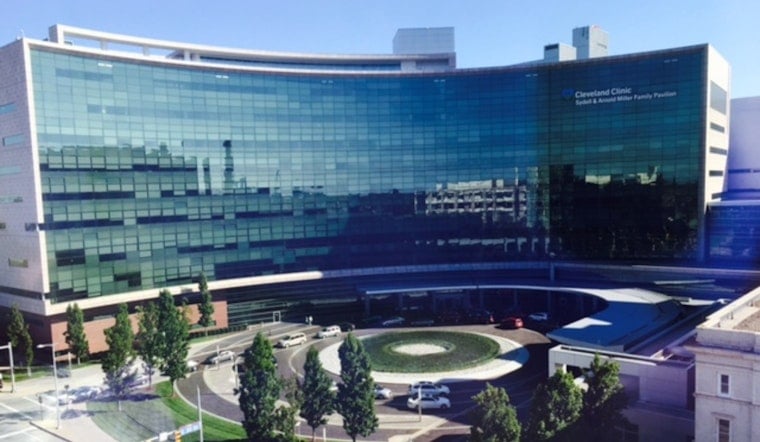
Cleveland Clinic and the nonprofit Bikur Cholim have completed a land swap near the hospital's Main Campus that clears space for a 120,000-square-foot emergency department expansion while giving the Jewish charity double the acreage it had before to build a new $10 million guest house for families of hospital patients. The deal centers on parcels along Cedar Avenue and East 93rd Street, where Cleveland Clinic is preparing to demolish five two-family residences and a shuttered Texaco service station to make way for construction tied to its pursuit of a Level I trauma center designation.
According to NEOtrans, Bikur Cholim gave Cleveland Clinic a 0.82-acre parcel at Chester Avenue and East 93rd Street, which had been used as a parking lot, in exchange for parcels at 8931 Cedar Avenue and two East 90th Street lots that closed on July 27, according to Cuyahoga County records cited in the report. The swap leaves Bikur Cholim with a new parcel twice the size of its previous property, on which it plans to build a three-story Cleveland Comfort House featuring 10 extended-stay guest suites, a community kitchen, a meeting room, and a small library, per the same account.
A Guest House Built for Shabbat-Observant Families
Founded in 1988 and based in Bikur Cholim of Cleveland's Cleveland Heights headquarters, the organization provides non-medical physical, emotional, and religious support to Jewish hospital patients and their families, including hospitality lounges stocked with kosher food across regional hospital campuses. Its Hebrew name translates to “visiting the sick,” and the group serves both local residents and out-of-town families traveling to Cleveland's hospital system. The planned Comfort House, to be built on Chester Avenue at East 93rd Street within walking distance of both Cleveland Clinic and University Hospitals, is modeled on a Jewish equivalent of the Ronald McDonald House, allowing observant families to visit patients without driving on Shabbat.
Architect Marco Ciccarelli, founding principal at StudioTechne of Cleveland, will design the Comfort House, and construction is expected to take 10 to 14 months. Bikur Cholim could begin building by the start of 2027 if enough funding is raised soon, per NEOtrans.
Clearing Cedar Avenue for a Bigger Emergency Department
On the Cleveland Clinic side of the ledger, the land moves are feeding a much larger construction push at 9105 Cedar Avenue. The health system is permitting a 120,000-square-foot expansion of the Maria & Sam Miller Emergency Services Building, also known as the E Building, a 228,000-square-foot structure built in 1994 that will be expanded onto the clinic's existing 112-space parking lot. NEOtrans reports that Cleveland Clinic paid $385,000 for the 9300 Cedar property, a 0.36-acre parcel containing the vacant, 1920-built former Texaco station, which it acquired from Ninety-Third Parking LLC this month. The clinic separately paid $550,000 in July for two Cedar Avenue parcels acquired from affiliates of Activity Capital LLC, a Woodmere-based firm.
Demolition contractor B&B Wrecking & Excavating will be paid $183,200 to tear down five structures — two-family residences at 8921, 8927, and 8931 Cedar Avenue and 2116 and 2118 East 90th Street — with work including complete removal of buildings, slabs, and footers and backfilling to positive drainage, according to NEOtrans. The 9300 Cedar parcel will be combined with other clinic-owned land and a city land bank lot to form a new surface parking lot, while the emergency department expansion itself will eliminate 95 existing parking spaces. To offset that loss, Cleveland Clinic plans to build a roughly 140-space emergency department lot on a nearly 1-acre plot, add 13 spaces along a vacated stretch of East 93rd north of Cedar, and retain 17 spaces in another lot.
Architect Edward Matthew Paine of Hasenstab Architects Inc. in Cleveland has submitted plans for a temporary emergency department entrance that will serve patients who self-present during construction, including a new exterior canopy and interior alterations to the existing administrative office and staff entry vestibule. Cleveland Clinic will spend $250,000 on that interim entrance, per NEOtrans.
The Trauma Center Fight Behind the Construction
The emergency department expansion is designed to support Cleveland Clinic's bid to open a Level I trauma center by 2028, a goal that has drawn sustained opposition from rival health systems and local officials. In March, the Jack, Joseph and Morton Mandel Foundation donated $50 million to Cleveland Clinic to help fund the expansion and support the trauma designation effort. In July, Cleveland Clinic established an enterprise-wide Center for Trauma and named Dr. Jeffrey Claridge as enterprise medical director, according to Becker's Hospital Review, a hire notable because Claridge spent more than 14 years as trauma medical director at MetroHealth, which has publicly and repeatedly opposed the Clinic's trauma plans.
That opposition has been pointed. MetroHealth CEO Dr. Christine Alexander-Rager called Cleveland Clinic's plan for a third Level I trauma center “reckless” in a February address, warning it would dilute patient cases and draw privately insured patients away from the county's public safety-net system, as reported by WKYC. MetroHealth has operated as one of Cleveland's primary adult Level I trauma centers since 1992 alongside University Hospitals, and in June it announced it would not seek reverification of its pediatric Level I trauma designation due to declining patient volume, leaving University Hospitals Rainbow Babies & Children's as the city's sole dedicated pediatric Level I provider.
Cuyahoga County state lawmakers sent Cleveland Clinic a formal letter in March requesting a pause on its trauma center bid pending an independent regional needs assessment, citing concerns over healthcare workforce shortages and questioning whether the Clinic had adequately justified adding trauma capacity in an already served market. The Cleveland City Planning Commission conceptually approved early design plans for the emergency department expansion in July despite that scrutiny, though Cleveland City Councilman Charles Slife cast a dissenting vote, arguing an analysis of regional trauma need should come before design approvals.
What's Driving the Demand
Behind the political fight is a clinical case Cleveland Clinic has leaned on to justify expanded emergency capacity. According to 2024 Northern Ohio Trauma System data reported by WKYC, falls accounted for 61% of regional trauma cases while motor vehicle collisions made up 15%, the primary injury types driving local emergency room demand. The CDC ranks physical trauma as a leading cause of death for people ages 1 through 44.
The Cedar Avenue land swap is one piece of a five-year Main Campus master plan Cleveland Clinic outlined in July, pairing the emergency department expansion with a new Neurological Institute building opening in 2027, a central utility plant, and twin parking garages totaling roughly 4,000 spaces — a buildout Hoodline detailed in April. Nearly one-third of facilities on the Main Campus are more than 50 years old, driving the systematic reinvestment. Whether or not Bikur Cholim adopts a different site plan for its Comfort House going forward, the swap has already resolved the physical footprint constraints that stood between Cleveland Clinic and its next phase of construction on Cedar Avenue — even as the larger question of whether Cleveland needs a third Level I trauma center remains unsettled among regional health leaders and lawmakers.




