

























































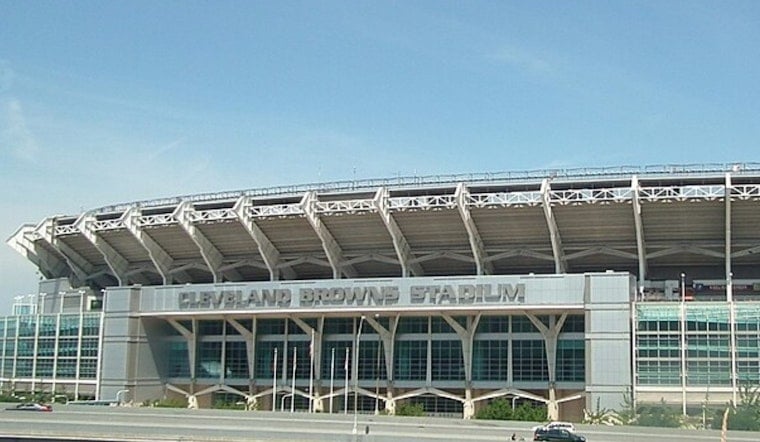
Cleveland City Council is set to decide Wednesday whether to reimburse the Cleveland Browns more than $1.1 million for emergency repairs at Huntington Bank Field, a bill that covers a failed sanitary pump, sewer line problems, and concrete work at the aging lakefront stadium. The measure lands just as the city continues its slow, expensive march toward the end of its relationship with the venue altogether.
The proposal, Emergency Ordinance File No. 931-2026, was introduced August 13 by Councilman Kevin L. Bishop and Council President Blaine A. Griffin, according to Cleveland City Council records. It would authorize the city to enter an agreement with Cleveland Browns Stadium Company LLC covering the reimbursement, with the council scheduled to take it up at its Wednesday meeting. As WKYC reports, the Browns have already carried out the repairs, and the ordinance would settle the city's obligation to pay them back.
The scope of the emergency work includes a failed sanitary pump, sewer line issues, vertical concrete repairs, and non-structural concrete fixes at the stadium, per details shared by cleveland.com. Those aren't cosmetic upgrades — they're the kind of basic infrastructure failures that can force operational shutdowns if left unaddressed ahead of stadium events.
A Lease That Still Binds City Hall
The reimbursement obligation traces back to the original 1998 lease between Cleveland and the Browns, which runs through the 2028 NFL season. Under that agreement, the city — as the stadium's legal owner — is required to cover emergency repairs needed to preserve structural integrity and public safety, according to Signal Cleveland. That contractual language is why City Hall keeps writing checks for a building it no longer expects to own for long.
This isn't a one-time expense. In August 2025, the council approved Ordinance 725-2025, authorizing $2,654,953 in emergency repair reimbursements to the Browns for seating bowl joint repairs, gutter replacements, A/C units, and overhead concrete work, the same outlet noted. Between 2014 and 2024 alone, Cleveland spent $28 million on stadium capital repairs, and that total has pushed past $30.7 million following additional approvals late last year, according to Cleveland Scene.
An Audit Flagged the Backlog Years Ago
None of this is a surprise to city inspectors. A municipal stadium repair audit commissioned by City Hall back in June 2024 found that while Huntington Bank Field was in reasonable shape for its age, it still needed an estimated $10.4 million in immediate emergency repairs, per Signal Cleveland's reporting on the audit. The 27-year-old facility's long-term structural needs have been on the books for two years now, even as the team's future in downtown Cleveland has shifted dramatically.
That shift became official in December 2025, when the council voted 13-2 to approve a $100 million settlement between Mayor Justin Bibb's administration and Haslam Sports Group, clearing the way for the Browns to relocate to Brook Park while dropping all pending relocation lawsuits, per coverage of the vote. Under that settlement, Haslam Sports Group agreed to demolish Huntington Bank Field at its own expense — estimated at $30 million — and return the lakefront site to a pad-ready state for redevelopment after the 2028 season.
Why the City Is Still Paying for a Building It's Losing
The arrangement leaves Cleveland in an odd financial spot: still legally on the hook for repair bills at a stadium the team itself will tear down within three years. Haslam Sports Group selected a joint venture of AECOM Hunt and Turner Construction in October 2025 to build the team's planned $2.4 billion, 67,500-seat domed stadium in Brook Park, targeting a 2029 opening, as Hoodline previously reported. Until that dome opens, though, the 1998 lease still governs who pays to keep the lights on and the pumps running downtown.
Cleveland's options for spreading out that financial burden have also narrowed. In May, Ohio House Speaker Matt Huffman blocked Cuyahoga County's attempt to raise its sports facility sin tax, which would have let local officials increase excise taxes on alcohol and cigarettes to replenish depleted repair funds across regional venues. With that funding stream off the table, the city's capital reserve accounts remain the primary source for covering bills like the one council will weigh Wednesday.



