

























































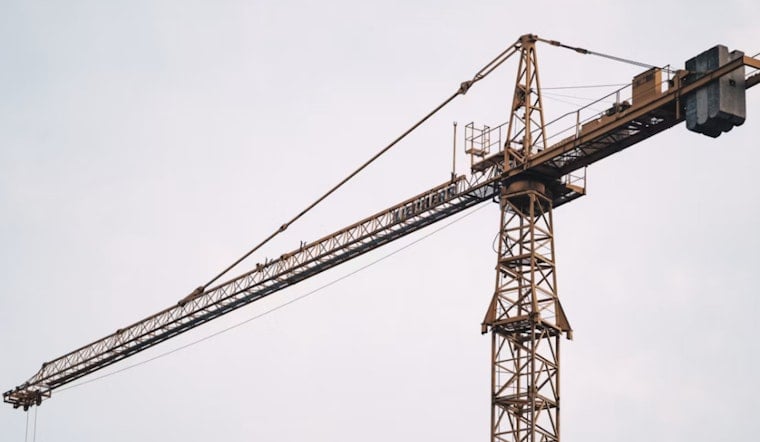
A selection committee tasked with picking a construction manager for the Tampa Bay Rays' new ballpark unanimously approved its final rankings, placing AECOM Hunt Turner in first place ahead of three competing firms. The vote sets the stage for contract negotiations on a $2.3 billion project designed to seat at least 28,000 fans at a new stadium on the Hillsborough Community College campus in Tampa, with a target opening date tied to the 2029 Rays season.
The committee evaluated four firms across four weighted categories worth up to 100 points total, according to Tampa Bay 28, including firm qualifications and similar-project experience worth up to 40 points, project approach worth up to 30 points, key personnel experience and project commitment worth up to 20 points, and a weighted interview worth up to 10 points. AECOM Hunt Turner emerged with a composite score of 6.01, ahead of Mortenson Beck at 5.15, Gilbane Barton Malow at 5.13, and H.J. Russell at 3.18, per the outlet's reporting. The panel included representatives from the Rays, the City of Tampa, and Hillsborough County.
A Firm With Deep Stadium-Building Credentials
Hillsborough Community College President Ken Atwater said stadium-building experience carried significant weight in the committee's decision, the outlet reported. AECOM Hunt Turner already has an existing relationship with the Rays, having completed interior renovations to Tropicana Field's club spaces and helped replace the stadium's dome after Hurricane Milton damaged it in 2024. The joint venture also worked on the Tennessee Titans stadium and, alongside Turner, the Cleveland Browns' new stadium project.
That Browns project is itself a massive undertaking: Haslam Sports Group selected the same AECOM Hunt and Turner Construction joint venture in October 2025 to manage construction of the $2.4 billion, 67,500-seat enclosed Huntington Bank Field in Brook Park, Ohio, according to Engineering News-Record, which is also slated to open in 2029. The pairing previously built SoFi Stadium in Inglewood, California, a $5 billion, 3.1 million-square-foot venue that can seat up to 100,000 fans and opened in 2020, per Informed Infrastructure. AECOM Hunt project executive Brian Schrems said the firm is excited to build the project and is positioned to manage the $2.3 billion budget, per Tampa Bay 28's report.
Local Hiring Promises Draw Praise and Skepticism
AECOM Hunt Turner impressed the committee with its commitment to the local community, discussing plans to use workers from the local community and holding outreach events with local contractors, the outlet reported. The firm has assembled its project teams and says it plans to involve local resources, with the University of South Florida stadium project — which involved Manhattan, H.J. Russell, and Ducon — cited as a model for the team's structure.
Not everyone at the meeting was satisfied with the makeup of the winning team. James Ransom, a board member of the Tampa Organization of Black Affairs, called for greater Black-owned participation in Rays employment and procurement, according to the outlet's account, and said the AECOM Hunt Turner team lacks a national Black-owned company. Ransom had proposed H.J. Russell — a national Black-owned construction firm that previously partnered with AECOM, Turner, and C.D. Moody to build Mercedes-Benz Stadium, the Atlanta Braves' stadium, Atlanta Hawks facilities, and PNC Ballpark — as a joint-venture partner with AECOM Hunt Turner. Ransom did praise local firm Horace Construction's participation on the AECOM Hunt Turner team and said the organization still supports the Rays coming to Tampa, per the report.
What the New Ballpark Will Look Like
The project calls for a roughly 1.3 million-gross-square-foot venue with a fixed roof and climate control, at least 28,000 fixed seats spread across three levels, and a large curtain wall system in the outfield, according to Tampa Bay 28's reporting. Beyond baseball, the ballpark is designed as an open, multi-purpose venue that will host concerts and other large events, with premium club and suite areas and a Rays aquarium similar to the one at Tropicana Field. The outlet described the design as a one-of-a-kind project for the market.
Atwater said the college's immediate next step is establishing temporary facilities so students can continue receiving a high-quality education while construction proceeds, and he hopes that temporary-facility work begins sometime this fall. He also said the project carries an urgent timeline given the 2029 opening target, the outlet reported.
Financing Fight Still Looms Over Groundbreaking
Winning the construction bid is a milestone, but it does not resolve the project's biggest open question: who pays for it. A nonbinding memorandum of understanding revealed in April that the Rays have proposed contributing $1.235 billion toward the $2.3 billion budget — more than half the total cost — while agreeing to absorb all construction overruns, according to MLB.com. The team is asking for a combined $1.065 billion in public funding, split between $750 million from Hillsborough County and $251 million from the City of Tampa.
That public ask has run into resistance at Tampa City Hall. Tampa City Councilmember Bill Carlson introduced an alternative financing proposal in August that would create a 35-year tax-increment financing district around the 122-acre college site, using future property taxes from surrounding commercial development instead of tapping $80 million from the Community Investment Tax or $100 million in Community Redevelopment Agency funds, as reported by NGSC Sports. Project funding still requires votes from Hillsborough County, the City of Tampa, and the Tampa CRA, and the City of Tampa is expected to revisit its portion of the funding this month.
State support has already materialized on one front. Governor Ron DeSantis signed a $117.6 billion state budget in June that included $50 million specifically for infrastructure improvements at Hillsborough Community College to help prepare the Dale Mabry campus for the stadium development, according to WTSP. That followed a February review by the Florida Cabinet of a proposal to reclassify 22 acres of non-conservation land at the campus, requiring an updated master plan so the stadium district could coexist with active college facilities, as Hoodline reported at the time.
Rivalry Between Local Venues Adds Pressure
The funding debate has also exposed tension between local agencies competing for limited dollars. In June, the Tampa Sports Authority board voted to prioritize funding Raymond James Stadium renovations over the new Rays ballpark, prompting Hillsborough County Commissioner Christine Miller to request a legal review of whether commissioners could remove agency board members, a dispute Hoodline covered in its report on the county-authority standoff. Supporters of the ballpark point to a February economic analysis projecting the $2.3 billion venue and its surrounding 130-acre mixed-use district would generate $34 billion in economic impact over 35 years, create 11,900 permanent jobs, and draw 10 million visitors annually, according to the Tampa Bay Times.
The Rays' pursuit of a Hillsborough County home follows the collapse of an earlier $1.3 billion stadium deal in St. Petersburg's Historic Gas Plant District in March 2025, according to Axios, a breakdown that came after storm disruptions and timeline disputes. St. Petersburg has since moved on, selecting a new developer in July for an $8.1 billion non-stadium redevelopment plan on that site. Meanwhile, after Hurricane Milton destroyed Tropicana Field's fiberglass roof in October 2024, the Rays played their entire 2025 regular season at Tampa's 11,000-seat George M. Steinbrenner Field, the Yankees' spring training home, before returning to Tropicana Field in April following $57 million in repairs, per MLB.com; that stadium's lease expires after the 2028 season.
Many matters remain to be determined in the next month or two, according to Tampa Bay 28's reporting, as project parties work through a short list of pending decisions before contract negotiations with AECOM Hunt Turner can move forward. Rays CEO Ken Babby and owner Patrick Zulpski have not publicly detailed further next steps beyond the committee's selection, and the timeline for resolving the outstanding public-funding votes remains unclear.





