

























































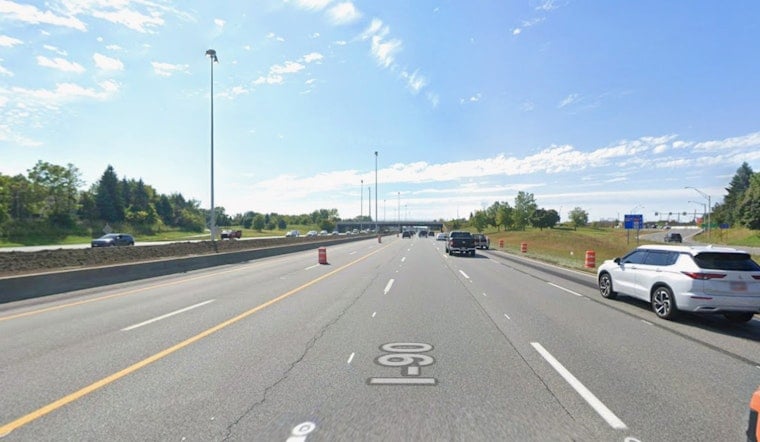
Cleveland is set to show off its first-ever highway crash attenuator truck Thursday afternoon, a specialized vehicle built to take the hit so firefighters, police, and road crews don't have to. The safety vehicle features a large crash cushion mounted on its back end that absorbs impact energy when struck, giving mobile crews and responding emergency personnel a physical buffer against oncoming traffic.
According to Cleveland 19 News, the attenuator truck is designed to park behind road crews or responding emergency personnel, warning oncoming drivers of the obstruction ahead while the cushion itself absorbs any impact energy from a vehicle that fails to stop or move over in time. The Cleveland Division of Risk Management, the Cleveland Department of Public Safety, and the Cleveland Division of Fire are all expected to provide additional details on how and where the truck will be deployed once Thursday's demonstration wraps up.
A Response to Years of Close Calls on Cleveland Freeways
The timing is no accident. Cleveland fire crews have repeatedly found themselves absorbing hits meant for someone else while blocking freeway lanes with nothing but standard engines and ladder trucks. In April, a Cleveland Division of Fire ladder truck was struck by a secondary vehicle while positioned to block traffic for police investigating a fatal crash on I-90 West near West 117th Street, an incident Hoodline covered in Corvette carnage on I-90.
That April strike wasn't an isolated scare. Just weeks later, a Cleveland driver died after slamming into a stationary work truck shielding a road crew on I-71 in Middleburg Heights, another close-range reminder of how vulnerable roadside crews remain even when a vehicle is already blocking for them. And the danger isn't limited to distracted passing drivers alone: in a separate incident on I-90 in Bratenahl in early August, an errant driver slammed into a stationary Ohio State Highway Patrol cruiser during a routine traffic stop, part of a pattern of vehicles striking parked emergency vehicles on Cleveland-area freeways.
The Tetrick Tragedy Looms Over the Decision
The push for dedicated crash protection carries painful local history. In November 2022, 27-year Cleveland Fire Department veteran Johnny Tetrick was struck and killed by a vehicle while assisting at an I-90 crash scene, a loss that led Governor Mike DeWine to sign legislation in December 2024 officially designating a section of I-90 in his memory. For years afterward, Cleveland first responders relied on standard emergency vehicles alone to block freeway scenes, without the kind of purpose-built crash cushion the city is unveiling now.
The stakes extend well beyond Cleveland city limits. Cuyahoga County recorded 2,660 work zone crashes between 2020 and 2024, ranking as the second-highest county for such collisions in Ohio, according to the Ohio State Highway Patrol. Statewide, Ohio logged 4,424 total work zone crashes in 2025, including 125 incidents directly involving Ohio Department of Transportation crews, vehicles, or equipment — a sharp jump from 84 such collisions the year before, per the Statehouse News Bureau.
Speeding Drivers and Escalating Penalties
Enforcement data underscores why physical barriers matter alongside tickets. Ohio State Highway Patrol troopers issued more than 30,000 citations in work zones between 2020 and 2024, with 74% for speeding and nearly 120 for drivers going 100 mph or faster, according to the Ohio Department of Transportation. Ohio also revised its Move Over Law in 2025, raising penalties for repeat offenders within a year to fines up to $1,000 plus potential jail time, and setting fines up to $10,000 for violations that cause a vehicular death, per the Robenalt Law Firm.
Even with tougher penalties on the books, transportation officials are leaning on engineering fixes too. The Ohio Department of Transportation began testing driverless, autonomous crash trucks equipped with rear attenuators in Marysville this year, using vehicle platooning so the trucks can trail maintenance crews without putting a human driver at risk. In March, ODOT requested $270,000 in state and federal research funding to study pairing attenuator trucks with adaptive messaging technology that could warn oncoming drivers before impact.
The federal government has already built a regulatory framework around these vehicles' sacrificial role. Federal Motor Carrier Safety Administration guidance specifies that when an errant vehicle strikes a deployed crash attenuator truck, it doesn't count as a reportable motor carrier accident for the truck's operator, since the cushion is explicitly designed to absorb impact rather than function as a standard commercial vehicle. Industry and federal safety evaluations cited by SPA Safety Systems show that truck-mounted attenuators reduce the severity and fatality rate of rear-end intrusions in work zones by 70% to 80%.
For Cleveland, Thursday's demonstration marks the moment theory becomes practice on local freeways. The city has not yet detailed exactly which stretches of highway will see the attenuator truck first, but officials say more specifics will follow the unveiling.





