

























































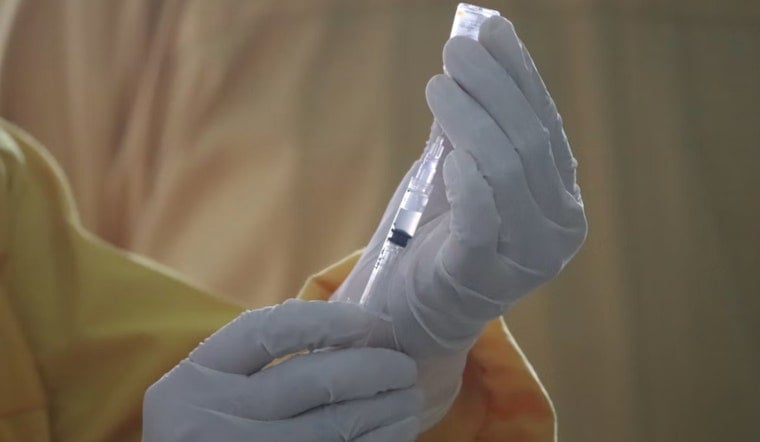
Cleveland's public health director is pushing back against a White House order reshaping the childhood vaccine schedule, warning it could unravel years of work that pushed the city's kindergarten vaccination rate from 68% to 76%. Dr. David Margolius, director of the Cleveland Department of Public Health, joined health leaders from other major U.S. cities this week to voice alarm over the policy shift, arguing it lands at the worst possible moment as measles cases surge nationwide.
The order at the center of the dispute, signed by President Donald Trump on August 10, directs the Department of Health and Human Services to pare the routinely recommended childhood vaccine schedule from 18 diseases down to 11, and it pushes for splitting the combined measles, mumps and rubella shot into three separate single-disease injections given at different visits, according to AHA News. Margolius and fellow health officials raised their concerns during a virtual press briefing held Tuesday by the Big Cities Health Coalition, an organization made up of leaders from the country's largest urban health departments, as reported by Cleveland.com. Panelists said the changes recommended in the order would leave children less protected, not more.
Cleveland's numbers illustrate what's at stake. Kindergartners in the city were up to date on vaccines at a rate of just 68% a few years ago, in 2023, but that figure climbed to 76% this past school year, per Margolius. He said the federal government's statements on vaccines could negate that progress, and stressed that childhood vaccines have been rigorously tested and that many have existed for decades. Margolius also said the MMR vaccine remains safe and easy to get, and it is currently administered in two shots.
A Technical Problem With the Federal Order
One obstacle facing the executive order's core recommendation is that it may not be possible to carry out. There are currently no monovalent single-disease vaccines for measles, mumps or rubella licensed by the Food and Drug Administration or manufactured in the United States, according to CIDRAP. Single-disease components were phased out and discontinued by manufacturer Merck back in 2009 in favor of the combination shot, leaving the order's call to administer childhood immunizations at separate appointments whenever possible without an obvious path to implementation.
Columbus Health Commissioner Dr. Mysheika Roberts, who also joined the briefing, said reducing and spacing out recommended childhood vaccines is not grounded in science. Roberts has reason to be blunt about the risks: a central Ohio measles outbreak that began in late 2022 infected 85 children, 94% of whom were completely unvaccinated, and led to 36 hospitalizations before it ended in early 2023, according to the CDC.
How Columbus Turned the Tide With Vaccine-Hesitant Parents
Roberts described how Columbus health care experts found effective ways to reach undervaccinated communities in the aftermath of that outbreak. Public health workers organized vaccine clinics in community locations such as recreation centers and churches, and began bringing autism experts to community vaccine education sessions after Columbus parents feared the MMR vaccine was linked to autism. Community members wanted to learn about vaccines before immunizations were offered, Roberts said, and per her account, those clinics increased vaccination uptake in low-vaccination communities in 2025 while also increasing parents' trust in public health and the health care system.
Baltimore Health Commissioner Dr. Michelle Taylor told the briefing she is following American Academy of Pediatrics childhood vaccine guidance rather than the Trump administration's vaccine order. Dr. Sean O'Leary, immunization schedule editor for the American Academy of Pediatrics Committee on Infectious Diseases, also took part. The American Academy of Pediatrics, which represents more than 67,000 pediatricians, joined more than 210 national medical and public health organizations in opposing the executive order, stating that delaying or separating childhood vaccines is scientifically unsupported and exposes children to preventable illness, per Sierra Sun Times.
A Record Measles Year, and a Widening Immunity Gap
The dispute is unfolding against a backdrop of the worst measles year in the U.S. in more than three decades. CDC surveillance data updated through August 14 shows 2,566 confirmed measles cases across 47 jurisdictions in 2026, already surpassing the 2,289 total cases recorded in all of 2025, per Drugs.com. The same CDC data, released the day of the coalition's briefing, found kindergarten vaccine exemptions hit a record 4.2% nationally during the 2025-2026 school year, with 24 states reporting exemption rates above 5% and non-medical exemptions accounting for most of the increase.
Nationwide, roughly 280,000 kindergartners entered school in the 2025-2026 year without documentation of completing the required two-dose MMR series, as coverage fell to 92.4% — well short of the 95% threshold epidemiologists say is needed to prevent sustained community spread. Cuyahoga County has already felt that gap directly this year, with a January outbreak among unvaccinated children and an August exposure alert at University Hospitals Rainbow Babies & Children's Hospital tied to an active regional outbreak, as Hoodline has previously reported.
Ohio's Broad Exemption Law Complicates Enforcement
Ohio law already gives parents wide latitude to opt out. Under Ohio Revised Code Section 3313.671, parents can exempt children from mandatory school immunizations for medical reasons, religious convictions, or general reasons of conscience, requiring nothing more than a written statement declining immunization. Margolius said some Cleveland residents who oppose measles vaccination believe measles is not a serious illness, a view that runs counter to the record outbreak numbers piling up nationally this year.
State lawmakers introduced House Bill 561, the Parental C.H.O.I.C.E. Act, in November, which would require K-12 schools that mandate vaccines to explicitly inform parents of exemption options and would bar schools from excluding healthy, unvaccinated students during active disease outbreaks. Health officials have warned that barring such exclusions raises exposure risks in schools during outbreaks. Ohio residents exposed to measles must currently prove they've been vaccinated to avoid quarantine, which Margolius said makes old vaccine records increasingly important as measles cases continue to rise.
What Cleveland Parents Should Do Now
The Cleveland Department of Public Health is urging parents with questions to ask their pediatrician rather than rely on shifting federal guidance. The department recommends contacting an elementary school or physician to track down past vaccination records for children whose immunization history is unclear. Officials also noted that pregnancy in a family is a good time to consider needed adult vaccines, since immunized adults help protect pregnant and newborn family members from exposure.




