

























































Cleveland Heights property owners along city-owned streets could soon pay significantly more to keep the city's tree canopy trimmed and maintained. City Council is weighing a plan that would raise the combined tree and street-lighting assessment from $2 to $2.60 per front foot, a 30% jump that would push the annual bill for a standard 50-foot lot from $100 to $130.
The bulk of that increase comes from the tree and forestry portion of the assessment, which would rise from $1.08 to $1.68 per front foot — a 55% jump — while the street-lighting assessment would hold steady at $0.92 per front foot, according to Cleveland.com. City staff recommended the split after reviewing the finances behind both funds, the outlet reports, and the tree and forestry assessment has remained unchanged for more than a decade.
The assessment applies to properties with frontage along a city-owned street, and the revenue helps cover forestry department salaries and maintenance costs. Both the tree and street-lighting assessments have been in place for more than 40 years, but rising personnel and operating costs have caused tree fund expenditures to exceed revenue over the past 12 years, per the same account.
Why the Tree Fund Is Running Dry
Finance Director Joe Brodzinski, who took over the post in February after Council unanimously confirmed him, has said tree fund expenditures have begun outpacing revenue, according to the same report. City officials project the fund would eventually fall into a negative balance without an increase. By contrast, Brodzinski has said the street-lighting fund is projected to remain financially stable for the next several years at its current revenue level, which is why officials are proposing to leave that portion of the assessment untouched.
If approved, the proposed street-lighting assessment would generate approximately $1.73 million, while the forestry assessment would bring in about $3.17 million over the two-year assessment period. The new rates would apply for two consecutive years, appearing on the 2026 tax duplicate for collection in 2027 and 2028.
A Long Road Through State Law
Ohio law lays out a detailed process cities must follow before raising special assessments like these. Under Ohio Revised Code Sections 727.01 and 727.011, municipalities are authorized to levy assessments on property along public rights-of-way specifically to fund the planting, care, trimming, and removal of shade trees. That statutory framework requires a series of steps, including necessity resolutions, a public objection window, and review by an independent equalization board.
Cleveland Heights City Council took the first of those steps on June 1, when it passed Resolution No. 100-2026 and Resolution No. 101-2026, declaring the assessments necessary at the proposed rates for tax years 2026 and 2027, according to the City of Cleveland Heights. That action opened a window for property owners to formally object to their estimated assessments.
At least three property-owner objections are now before the Assessment Equalization Board, per Cleveland.com. On July 6, Council passed Resolution No. 134-2026(F), appointing three Cuyahoga County residents from outside Cleveland Heights — Rich Petrunyak of Lyndhurst, John Potts of Shaker Heights, and Larry Heiser of Beachwood — to serve on that board, as required under state law governing disinterested property owners from outside the assessing municipality. Board members serve on a voluntary, unpaid basis.
Objection Hearings Set for Monday
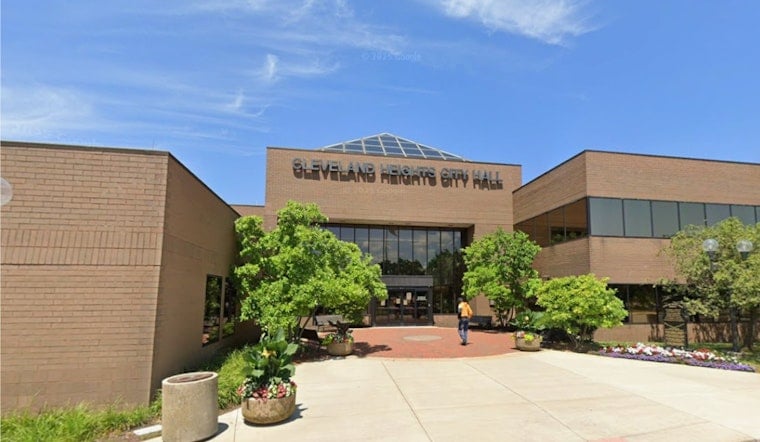
The Assessment Equalization Board has scheduled its official objection hearings for Monday from 1 p.m. to 2:30 p.m. in the Executive Conference Room at Cleveland Heights City Hall, according to the city's public calendar. After hearing the objections, the board will submit final determinations, a report, and recommendations to Council, which will then be asked to accept the board's findings before voting to levy the assessments.
Council is expected to consider the assessment measures on first reading Monday during its regular meeting, which begins at 7:30 p.m. at Cleveland Heights City Hall, 40 Severance Circle. The city must certify the final assessments to Cuyahoga County by September 14, meaning property owners could begin paying the higher rates in 2027.
A Canopy the City Has Long Protected
The proposed hike arrives even as Cleveland Heights touts its forestry credentials. The city notched its 48th consecutive year as a Tree City USA designee in 2026, an Arbor Day Foundation distinction that requires municipalities to maintain a forestry department, spend at least $2 per capita on urban forestry, and observe Arbor Day, according to the City of Cleveland Heights. The city's tree canopy also sits well above the countywide average of 34.7%, according to the Cuyahoga County Planning Commission, putting it among the region's leading inner-ring suburban canopies and standing in sharp contrast to neighboring Cleveland's 17.9% coverage.
City officials are also weighing longer-term forestry planning. In May, the Cleveland Heights Climate and Environmental Sustainability Committee reported that the city is preparing to issue a Request for Proposals for an Urban Forestry Master Plan and developing plans to establish a municipal Tree Commission, per the City of Cleveland Heights.
The proposed assessment increase also lands amid broader budget pressure across Cleveland Heights. Hoodline previously reported that municipal briefings in March revealed unbudgeted invoices, unexpected legal liabilities, and an ongoing review of dozens of special funds citywide. The city has also recently expanded other infrastructure spending, increasing its road resurfacing fund to $5.1 million and approving a $3.3 million street paving contract in April.



