

























































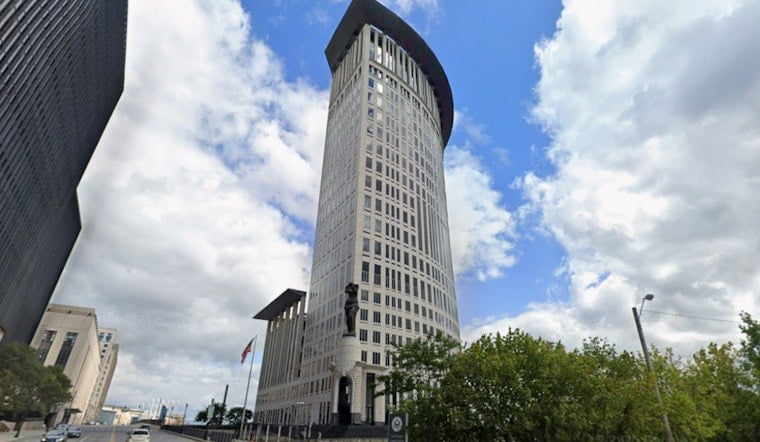
A 40-year-old Cleveland man who threatened to kill everyone inside a Social Security office on Waterloo Road walked out of federal court this week with no additional prison time, after a judge cited his severe mental illness and the eviction and benefit delays that preceded his outburst. Aharon Schur was sentenced to four months of time served, the same amount of time he had already spent in jail, along with three years of supervised release.
According to Cleveland.com, Schur missed a Social Security payment in October 2025 after changing his bank account the previous month, and the check still had not appeared in his account by the next morning. He called the Cleveland Social Security office on Waterloo Road on October 6, 2025, and threatened to attack workers and kill everyone inside the building, the outlet reported. Federal prosecutors focused their case on those threats against Social Security employees.
Schur was directed to return to the Waterloo Road office in person, where he checked in with security and then waited between three and six hours for assistance, per the report. While there, he again threatened to kill everyone at the office and also threatened to burn down the building. U.S. District Judge J. Philip Calabrese, who was confirmed to the Northern District of Ohio bench in December 2020 after serving on the Cuyahoga County Court of Common Pleas, presided over the case.
A Frantic Bid for Emergency Help
Schur's attorney, Timothy Kucharski, said his client was trying to get a “dire need” designation from the agency — an official Social Security Administration mechanism that allows for expedited processing or immediate advance payments when a claimant faces an imminent threat to health or safety, such as eviction or lack of food. Schur was facing eviction and said he needed the money to help care for his son amid a custody dispute, according to the report.
Kucharski said Schur sat quietly at the office while waiting for help and described his client's outbursts as venting born out of frustration rather than genuine threats. The attorney said Schur never issued specific threats and has a long history of mental illness, including a diagnosis of bipolar disorder, the outlet reported.
Schur told the court he felt manipulated, recalling that he was told “1 plus 1 equals 3” during the ordeal, and said he would never hurt anybody. He expressed shame about his actions and said he has started a new mental health treatment regimen that he says works, according to the report.
Why Threats Against Federal Workers Carry Steep Penalties
Federal law makes clear that threatening a federal officer or employee is a serious crime regardless of whether the person threatening actually intends or is able to carry it out. Under 18 U.S.C. §§ 115 and 111, threatening to assault, kidnap, or murder a federal official can carry a maximum of five to ten years in prison, according to the Legal Information Institute and Federal Lawyers. The U.S. Department of Justice's own guidance notes that prosecutors only need to prove a credible threat was communicated with intent to impede or retaliate against a public official — not that the defendant had the actual capability to follow through.
Judge Calabrese's decision to impose time served rather than additional prison time echoes his approach in a similar case from the same federal district. In November 2021, he sentenced a Warren, Ohio man to three years of probation after that man pleaded guilty to leaving violent, threatening voicemails for a Social Security Administration contractor during a benefits dispute, according to the U.S. Attorney's Office for the Northern District of Ohio.
Schur's Prior Brushes With the Law
This is not Schur's first serious criminal case in Cuyahoga County. In August 2020, a county grand jury indicted him on state felony charges including vandalism, criminal damaging, and aggravated riot, stemming from allegations that he damaged a Cleveland police cruiser and used a claw hammer on a Justice Center security terminal during protests on May 30, 2020, according to Patch. Cleveland Housing Court records also show a Cleveland property management company filed an eviction lawsuit against Schur in September 2023, documenting a history of housing instability that predates the eviction threat cited in his more recent defense.
A System Under Strain
Schur's case unfolded against a backdrop of well-documented delays at Social Security field offices nationwide. The agency maintains fraud-prevention protocols on direct deposit changes that trigger mandatory identity verification, often delaying payments by one to two cycles when beneficiaries switch bank accounts, according to reporting from 24/7 Wall St. That mechanism helps explain why Schur's payment failed to arrive after he changed accounts in September 2025.
Those payment holds have coincided with mounting service backlogs across the agency. An August 2024 report from the Social Security Administration's Office of the Inspector General found record backlogs and service delays at field offices nationwide, driven by staffing levels that had fallen to a 50-year low even as the agency served a record number of beneficiaries, according to The Guardian. The Waterloo Road field office, located in Cleveland's Collinwood neighborhood, is one of four primary Social Security offices serving Cuyahoga County's East Side.
As part of his supervised release, Schur is barred from using drugs or alcohol and must continue mental health treatment. The three-year term of post-prison supervision is meant to balance accountability with the rehabilitation Kucharski argued his client needs going forward.





