

























































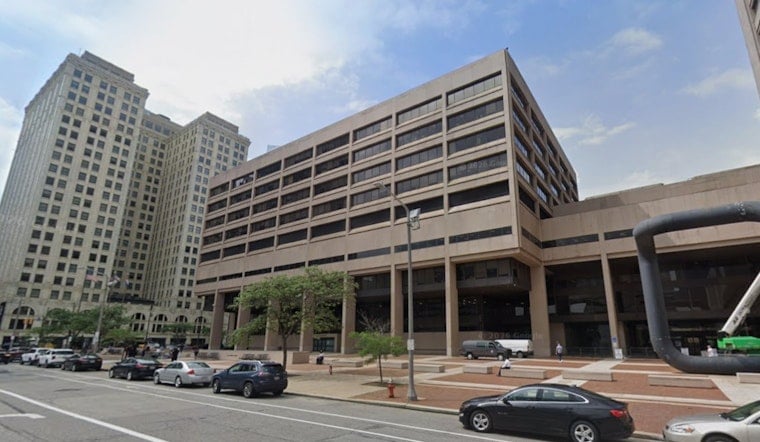
Cleveland's Community Police Commission ground to a halt again Wednesday, recessing for one hour and 15 minutes after former commissioner Teri Wang refused to leave the meeting room and a confrontation between her and a local pastor appeared close to turning physical. Police officers eventually asked everyone in the room to clear out, and Wang left with a disorderly conduct citation in hand — the latest flashpoint in a standoff that commissioners say has stretched on for more than two years.
The disruption unfolded after Wang used her public comment time to level accusations against the commission and Pastor Aaron Phillips, director of the Cleveland Clergy Coalition, according to Signal Cleveland. Commission Chair Maya Kincaid said the panel simply cannot function under the current conditions, telling the outlet that Wang “makes accusations, slanders people, defames people and refuses to yield her time.” Kincaid added bluntly that the commission cannot get its work done as things stand.
Commission Executive Director Shalenah Williams reported in an email that staff, commissioners and members of the public have experienced panic attacks, anxiety attacks and fear for their physical safety amid the ongoing disruptions. Williams has said the commission has faced severe, persistent disruptions from Wang for more than two years, and she warned the city law department in June about Wang's escalating behavior. Wang herself pushed back in a Facebook post the day before the meeting, writing that critics are trying to silence her instead of addressing alleged corruption. She has separately argued that her comments amount to dissent protected by the First Amendment, once telling the commission at a May 2025 meeting, “It's not disruption, it's dissent.”
A Pattern Stretching Back Years
Wednesday's blowup was far from the first. In May 2025, the commission's Accountability Committee recessed a meeting entirely because Wang repeatedly called out and ignored demands for order, leading to a 90-minute recess. In May 2026, Wang barged into a closed-door executive-session commission meeting, prompting Commission Chair Mark Griffin to remind the panel of Ohio law governing executive sessions. Wang has also accused the commission of violating Ohio's open meetings laws.
The commission's history with Wang runs deeper still. In February 2024, the panel's Rules Committee voted to strip her of her role as committee chair over concerns about committee management and persistent internal friction, according to Signal Cleveland. Later that year, commissioners John Adams and Sharena Zayed asked Mayor Justin Bibb to remove Wang from the commission, but Bibb did not do so. When Wang's term expired in 2024, she was not reappointed.
Protective Order and a Special Prosecutor
Phillips obtained an emergency civil order of protection against Wang, he told the outlet, after the confrontation Wednesday nearly turned physical before officers intervened. Williams has requested a formal review seeking a sworn criminal warrant against Wang and has separately asked Griffin to bar her from commission meetings entirely until a permanent solution is in place — a request Griffin rejected in a letter, according to the same report. Griffin has said commission meetings must remain safe and open to all.
The city's law department hired Edward Fadel, a former assistant county prosecutor, as a special prosecutor in 2025 to investigate the disruptions involving Wang. Sarah Johnson said Fadel will investigate Wednesday's events and recommend whether charges are warranted. Fadel has not brought charges to date. Wang did receive a disorderly conduct citation following the August 26 meeting, and according to Johnson, a 2025 citation against Wang was part of a deferred prosecution agreement — though John Adams has since disclosed that Wang never actually signed that agreement, leaving unresolved questions about what, if any, enforcement mechanism has been in place. Wang, for her part, has said, “If they stopped lying, I wouldn't have to say anything.”
What Ohio Law Allows
Ohio law offers city prosecutors more than one path here. Under Ohio Revised Code Section 2917.11, disorderly conduct that persists after a reasonable warning can escalate from a minor misdemeanor to a fourth-degree misdemeanor carrying up to 30 days in jail and a $250 fine, according to Jay Perez Law. Separately, Ohio Revised Code Section 2917.12 designates disturbing a lawful meeting through acts that obstruct or interfere with its conduct as its own fourth-degree misdemeanor offense, per the state's codified laws.
City officials have also weighed physical security measures. Griffin has recommended police presence, sign-in procedures, security screening, designated seating, separation of parties, comment time limits, recesses, and removal of disruptive individuals as tools for managing meetings going forward. The city has said it plans to send police officers to future commission meetings, and officers did intervene Wednesday when the Wang-Phillips confrontation appeared close to becoming physical. Even so, the federal monitoring team overseeing Cleveland's consent decree reported earlier this month that the city still had no formal plan in place for handling meeting disruptions.
A Watchdog Under Broader Strain
The commission was established in 2015 under Cleveland's federal consent decree, and in November 2021 voters approved Issue 24, amending Charter Section 115 to grant the commission final authority over police discipline, training and policy — independent of the police chief, according to Ballotpedia. U.S. District Judge Solomon Oliver Jr., who oversees the consent decree, denied a joint motion by the city and the Department of Justice in May to end federal supervision, finding that local oversight mechanisms had not yet achieved full compliance, as previously reported by Hoodline.
The commission's governance troubles are not new. In December 2024, six members' terms expired and three resigned early, leaving only four active commissioners and forcing City Council into emergency vetting to rebuild the 13-member panel, according to Cleveland Scene. That instability has coincided with turnover atop the city's broader accountability apparatus: Public Safety Inspector General Shayleen Agarwal resigned in July after less than two years in office, citing persistent ambiguity about the structural stability of municipal watchdog agencies. The Fraternal Order of Police has also warned it may sue the city over the commission's newly adopted discipline review rules, arguing they conflict with collective bargaining agreements.
Amid the turmoil, the commission did note one bright spot Wednesday: it received a $35,000 grant for youth job training. But the persistent disruptions continue to overshadow the panel's substantive work, including its role in a set of independent community perception surveys launched in May alongside the Mayor's Police Accountability Team and the federal monitoring team, a rollout that itself raised concerns about redundant outreach and survey fatigue.





