

























































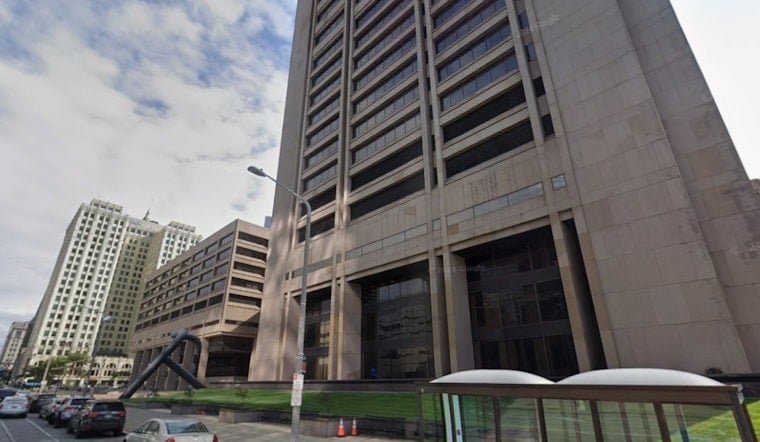
A 29-year-old man died in the parking lot of Cleveland's Fifth District police headquarters last month during what began as a child custody exchange, and no security camera captured what happened. That gap sits at the center of a new investigation into whether Cleveland's police stations, of all places, actually have working exterior surveillance.
The victim, identified as Marcus Driggins Jr., was shot and later died at University Hospitals Cleveland Medical Center after a dispute at the station's parking lot, according to WKYC. Police say the confrontation started as a verbal dispute before Driggins allegedly rammed a vehicle carrying the mother of his child twice as she tried to reach the station for help. The Fifth District headquarters had no camera capture of the deadly shooting that followed, according to reporting from FOX 8 News, whose I-Team investigation, led by reporters Ed Gallek and Peggy Gallek, uncovered the security gap at some Cleveland police stations.
Cuyahoga County prosecutors are reviewing the shooting, and the case may go to a grand jury, per the FOX 8 report. A self-defense review committee will also consider the incident. Ohio Revised Code § 2901.05, revised in 2021 to eliminate the duty to retreat, puts the burden on prosecutors to prove beyond a reasonable doubt that a shooter did not act in self-defense when using lethal force against what they believed was an imminent threat, according to USA Carry. Without video, that legal calculus becomes harder for investigators to resolve either way.
A Pattern Beyond One Station
The Fifth District isn't an isolated case. The FOX 8 I-Team found the Second District headquarters also had no camera capture of a shooting outside that building in 2023 — the only footage available showed the inside of the lobby, with nothing outside it. Chairman Kenneth Taylor said the incident represented a breach of public trust, and he told the station he will continue pursuing the issue.
The I-Team filed a request for security video from outside all five Cleveland police district headquarters. The results were uneven: cameras at the Third District near downtown recorded multiple outside views, while other districts came up short. Cleveland police were asked directly whether working security cameras cover the parking lot and front door of every station, and the department's answer was, specifically, no.
Police did tell the I-Team that security cameras are strategically placed throughout Cleveland Division of Police district facilities, according to Sgt. Freddy Diaz. But the department said it will not disclose specific camera locations, citing the need to protect the safety and security of officers, employees, and members of the public.
Council's Safety Chair Wants Fast Fixes
Cleveland City Council Public Safety Chairman Michael Polensek said a city official told him most police district stations do not have cameras outside. Polensek said everyone would assume cameras are already installed at police district stations, and he called the gap something that has to change. He promised to fix the lack of exterior cameras and said he plans to work quickly to install them, adding that doing so must now be a priority.
Polensek has pushed for more video transparency in Cleveland policing before. In June, he proposed legislation that would require the police department to publicly release body-camera footage within 24 hours of any deadly force incident, arguing that prompt release builds public trust and reduces community suspicion of cover-ups, according to FOX 8 reporting at the time.
A City That Watches Everything Except Its Own Lots
The camera gap is jarring given how much Cleveland has invested in surveillance elsewhere. The city has spent more than $7 million since 2007 to deploy roughly 1,500 municipal surveillance cameras citywide, though officials have historically kept exact camera locations and capabilities confidential, according to The Marshall Project. Just weeks before the Fifth District shooting, City Council voted 9-6 to extend its contract with license-plate camera vendor Flock Safety for six more months, this time with strict new guardrails barring data sharing with outside agencies, as reported by WOSU Public Media. Cleveland maintains around 100 of those license-plate cameras to track vehicles tied to violent crime.
The Cleveland Division of Police oversees five district headquarters across 82.5 square miles with roughly 1,250 sworn officers serving a population of more than 370,000, per Wikipedia. The Fourth District logs the highest volume of emergency calls and violent crime among the five districts, followed by the Second District, according to Signal Cleveland — the same Second District where a 2023 shooting also went unrecorded outside the station.
Why Custody Exchanges End Up at Police Stations
Parents in high-conflict custody situations often default to police station parking lots for handoffs, assuming a police presence means video monitoring — even where no formal infrastructure exists. Some neighboring Cuyahoga County suburbs have built exactly that kind of infrastructure: Brecksville, Shaker Heights, and Parma have each established designated 24-hour Safe Exchange Zones at their police headquarters, equipped with video surveillance for custody handoffs and online sales, according to the Brecksville Police Department.
Cuyahoga County also has a dedicated alternative for families who want to avoid direct contact altogether. The Journey Center for Safety and Healing runs a free Safe Exchange Program that uses trained staff and staggered departure times so parents in high-conflict situations never have to interact face to face, per News 5 Cleveland. The organization serves roughly 20,000 people annually across the county through its domestic violence and family safety programs.
For now, the central question raised by the I-Team's reporting remains open: whether Cleveland will move as aggressively to secure its own station lots as it has to expand surveillance across the rest of the city. Polensek's promise to install exterior cameras quickly has yet to translate into a timeline, and the Fifth District case continues to sit with prosecutors and a self-defense review committee, still missing the one piece of evidence that might have settled it outright.





