

























































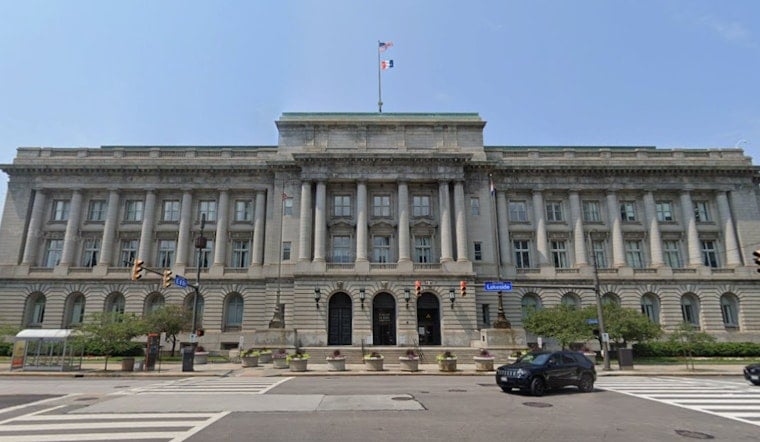
Michael Anderson spent more than a decade pushing Cleveland officials to change how the city responds to mental-health emergencies, work that began the night his niece Tanisha Anderson died in police custody in November 2014. That advocacy finally produced Tanisha's Law, an ordinance that establishes a Bureau of Crisis Response within Cleveland's Division of Emergency Medical Services and tasks an EMS deputy commissioner with expanding the city's mental-health crisis-response system.
Tanisha Anderson was 37 and lived with bipolar disorder and schizophrenia when her family called 911 on November 12, 2014, asking for an ambulance to take her back to the hospital, according to Signal Cleveland. A dispatcher sent police instead of an ambulance. Officers restrained Anderson on a sidewalk for at least 21 minutes, per the investigation into her death, and she was pronounced dead at a hospital soon after midnight. The Cuyahoga County Medical Examiner ruled in 2015 that her death was a homicide caused by restraint, a finding that also cited ischemic heart disease and bipolar disorder with agitation, according to WKYC.
A Cuyahoga County grand jury cleared the two responding officers of criminal wrongdoing, but Cleveland Safety Director Michael McGrath later imposed internal discipline, suspending Officer Scott Aldridge for 10 days without pay and giving Officer Bryan Myers a written warning after internal affairs found they failed to provide adequate medical assistance, WKYC reported in March 2018. The Anderson family sued Cleveland and the officers in federal court, and the city settled the lawsuit for $2.25 million in 2017, according to the same account from Signal Cleveland.
An Uncle's Vow Becomes a Movement
Michael Anderson, Tanisha's uncle, vowed to prevent tragedies like his niece's death. He had stopped using intravenous drugs in 2007, and after another advocate, Cassandra Johnson, died in 2021, he resumed the work of building his niece's legacy. Anderson has six children of his own, and told Signal Cleveland that the law ends the practice of Black women being thrown to the sidewalks and dying.
The Case Western Reserve University Social Justice Institute connected Anderson with law-school students, whose group, the Student Legislative Initiative of Cleveland, formed in 2020 to support local public-safety policy work. Those students researched crisis-response training, 911 dispatch systems, and approaches used in other cities, ultimately proposing two paths forward: police-training and co-response legislation, or a broader care-response bill. Anderson chose the broader care-response approach.
By July 2024, Anderson and his supporters sent Mayor Justin Bibb a letter urging his administration to commit to expanded crisis-response options. Advocates had already organized that year under the Care for CLE Coalition banner, which backed community input into a county-led care-response pilot program. City council members introduced the bill that would become Tanisha's Law that November, with sponsors Stephanie Howse-Jones and Charles Slife leading the effort — a milestone Hoodline first reported at the time.
An Administration Pushes Back
The Bibb administration opposed Tanisha's Law as initially written. Cleveland's public safety department argued that a new city department was structurally unnecessary and would create duplicative bureaucracy, and said it needed more time to analyze 911 call data to determine the actual scope of need. Howse-Jones publicly criticized the administration's delays, noting that federal funding for a 911 call analysis had reportedly been secured almost two years earlier.
The tension echoed findings the U.S. Department of Justice had already made about Cleveland police in 2014: that the department had a pattern of unreasonable force against people with mental illness, that too few officers had received crisis-intervention training, and that the city had no system to prioritize CIT-trained officers for mental-health calls. Those findings led to a May 2015 federal consent decree between the DOJ and Cleveland that mandated an overhaul of use-of-force policy and created the Mental Health Response Advisory Committee, per the City of Cleveland Department of Public Health. The Cuyahoga County ADAMHS Board, which had co-managed that committee since its creation, stepped back from the role in November 2022, transferring sole oversight to the city's health department, according to Signal Cleveland.
Cleveland police had already tried incremental fixes. The department launched a co-response program pairing a mental-health professional with an officer in 2020 and expanded it in 2022. Dispatches involving CIT-trained officers climbed from 9.4% of crisis calls in late 2020 to nearly 37% by late 2023, though the city's Bureau of Communications still processes more than 300,000 emergency 911 calls a year, leaving dispatchers as the first point of triage for deciding whether to send police, EMS, or another response.
Compromise and Passage
After the bill was assigned to the city council's safety committee, sponsors and supporters reached a compromise: rather than creating an entirely new city department, they placed the Bureau of Crisis Response within Cleveland EMS, with its head serving as an equal to the public safety director. Howse-Jones worked with then-council member Rebecca Maurer and Slife on refining the bill's language. Council member Mike Polensek announced the legislation would get a council vote early in the new year, and Cleveland City Council approved Tanisha's Law after more than a year of legislative work.
Bibb signed the ordinance at Case Western Reserve University's School of Law in February, apologizing to the Anderson family as part of the signing. In June, the city hired Maureen C. Malavé to lead the new bureau; she has previously worked at USAID and New York City's Department of Health and Mental Hygiene. Per a city spokesperson, Malavé is now establishing operations within the bureau.
Regional Momentum Builds Around the New Law
Cleveland's move follows years of related reform efforts across Cuyahoga County. The county's First Call Cuyahoga Community Co-Response Startup Fund now offers municipalities up to $50,000 annually — as much as $150,000 over three years — in opioid settlement revenue to launch behavioral-health co-response teams pairing public safety personnel with licensed clinicians, according to the county's Department of Public Safety & Justice Services. Nearby Parma and Parma Heights have already begun embedding social workers directly into 911 crisis calls under that initiative, as Hoodline reported last month.
Cleveland also received a $550,000 Department of Justice “Connect and Protect” grant in September 2023 — later expanded past $800,000 with local matching funds — to modernize its 911 dispatch center and embed mental-health clinicians into emergency dispatching, though implementation faced years of local delays, according to Policy Matters Ohio. National research on similar unarmed civilian crisis models, including Denver's STAR program and Eugene's CAHOOTS, has found they resolve nonviolent mental-health emergencies without police backup in roughly 97% to 99% of dispatched incidents, according to the Center for American Progress.
How quickly Cleveland's new bureau can recruit staff, train dispatchers to properly screen crisis calls, and coordinate with the county's co-response funding streams to ensure coverage citywide remains an open question. For Michael Anderson, the law's passage marks the end of one fight and the start of watching whether the system he helped build actually works the way it was designed to.





