

























































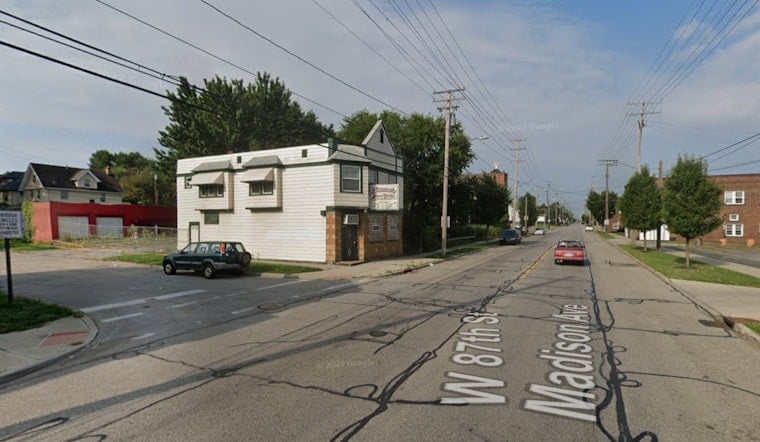
About 30 residents packed into Spotlight Cleveland at 8701 Madison Ave. on July 22 to grill city officials over vacant buildings, aggressive code violators and a controversial surveillance camera program that has divided Cleveland's West Side. The Ward 11 community meeting, covering the Cudell, Edgewater, Detroit-Shoreway, West Boulevard and parts of Brookside/Old Brooklyn neighborhoods, surfaced complaints ranging from a 15-owner condemned apartment building to an American citizen's detention by federal immigration agents.
Among the most striking accounts came from Council Member Nikki Hudson, who represents Ward 11, who said U.S. Immigration and Customs Enforcement detained an American citizen from the ward on Ridge Road, according to Signal Cleveland. Yariel Camacho, a field representative for U.S. Rep. Shontel Brown's office, offered assistance navigating federal agencies in response to residents' concerns about immigration enforcement touching their neighborhood.
The detention account fed into a broader discussion about the city's use of Flock Safety license-plate cameras, a topic that has simmered in Cleveland for months. Hudson was one of six council members who voted against a $125,000, six-month extension of the city's Flock contract in July, citing privacy concerns, and the city says it will stop sharing camera data with outside agencies and will consider contracts with other automated license-plate-reader companies going forward.
Flock Debate Echoes Regional Privacy Fights
Cleveland's Flock decision follows a winter in which the city already hit pause on an earlier expansion of the camera program after residents objected, a reversal Hoodline covered in February. The debate is not unique to Cleveland: neighboring Cleveland Heights passed emergency legislation in April capping Flock data retention at 30 days and explicitly barring data sharing for civil immigration enforcement, part of a wider regional reckoning over how license-plate readers are used and by whom.
City officials at the Ward 11 meeting also touched on a separate, ongoing research partnership meant to address trust between police and residents. Elias Nader, an assistant professor at Kent State University, told attendees the university and the city's police accountability team have launched a joint policing research initiative collecting Clevelanders' opinions on police, public safety and neighborhood problems. Nader said the research is not really related to Cleveland's consent decree, which has been in effect since May 2015.
Nader said the team plans to add focus groups in September or October, with data collection and analysis wrapping up in fall 2026. Kent State will send results to the city and other stakeholders and publish an aggregated report publicly, and the research team also plans to develop workshops on police trust-building and conflict management. Nader and Kent State students collected survey data from attendees after the meeting concluded.
A Condemned Building and 23 Nuisance Calls
Housing enforcement dominated much of the evening. Toni Allen, administrative manager for Cleveland's Department of Building and Housing, and Tajuana Harris, the department's project coordinator, fielded questions about vacant and nuisance properties, a top concern among Ward 11 residents. One community member reported 23 separate calls about a neighborhood nuisance property, and Allen said she would follow up on the specific address raised.
The property at 9212 Madison Ave. emerged as a case study in the difficulty of holding absentee owners accountable. The building was condemned after being owned by 15 separate Turkish owners who have since been consolidated into one entity, according to the same Signal Cleveland report. The city is now working with those owners to find a buyer willing to rehabilitate the structure rather than let it sit vacant.
Under a 2025 update to Cleveland's nuisance ordinance, a property that racks up five nuisance-activity calls within a year receives a warning letter, and owners face fines if the nuisance activity continues afterward. The revised law, which replaced a 2018 version council members found difficult to enforce, lowered the threshold for designating a criminal nuisance by letting police and the safety director act on probable cause and repeated 911 calls without requiring a formal arrest.
Lead-Safe Rules and a $70 Registration Fee
Officials also walked residents through Cleveland's rental compliance rules, which apply broadly across the city's aging housing stock. All properties built before 1978 must have lead-safe certification, and rental properties with four or more units must carry HVAC certification. Rental properties must register for a $70 per-unit fee, and Allen said owners can register and pay that fee before submitting all required documents. Owners can also satisfy part of the process by providing utility-bill documentation, and rental properties owned by people outside the area must designate a local agent who lives in Cuyahoga, Summit, Lake, Portage, Medina, Lorain or Geauga county.
The compliance push comes as the city's lead-safe numbers have slipped. Roughly 90% of Cleveland's residential housing stock predates the 1978 federal ban on lead-based paint, a legacy tied to elevated blood lead levels in local children at rates roughly four times the national average, according to HUD User. Active lead-safe certified rental units citywide dropped to roughly 24,700 as of April 2025, down from 31,000 in December 2023, as thousands of initial two-year certifications lapsed without renewal. Compliance is worst among small landlords: only 12% of single-family and 9% of two-family rentals held active certifications as of 2024, compared with 44% among buildings with 10 or more units, per city Building and Housing Department data.
Those enforcement gaps have real consequences for tenants. Unsafe rental units receive a vacate order, forcing tenants out, and the rental registration program requires every requirement to be met before the city will issue a rental-occupancy certificate. The stakes for the city's broader lead abatement efforts were underscored in February, when the State of Ohio clawed back $3.3 million of a $4.9 million grant after municipal agencies failed to spend the funds on removing lead paint hazards before the state's deadline.
Stalled Housing Project on West 74th Street
Residents also asked about the vacant lot at West 74th Street and Detroit Avenue, a 2-acre parcel owned by the Cleveland Metropolitan School District that is now being transferred to the City of Cleveland. Hudson said an affordable-housing project planned for the site does not seem to be happening because of the Trump administration's clawback of greenhouse gas funding, and her office supports only affordable housing for the site going forward. The property had previously been approved in July 2025 for an $88.2 million mixed-use redevelopment containing 136 affordable units before the federal funding shifts stalled the project, according to NEOtrans.
Not every issue raised at the meeting fell under city control. Officials noted that property taxes are a state and county issue, and Cleveland school funding challenges are governed at the state level, tied to an Ohio public-school funding system that was deemed unconstitutional decades ago. Sidewalk maintenance, by contrast, remains a local responsibility split between owners and the city: sidewalk upkeep belongs to the property owner, though Cleveland runs a 50/50 program splitting replacement costs and a separate program to shave and sand sidewalk tripping hazards.
On the infrastructure side, residents got some concrete news: Willard Avenue from West 85th Street to West 98th Street will receive resurfacing and speed tables, and every other Ward 11 street slated for resurfacing will get speed tables as well. By the meeting's end, residents showed interest in continuing to use the problem-properties roundtable format to keep pressure on the mix of code enforcement, housing and surveillance issues shaping the ward.





