

























































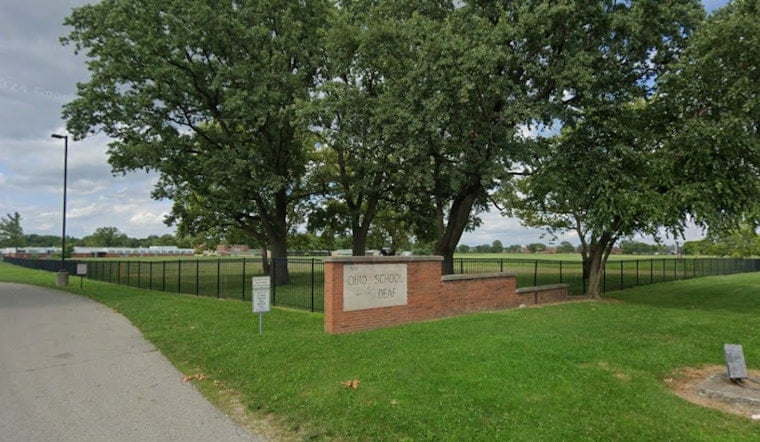
A state plan to build a drivable and walkable bridge through one of Clintonville's last untouched ravines is drawing pushback from residents who fear the project will carve into 76 acres of protected land along Bill Moose Run. The proposed connector would link the Ohio State School for the Blind and the Ohio School for the Deaf, two campuses separated by the ravine that currently forces students and staff to leave state property and cross public streets to move between them.
The roadway proposal, first reported by The Columbus Dispatch, has already secured significant state funding. Ohio's FY 2027–FY 2028 capital budget set aside $10.1 million for construction of the bridge and connecting roadways, building on $3.5 million appropriated in the prior two-year budget for preliminary engineering and design, according to the Ohio Legislative Service Commission. Bill Moose Run bisects the state-owned campus, and the Ohio School for the Deaf sits at 500 Morse Rd. while the Ohio State School for the Blind is located at 5220 N. High St., with the ravine currently forcing anyone traveling between them onto public traffic.
Momentum behind the project is already visible in state contracting records. In July, the state agency Ohio Deaf and Blind Education Services asked the Controlling Board to release $130,764 to hire Medina County-based construction manager The Ruhlin Company for preconstruction work on the bridge, per state records. The funding push follows facility condition assessments completed in 2023 and 2024 that found obsolete campus buildings beyond repair, prompting the state to pair the bridge project with demolitions aimed at cutting deferred maintenance and insurance liabilities.
A Ravine With Deep Roots
Bill Moose Run is one of six natural glacial ravines that cut through Clintonville toward the Olentangy River, and four of the others have already been reshaped by roads or residential development, according to Kiddle. That scarcity is part of why the remaining, largely undisturbed stretch carries outsized weight for conservation-minded neighbors watching the bridge proposal move forward.
The ravine's name carries its own history. It is named for Bill Moose, remembered as the last Wyandot Indian in central Ohio, who lived and hunted along the creek before his death in 1937 at age 100, according to the Clintonville Spotlight. The site has also drawn sustained volunteer investment: Friends of the Lower Olentangy Watershed has planted more than 1,600 trees and organized trash cleanups on the school grounds as part of ongoing conservation work along the corridor.
The ravine's seclusion has made it something of an urban wildlife refuge, a role that has surfaced before at the Clintonville Area Commission, where residents have raised concerns about deer overpopulation and reports of unauthorized poaching on state land. Hoodline has previously reported on Clintonville's deer disputes, underscoring how the neighborhood's remaining green corridors, including Bill Moose Run, have already been a flashpoint over wildlife and land use.
Public Comment Set For September 2
The immediate flashpoint for residents arrives soon. The Franklin Soil and Water Conservation District announced Thursday that it will hold a public open house on September 2 to present historical and environmental data on a proposed amendment to the 76-acre Bill Moose Run Conservation Easement and to collect resident feedback, the district said in an announcement. That session represents the first formal opportunity for the community to respond directly to a possible change in the easement that currently protects the ravine.
Any modification to the easement will require its own administrative process separate from the construction contracts already underway, meaning the preconstruction work awarded to The Ruhlin Company does not by itself guarantee the bridge proceeds as designed. Some Clintonville residents are pushing back on the roadway proposal specifically because it would run through the protected ravine, according to the Dispatch's reporting on the plan.
Historic Institutions, Modern Debate
The schools at the center of the project carry their own long history in Ohio. The Ohio School for the Deaf was founded in 1829, and the state established the Ohio State School for the Blind through legislative action in April 1837 as the nation's first state-supported residential school for visually impaired students, according to Remarkable Ohio. That history frames the current debate as a clash between generations-old public institutions seeking safer, more efficient connections between their campuses and a conservation easement meant to preserve one of the neighborhood's last intact ravines.
For now, the outcome hinges on the process still ahead. State officials have funding, a construction manager, and a capital budget timeline in place, but the easement amendment that would allow the bridge to cross Bill Moose Run has not yet been finalized, leaving the September 2 open house as the next concrete step in determining whether the project moves forward as planned.





