

























































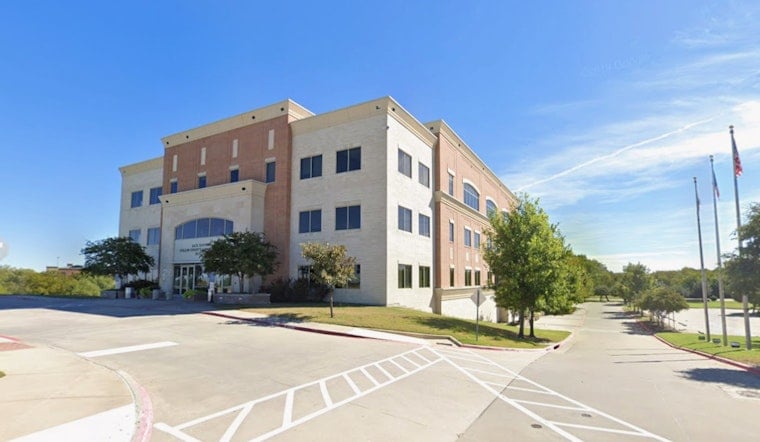
Collin County commissioners voted 4-0 yesterday to place an $817.5 million bond package on the November 3 ballot, betting that voters will fund a major jail expansion, hundreds of millions in road work, and a new elections facility rather than let the county's overcrowded detention center and traffic bottlenecks keep piling up. Commissioner Duncan Webb was absent from the vote.
The package, divided into four separate propositions, comes as Collin County keeps adding residents faster than almost anywhere else in the country. The county added nearly 43,000 residents between July 2024 and July 2025, according to U.S. Census numbers cited by The Dallas Morning News, and ranked second nationally among counties that added the most residents in a single year. The county now has about 1.3 million people, per the same report.
Commissioners had another option on the table: a smaller roughly $481 million bond proposal. But they chose the larger $817.5 million package instead, according to the Dallas Morning News report by reporter Angela Mathew, who covers local government accountability for the paper as well as the cities of Frisco and Allen. The smaller version would have excluded a major highway project, elections building funds, and half of the proposed jail-expansion beds, and it included less than 60% of the larger bond's transportation funding.
Jail Overcrowding Drives the Largest Ask
Proposition A sets aside $296.5 million for jail and courthouse expansion, including approximately 550 additional county jail beds. The proposition also covers courthouse roof replacement, elevator modernization, and renovation of community supervision and corrections space, along with replacing cell doors, modernizing elevators, and upgrading HVAC systems. The Collin County Detention Facility in McKinney has been operating at or above capacity most of the time, forcing the county to board out some inmates to outside county jails through September, according to local reporting from the Murphy Monitor.
County Administrator Yoon Kim had originally evaluated an overall capital needs package totaling $1.2 billion before trimming it down to the roughly $820 million proposal presented to commissioners in July, per the same outlet's account. The final $817.5 million package chosen Monday kept full funding for roads and elections facilities while maintaining the jail bed additions.
Susan Fletcher said the courthouse expansion would help the county serve residents more efficiently, and that voters will ultimately decide whether to fund the projects through a bond. She added that if taxpayers reject the bond, the county will still pay in other ways — through impacts like traffic congestion and the cost of transporting inmates to other counties for housing. If voters approve it, Fletcher said, the county will proceed with construction.
Hundreds of Millions More for Roads
Proposition B carries the single largest price tag after the jail package, setting aside $475 million for road and bridge projects. That includes service roads for the Dallas North Tollway, a service road from Farmersville to the Rockwall County line, and a second Outer Loop service road west of U.S. Highway 75, along with widening existing roads and improving intersections.
The Outer Loop referenced in Proposition B is a 55-mile multimodal corridor planned to run from the Denton County line to the Rockwall County line across eight municipalities, using a 500-foot right-of-way that reserves space for future transit, according to the Collin County Engineering Department. Corridor planning began in 2000 and is divided into five segments. The county already delivered a piece of that vision last November, when it opened Segment 3C, an 8.9-mile continuous stretch of roadway connecting FM 2478 to U.S. Highway 75 ahead of schedule, as reported by TX3DNews. That segment was built with continuously reinforced concrete meant to handle heavy long-term traffic between Celina and McKinney.
Commissioner Chris Hill said the long-term impacts of the proposed bond were still under consideration, and separately said he liked holding the debt service rate steady. Commissioner Clarence Daugherty said the smaller bond proposal would have delayed projects addressing congestion.
Elections Building and Parks Round Out the Ballot
Proposition D sets aside $40 million for a new elections department and county records facility, which would store voting equipment and documents. County staff recommends building it at the county's headquarters on Bloomdale Road in McKinney, where the county already owns 400 acres.
Proposition C is the smallest of the four, setting aside $6 million for parks and open space projects, including land acquisition, improvements to existing parks, and joint county-city projects.
What It Could Mean for Tax Bills
If approved, the $817.5 million bond could raise the county's debt service rate from 4.18 cents to 4.95 cents per $100 of assessed value over six years, which could increase property taxes. That comes even as the countywide average home market value dipped slightly, from $603,190 in 2025 to $588,119 in 2026, according to certified appraisal data reported by the Farmersville Times. Total taxable property value across the county still rose 4.43% to $280.17 billion, adding $7.7 billion in new construction, with rapid growth in northern and eastern municipalities like Celina, Melissa, and Princeton driving much of the gain.
Commissioners faced a statutory deadline of next Monday, August 17, to officially order any measure onto the November 3 ballot, according to a report from Shelby Williams. Missing that deadline would have pushed any infrastructure funding decision into 2027.
Collin County voters won't just be weighing this package alone. Collin College's Board of Trustees separately voted unanimously on August 7 to place its own $600 million bond proposition on the same November ballot, aiming to expand workforce and academic programs without raising the college's tax rate, as Community Impact reported. Collin College's credit enrollment has grown by more than 31% over the past decade. Combined, the county and college bonds put more than $1.4 billion in infrastructure spending before voters this fall.





