

























































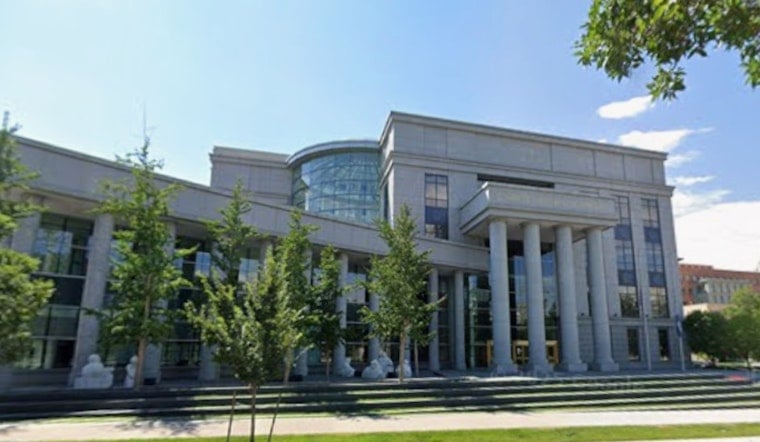
An El Paso County child neglect case that county officials moved to dismiss has been ordered back to court after a Colorado appeals panel ruled that a state law barely a week old required a judge to reconsider closing it. The Colorado Court of Appeals reinstated the case involving a girl identified in court records as M.G.W. and her father, K.W., who had objected to El Paso County Human Services ending its involvement.
The ruling in People in the Interest of M.G.W., handed down Thursday, marks the first time the Colorado Court of Appeals has applied House Bill 1227, the state law that took effect on August 12, according to the Denver Gazette. Judge Pax L. Moultrie authored the unanimous 3-0 opinion, joined by Judges Matthew D. Grove and Christina F. Gomez, sending the case back to District Court Judge Diana May with instructions to follow the new law.
A Dismissal Judge Said She Couldn't Override
El Paso County Human Services had pursued the neglect case involving M.G.W. and K.W. and, per the county's statement to the court, reported it no longer had active safety concerns about the girl in 2025. The county moved to dismiss the case in early 2025 and agreed to keep assisting the family for up to a year, with the county saying K.W. complied with the terms of that agreement, the Gazette's report notes.
Both M.G.W. and K.W. protested the county's decision to close the case, but the trial judge granted the dismissal motion quickly, according to the same account. Judge May concluded she lacked the authority to override El Paso County's dismissal decision at the time — a conclusion the appeals panel has now overturned by applying the new statute retroactively to the pending appeal.
The Supreme Court Ruling That Triggered a Legislative Response
The Court of Appeals panel ruled that HB 1227 overruled a June 2025 Colorado Supreme Court decision and applied directly to the case. That earlier ruling, in People in the Interest of R.M.P., held 6-1 that the state alone holds exclusive parens patriae authority to prosecute child neglect cases, with the court concluding that allowing individual parties to litigate such cases independently would risk creating what Chief Justice Monica M. Márquez described in that opinion as a “weaponized family court system,” as reported by Colorado Politics.
Justice Richard L. Gabriel dissented from that 2025 decision, arguing that the government should not be able to unilaterally dismiss a child welfare case without judicial oversight. The Colorado Legislature effectively adopted Gabriel's view when it passed HB 1227, which now requires judges to hold a hearing after a child's legal representative objects to a county's dismissal, and to determine whether the county has a reasonable basis for that dismissal.
How Lawmakers Rewrote the Rules
HB 1227 was sponsored by Representatives Lindsay Gilchrist and Mary Bradfield alongside Senator Kyle Mullica during the 2026 legislative session, per Colorado Politics' reporting on the bill's origins. The initial draft would have let a child's legal representative independently litigate a dependency case after a county dismissal, but House amendments narrowed that to require a judicial hearing on whether the county has a reasonable basis for ending the case — restoring, in effect, a practice that had governed Colorado juvenile courts for nearly 40 years under the 1986 Court of Appeals precedent People in the Interest of R.E. before the 2025 ruling upended it, according to FindLaw.
Chris Henderson, executive director of the Colorado Office of the Child's Representative, supported the amended bill during legislative hearings, saying it restored vital procedural due process by ensuring both parents and children are heard before a case is dismissed. But Richard Polk, the father in the original R.M.P. case, testified against HB 1227, warning that letting court-appointed attorneys challenge county dismissals could produce legal strategies that conflict with what a child actually needs.
A Year of Judicial Uncertainty Before the Fix
The gap between the Supreme Court's 2025 ruling and the new law produced conflicting outcomes in the state's courts. In December 2025, a divided Colorado Court of Appeals panel ruled 2-1 in People in the Interest of N.K.S. that a child's guardian ad litem could not appeal a trial court's denial of parental rights termination without county participation, with Judge Katharine E. Lum dissenting that the earlier ruling was meant to address initial dismissals, not appellate review of parental rights terminations, Colorado Politics reported.
The following month, an evenly divided Colorado Supreme Court, at 3-3 following Justice Melissa Hart's resignation, issued a ruling without an opinion in a Morgan County child welfare case over whether a child's attorney could independently seek termination of parental rights. The Office of the Child's Representative and the Office of Respondent Parents' Counsel both cited the decreased case filings and early county dismissals that followed the 2025 ruling in their fiscal year 2027 budget requests, seeking funding reductions of $871,000 and $900,000 respectively, according to state budget documents.
Writing for the appeals panel in M.G.W.'s case, Judge Moultrie noted that the new legislation renders part of the youth's appeal moot because it grants her the exact relief she sought — a hearing on whether El Paso County has reasonable grounds to keep the case closed. The case now returns to Judge May's courtroom, where the county will have to defend its dismissal under the standard state lawmakers wrote into law just over a week before the ruling came down.





