

























































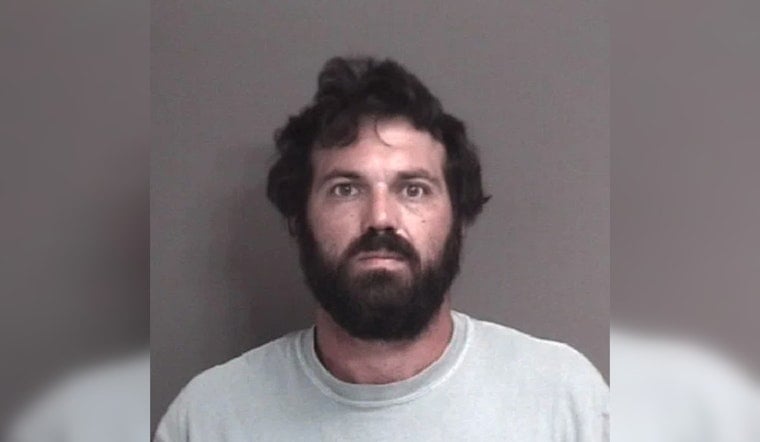
A 35-year-old man was denied bond Monday after appearing in Boone County court on a felony charge accusing him of trying to pay teenagers for sex at Rock Bridge Memorial State Park. Colton Cranford, who has an unknown Columbia address and is originally from Bowling Green, Kentucky, appeared by video for his initial hearing at 1 p.m. Monday on a single count of patronizing prostitution involving a person between the ages of 15 and 18.
According to ABC 17 News reporter Demetra Alarcon, prosecutors allege Cranford offered to pay $2,000 for each child. The state argued Cranford should remain jailed pending trial because he poses a danger to the community, and the judge sided with prosecutors in denying bond. A motion to set bond noted that Cranford appears to have no criminal history in Missouri.
The case stems from a probable cause statement in which Missouri Department of Natural Resources state park rangers reported that a man was texting a reporting party about taking videos of children performing sex acts and soliciting sex from a minor for money. Rangers are fully commissioned peace officers under state law, giving them full law enforcement authority, arrest powers, and investigative duties across all land managed by the department, according to Justia Law. The Missouri State Park Ranger Division has provided law enforcement and resource protection across the state's 93 parks and historic sites since it was established in 1967, per the Missouri Department of Natural Resources.
A New Law Just Days Old
The timing of the alleged offense places it squarely within a newly toughened legal framework. Missouri law made patronizing prostitution of a person younger than 18 but older than 15 a Class D felony as of August 28, just three days before Cranford's court appearance, elevating the charge from what had previously been classified as a Class E felony. That change came through House Bill 2273, signed by Governor Mike Kehoe in April as part of a statewide push to combat child sex trafficking and increase criminal consequences for minor exploitation, according to Missourinet. The bill was sponsored by State Representative Ed Lewis and State Senator Jill Carter.
Under Section 558.011 of the Revised Statutes of Missouri, a Class D felony conviction carries a statutory penalty of up to seven years in state prison, up to one year in a county jail, or a fine of up to $10,000. Prosecutors do not need to prove a completed physical act to secure a conviction — Missouri Revised Statutes Section 567.030 establishes that a person commits patronizing prostitution simply by soliciting or agreeing to pay for sexual conduct, according to David Naumann & Associates.
Rock Bridge's Public Footprint
Rock Bridge Memorial State Park, located five miles south of Columbia in Boone County, encompasses 2,273 acres of public land managed by the Missouri Department of Natural Resources and drew more than 587,000 visitors in 2023, according to Wikipedia. The park is known for its karst bluffs, sinkholes, and cave systems, making it a popular destination for hikers and families in the mid-Missouri region.
Cranford's case will proceed through the 13th Judicial Circuit Court of Missouri, which handles felony initial appearances and preliminary hearings for Boone County at the county courthouse in Columbia. Because he was denied bond at Monday's hearing, Cranford is entitled to a formal bond review hearing within seven days under Missouri Supreme Court Rule 33.05, a proceeding that would allow both prosecutors and defense counsel to argue over community safety and flight risk.
Steeper Stakes for a Conviction
Beyond prison time, a felony conviction in Missouri carries lasting collateral consequences. A conviction would trigger a lifetime federal prohibition on firearm ownership under 18 U.S.C. § 922(g), and Missouri law explicitly excludes sex-related offenses from record expungement eligibility, according to criminal defense attorneys who outline the state's felony sentencing framework.
It remains unclear whether the reporting party who alerted rangers to the texts was an undercover investigator or a private citizen, and prosecutors have not detailed the full contents of the messages cited in the probable cause statement. The case echoes a similar prosecution Hoodline reported on in Knoxville earlier this year, in which an undercover operation led to felony charges for patronizing prostitution of a minor.




