

























































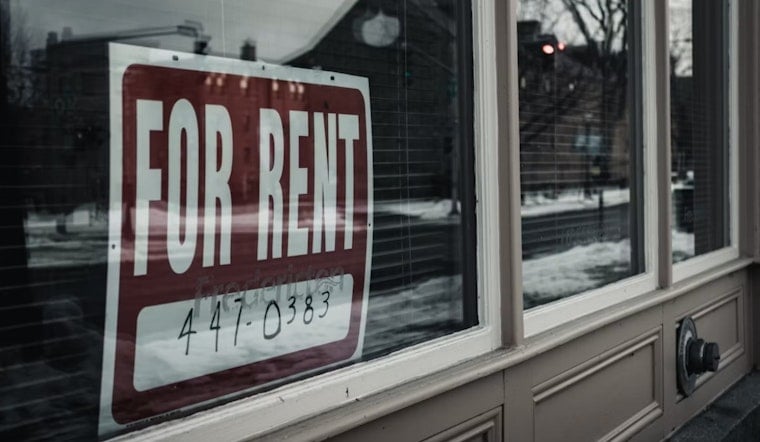
Columbia Charter Township trustees voted unanimously yesterday to enact a new short-term rental ordinance that requires operators to obtain annual permits, carry $1 million in liability insurance, and post working fire extinguishers, or risk fines as high as $1,000 and the loss of their permit. The rules, which apply across the township's lakefront communities surrounding Clark Lake and Lake Columbia, arrive after more than two years of resident complaints about loud parties, overflowing parking and overcrowded rental homes.
One flashpoint cited in the debate was a roughly 10,000-square-foot short-term rental near Maple Lane with nine bedrooms and seven bathrooms and a capacity for 27 people, where a large group brought 10 to 12 vehicles to the private drive and generated loud music, shouting and disruptive behavior, according to MLive.com. Existing township ordinances addressed noise, parking and other nuisances but did not directly address short-term rental property use, leaving officials without a targeted tool until now, per the same report.
The debate itself stretches back to May 2024, when lakefront residents first pressed township trustees to confront the noise, parking overflow and overcrowding tied to vacation rentals around Clark Lake and Lake Columbia, according to the Clark Lake Spirit Foundation. The topic returned to township board sessions repeatedly through 2024 and into 2026 before trustees finally reached a final vote this week.
Why the Occupancy Cap Disappeared
The version of the ordinance that finally passed looks different from the draft township officials first floated. The new ordinance removed the earlier requirement that all short-term rentals limit occupancy to 10 people, replacing it with a calculation drawn from the Michigan Residential Code, which weighs square footage, ceiling height, floor area and the number of sleeping rooms when determining maximum occupancy, the MLive report states.
That change followed a formal legal challenge. Attorney Jordan Valentine of the Grand Rapids-based Varnum LLP sent a letter that prompted the township to delay its vote on July 15, representing short-term rental owners including GKMM Properties, Paint Creek Collective Management, Buschmann Properties and 1380 Eagle Point LLC, according to the Clark Lake Spirit Foundation. Township official Eric White reviewed that letter, MLive reported.
Varnum's filing argued the flat 10-person limit was “arbitrary and capricious,” that it functioned as a de facto zoning ordinance under the Michigan Zoning Enabling Act, and that the enforcement scheme lacked any appeals process, per the Clark Lake Spirit Foundation. The revised ordinance that passed still does not assign a third-party arbitrator or appeal process, even after switching to the residential-code occupancy formula.
What Operators Now Must Do
Under the ordinance, short-term rental operators must apply annually for permits, paying $200 in the first year and $90 in every subsequent year, MLive reported. Operators must also provide one off-street parking space per bedroom, arrange weekly on-site trash service, install working fire extinguishers, and designate a local agent available 24 hours a day who can reach the rented property within 60 minutes.
Enforcement escalates with each violation. A first ordinance violation draws a written or verbal notice, a second violation in the same calendar year can bring a fine up to $500, and a third violation can cost an operator up to $1,000 and the loss of their permit altogether, according to the MLive account. The ordinance also makes clear that anyone who files a false violation report is subject to criminal prosecution. Township officials say the measure is meant to protect public health, safety and general welfare across Columbia Charter Township, and it takes effect 30 days after publication in the local newspaper.
Residents and Renters React
Township official Barry Marsh said the board heard concerns from both displeased neighbors and short-term rental advocates as it crafted the final rules, per MLive. Resident Heather Lee, of Columbia Township, called the ordinance “a start,” suggesting more work may still be needed to address neighborhood concerns.
Not everyone in the rental business sees the debate the same way. Advocates note that short-term rentals boost tourism and provide owners with income, a point echoed by operators like Landon Cathers, who subleases a 4,000-square-foot home with beds for 17 people on Clark Lake. Supporters of the industry argue the properties bring visitors and spending into the township's lake communities even as neighbors push back on the noise and crowding that can come with them.
The Legal Backdrop
Columbia Township's approach rests on a 2020 Michigan Supreme Court precedent. Under Reaume v. Township of Spring Lake, Michigan courts treat short-term vacation rentals in single-family residential zones as commercial activity rather than traditional residential use, according to the FSBR Law Firm. That ruling gives municipalities broad authority to regulate the rentals through police power ordinances, which can apply immediately to existing operators without grandfathering them as nonconforming uses, as long as the rules apply uniformly townshipwide.
Columbia Township is not the only Michigan municipality facing pushback over strict rental limits. In Ottawa County, Park Township's decision to enforce a complete short-term rental ban sparked a 2026 federal lawsuit from property owners also represented by Varnum LLP, alleging constitutional due process violations, according to the Mackinac Center for Public Policy. The firm raised similar due-process arguments there as it did against Columbia Township's original draft.
Meanwhile, state lawmakers continue to weigh how much authority local governments should retain over vacation rentals. House Bill 5438, introduced in Lansing in April 2024, would create a statewide short-term rental registry under LARA along with a 6% excise tax, while preserving municipalities' power to revoke permits for local code violations, according to Michigan House Democrats. That effort follows an earlier attempt, House Bill 4722, which passed the Michigan House in October 2021 to declare short-term rentals a permitted residential use statewide but died in the Senate after opposition from groups including the Michigan Municipal League, which fought to preserve local zoning authority over residential neighborhoods.
Columbia Township, home to an estimated 7,572 residents with a median age of 51.9 and a median household income of $85,767, spans 39.6 square miles in south-central Jackson County and surrounds the waterfront communities of Clark Lake and Lake Columbia as well as the Village of Brooklyn, according to U.S. Census Bureau data and the Region 2 Planning Commission. That demographic profile, older and wealthier than many parts of the state, helps explain why long-term residents have pushed hard to preserve quiet neighborhood character even as lakefront parcels continue to draw vacation rental demand.





