

























































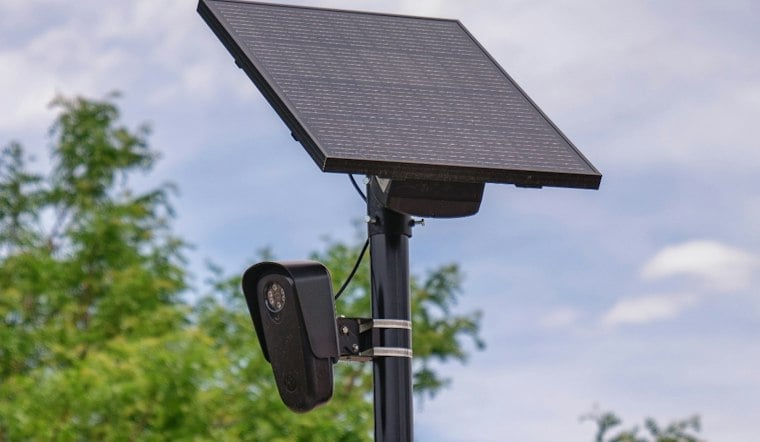
Madison Heights is pulling the plug on its automated license plate reader program, announcing it will disconnect its three city-run Flock Safety cameras and will not renew its contract with the company. City officials say the move follows an extended review of the surveillance program and its ability to meet standards for accountability, privacy, and operational integrity.
According to WXYZ 7 News Detroit, city officials said Flock staff failed to address the city's concerns about whether appropriate guardrails were in place to govern how the cameras' data could be accessed and used. Madison Heights said it cannot continue operating the ALPR system without clear and reliable safeguards. The city's three cameras had not been actively used since September 23, and no new data has been collected since they were bagged and taken out of service, the station reported.
The city noted that some local businesses and organizations maintain their own cameras and independent Flock contracts separate from the municipal system, so private ALPR coverage in Madison Heights won't necessarily disappear even as the city-run units go dark. In its statement, the city said it remains committed to public safety and to a responsible evaluation of technologies that support it while upholding transparency, accountability, and privacy. Madison Heights also thanked the city council, residents, and local businesses for their engagement and feedback throughout the evaluation process.
A Deputy Under Investigation
The decision lands amid a live example of exactly the kind of misuse local leaders feared. The Oakland County Sheriff's Office confirmed in October 2026 that it is investigating a former deputy accused of improperly accessing and misusing the county's Flock camera database after leaving the department, according to CBS News. The investigation is a separate local case involving alleged misuse of the county's Flock camera database.
Madison Heights isn't the first Oakland County community to make this move. Independence Township's Board of Trustees voted 7-0 in September to terminate its own Flock contract, order Flock to permanently purge township-related data and certify the purge through an affidavit, and threaten legal action if the vendor doesn't take down its eight active cameras, as Hoodline previously reported. Neighboring Macomb County saw a similar reckoning: Eastpointe's city council voted 4-1 to cancel its Flock contract in September after disclosing that two employees had misused the city's license plate readers, one for personal use and another in violation of department policy.
A Local Pattern Predates the City's Decision
Madison Heights has already weathered one high-profile Flock dispute this year. In August, JARS Cannabis negotiated a revised settlement with city officials to remove an ALPR camera that pointed into its parking lot, after the dispensary blocked the lens with a “No Flock Zone” sign and fielded customer privacy complaints, per a report from ganjapreneur.com. That earlier fight signaled local unease with camera placement well before the city moved to shut down its own units entirely.
Part of a Wider Retreat From Flock
Madison Heights joins a fast-growing list of communities cutting ties with the surveillance vendor. More than 50 local governments across 20 states had canceled or declined to renew Flock Safety contracts as of October, with 93 cities and counties dropping the vendor in August alone, according to privacy advocacy group Secure Justice as cited by Startup Fortune. Flock Safety itself responded to the backlash in August by shortening its default recommended data retention window from 30 days to seven days and rolling out mandatory audit software and search logs for police agencies using the system.
The pushback isn't confined to Michigan. Jalopnik reported that state transportation and public safety authorities in Florida and Texas revoked permits and cut off funding for automated license plate readers in 2026, forcing camera removals along state highways and leaving local municipal contracts in limbo. At the federal level, U.S. Senator Josh Hawley introduced the Stop Flock Abuse Act this month, proposed legislation that would set statutory limits on data retention, search permissions, and AI integration for license plate readers nationwide, CBS News reported.
Michigan's Regulatory Gap
Michigan still lacks statewide rules governing how police departments use ALPR data. State Representatives Jimmie Wilson Jr. and Doug Wozniak introduced a bipartisan bill package, House Bills 5492 and 5493, back in January, according to Michigan House Republicans. The proposals come as more local governments move to fill the gap on their own.
Even so, police adoption of Flock technology in Michigan has kept climbing. The number of Michigan law enforcement agencies using Flock Safety rose from roughly 125 departments at the start of 2026 to more than 180 as of September, per Detroit Legal News, underscoring the tension between departments eager for the tool and municipal leaders increasingly wary of how its data gets handled.





