

























































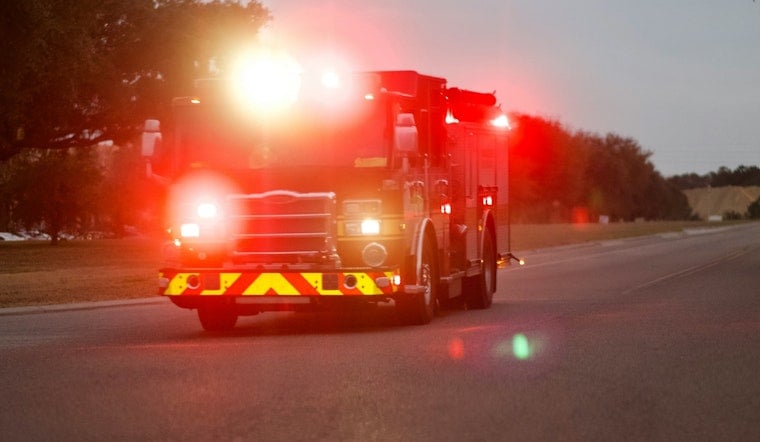
A wildfire that started around 8 a.m. Saturday outside Mabton exploded to roughly 8,000 acres within a single day, forcing authorities to order immediate evacuations across a swath of southeastern Yakima County and west-central Benton County. The blaze, known as the Colwash Fire, is one of several new fires that have sparked across Washington state as an already brutal 2026 fire season grinds on.
According to FOX 13 Seattle, the fire's rapid growth from a Saturday-morning ignition to thousands of acres by day's end prompted Level 3 “Go Now” evacuation orders, the most urgent level issued, meaning residents had to leave without delay. The City of Richland's emergency management office reported that the American Red Cross set up a shelter at Prosser High School for displaced residents, underscoring how quickly the danger spread across county lines.
Initial suppression efforts drew on a multi-agency response that included Yakima County Fire District 5, the Bureau of Indian Affairs, and the all-volunteer Mabton Fire Department, per Morgan Murphy Media. Small rural departments like Mabton's typically lean heavily on tribal, county, and state mutual aid when grass and brush fires grow this fast, and this blaze proved no exception.
A State Already Stretched Thin
The Colwash Fire ignited just a day after the Washington State Patrol Chief authorized a state mobilization plan on August 21, prepositioning wildland firefighting crews and equipment across Kittitas, Yakima, and Klickitat counties in anticipation of severe fire weather, according to FOX 13 Seattle's reporting. That advance staging gave local fire districts access to broader regional and state-level emergency assets just as the new fire broke out near Mabton.
The blaze is also not burning in isolation. It joins other major Central Washington fires this month, including the 3,300-acre Three Queens Fire near Snoqualmie Pass, which Hoodline previously shut down 50 miles of trail, and the 4,000-acre Red Sky Fire near Union Gap, which reached full containment shortly before the Colwash Fire ignited. Regional firefighting resources have been stretched thin managing multiple concurrent blazes across adjacent counties.
Drought And Emergency Declarations Set The Stage
The conditions behind this outbreak were building for months. On April 8, the Washington State Department of Ecology declared a statewide drought emergency, the fourth consecutive year of drought declarations in the state, after a warm winter left mountain snowpack at roughly half of normal levels. Snowpack acts as a natural reservoir that gradually feeds streamflows into late summer, and its absence left vegetation across central Washington tinder-dry heading into August.
Governor Bob Ferguson signed Emergency Proclamation 26-03 on August 1, declaring a statewide wildfire emergency and imposing a temporary outdoor burn ban across all 39 counties through September 30, prohibiting recreational campfires, agricultural burning, and land-clearing debris fires. That same day, the National Weather Service issued a rare “Particularly Dangerous Situation” Red Flag Alert across Eastern Washington, the first time that top-tier designation had been issued in the state, according to Clark County Fire District 6.
The scale of the response has grown alongside the fires themselves. After Ferguson activated 110 Washington National Guard members on July 31, the federal government approved an emergency declaration for Washington on August 4 to deploy federal personnel and resources for wildland fire suppression, per the Office of Governor Bob Ferguson. On August 10, Ferguson signed a further proclamation providing late-fee waivers for second-quarter tax filings and relaxing commercial truck driver hours-of-service rules for businesses in wildfire-affected jurisdictions, including Yakima County.
A Historically Severe Season
By early August, more than 425,000 acres had already burned across Washington this season, destroying roughly 700 structures and forcing over 67,000 residents to evacuate statewide, according to figures from U.S. Representative Suzan DelBene's office. Structural losses have been concentrated heavily around Spokane County. The Colwash Fire's jump from roughly 700 acres to 8,000 acres in a single day illustrates how quickly tinder-dry brush and grass, combined with high winds, can outpace local suppression capacity.
Out-of-state crews have also joined the fight this season, including a Half Moon Bay engine that Hoodline reported rolled north to help battle Washington's blazes. As the Colwash Fire continues to burn near Mabton, residents under Level 3 orders are being urged to stay clear of the evacuation zone while multi-agency crews work to contain it.





