

























































Cyclists will line up before dawn Saturday for one of Colorado's toughest tests on two wheels: a 12.42-mile ride up Pikes Peak that gains 4,735 feet of elevation before the mountain reopens to regular tourist traffic. The Broadmoor Cycle to the Summit sends riders climbing from a starting line about seven miles up the Pikes Peak Highway gate, with the first wheels turning at 6:15 a.m.
As reported by the Denver Gazette, race organizers stagger start times for different race classes throughout the morning, a logistical necessity given that Pikes Peak has to open back up to the public by 9 a.m. That tight window is part of what makes the event a genuine operational puzzle each year: get hundreds of cyclists safely up and off a mountain highway before regular traffic resumes.
The race is designed for a wide array of skill levels, according to the Gazette, and includes multiple age-group categories as well as an e-bike competition for riders who want the Pikes Peak experience without the full physical grind of the unassisted climb.
A Punishing Course With Real History
The route itself is no secret to endurance junkies. It uses the same 12.42-mile asphalt corridor and 156 turns as the Pikes Peak International Hill Climb, an auto and motorcycle race established in 1916 that ranks as the second-oldest motor race in North America, according to the Pikes Peak International Hill Climb. The course maintains an average gradient above 6.5% with essentially no downhill recovery, per Gran Fondo Guide.
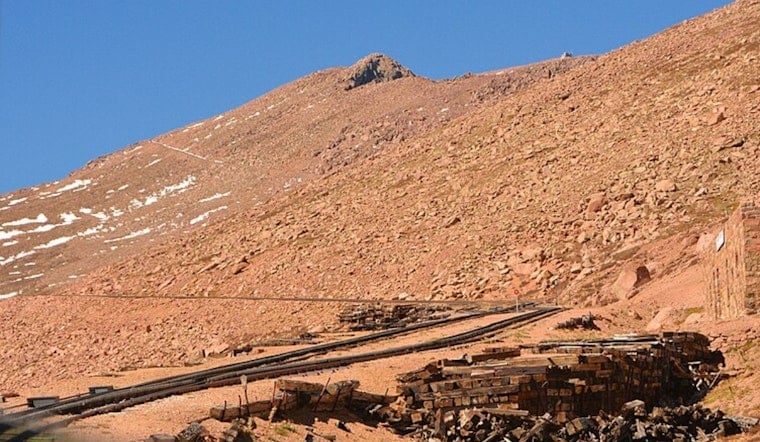
That combination of sustained steepness and thin air makes Pikes Peak's summit, at 14,115 feet above sea level, one of the more physiologically brutal finish lines in American cycling. As Wikipedia notes, the peak is the easternmost 14er in the country, and reduced oxygen at elevation adds a layer of strain that flatter century rides simply don't produce.
Chasing the Summit Society and a Standing Record
Riders who reach the top before 9:45 a.m. earn membership in the Summit Society, an exclusive club that comes with a specialized medal and year-round discounts, according to Gran Fondo Guide. The cutoff isn't just a bragging-rights gimmick — it's tied directly to the need to reopen the toll road to standard traffic.
For those seeking a shorter test, the Midway Challenge, introduced in 2025, offers a timed 5.16-mile climb that concludes about halfway up the mountain at Glen Cove, giving riders an alternative to the full summit push. At the elite end of the field, professional gravel racer John Keller set the course record during the August 2025 edition of the race with a winning time of 1:07:54, shaving eight seconds off the mark he'd set in 2023, according to Gran Fondo Daily.
A Sanctioned Championship Now in Its 17th Year
Saturday's race is sanctioned by USA Cycling and doubles as the hill climb state championship for the Colorado Bicycle Racing Association, per the Gazette. Bicycle Colorado separately designates the event as the official Colorado Senior and Masters Hill Climb State Championship, recognizing the top three Colorado resident finishers across 29 age-group categories.
This year's edition marks the 17th running of the annual race, according to Uncover Colorado, reflecting nearly two decades of growth for an event that started as a niche climbing challenge and has since expanded to include amateur-friendly categories like the Midway Challenge and e-bikes. It's organized annually by the nonprofit Colorado Springs Sports Corporation, which also runs the Pikes Peak APEX mountain bike marathon, the Labor Day Lift Off, and the Rocky Mountain State Games.
Outside of race-day closures, everyday motorists hoping to drive the Pikes Peak Highway past Mile 7 during peak season, which runs May 23 through September 30, need a $2 timed-entry reservation permit, a measure aimed at easing congestion near the summit. For Saturday's competitors, though, the only permit that matters is a start number and the will to keep pedaling for more than 4,700 vertical feet.





.jpg)