

























































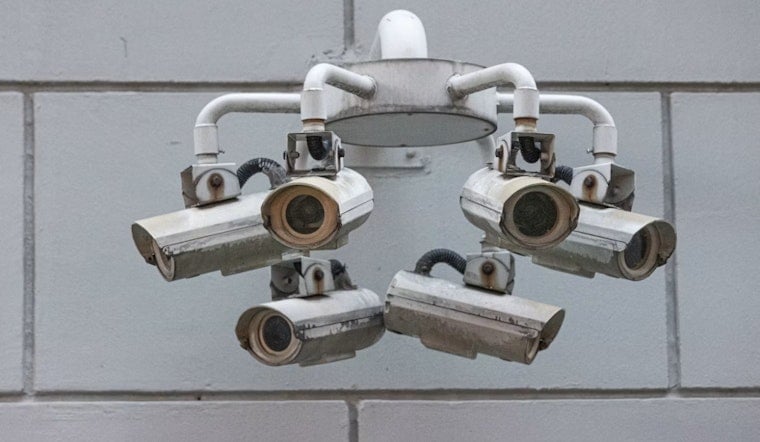
Dallas Police are in the middle of swapping out their aging camera network for more than 1,200 AI-linked Verkada cameras, a buildout timed to the city's 2026 FIFA World Cup hosting duties and paid for with a mix of federal forfeiture money and city funds. The department says it has no plans to activate the cameras' built-in facial recognition capabilities, even though the hardware supports it, and officials point to strict internal limits meant to keep the system from becoming a surveillance free-for-all.
The department has roughly 431 active Verkada cameras running today at headquarters, its in-service training facility, and seven police substations, according to reporting by the Dallas Observer. That number is set to grow by about 125 more cameras, part of a plan that will eventually put the city's total CCTV count at 1,207 cameras once the transition is complete. The rollout, which began in March with a focus on areas near planned World Cup events, is expected to have the majority of intersection camera replacements finished by mid-June, ahead of the tournament, per a February briefing cited in the same report.
The financial backbone of the project traces to a five-year, $4.63 million cooperative purchasing agreement between Dallas and vendor STS360, the North Texas security technology distributor that already supplies the city's current CCTV inventory. City council agenda records reviewed by Municue show the contract is funded by $946,305 in federal asset forfeiture funds alongside $3.68 million drawn from the city's General Fund. The council deferred the item in January before ultimately approving it on February 25, and separately, the department is set to receive $1 million specifically for Verkada's AI-powered surveillance cameras, according to the Observer's reporting.
A World Cup Security Push With Federal Dollars Behind It
The timing is no accident. Dallas and Arlington are hosting nine World Cup matches along with a 34-day Fan Fest expected to draw 1.5 million visitors, and federal public safety funding is flowing accordingly. As reported by CBS News Texas, DPD received $22 million out of a $51 million Department of Homeland Security grant to cover officer overtime, anti-ramming barricades, and surveillance hardware for Fan Fest and convention venues.
That federal push builds on an already sprawling surveillance footprint. Dallas Police use more than 600 Flock Safety automatic license plate readers, and the department launched more than 800,000 searches of the Flock Safety network in 2025 alone, per the Observer's reporting. The city separately approved a $5.74 million, three-year agreement with Flock Safety in May 2025 to operate those readers through June 2028, according to DeFlock DFW, with two additional one-year renewal options built into the deal.
What the Cameras Can and Cannot Do
DPD's Adam Reinhart has said an AI search result is not probable cause and only helps narrow a search, according to the Observer's reporting. Officers can use common-language prompts to search for vehicle details like make and color, and can search for descriptions such as clothing, gender, appearance, and items like backpacks or hats — but the department says it does not use facial recognition technology and has no plans to activate it.
Verkada itself has said its facial recognition technology cannot identify a person using third-party databases, and the company notes its system operates independently of a centralized database across multiple parties. The Verkada system deployed in Dallas cannot automatically pool data with other law enforcement agencies, including federal entities, and the city retains full control of its Verkada data. Any footage sharing with outside partners has to go through a manual approval process, and any move to activate facial recognition would require sign-off from the council's public safety committee plus a full council vote, per the same reporting.
Vendor's Troubled Security History Raises Questions
Verkada's own track record has become a focal point for skeptics. The company experienced at least two data breaches between December 2020 and March 2021 that allowed a hacker to access 150,000 live camera feeds and their associated databases, exposing footage from healthcare and school facilities nationwide. The Federal Trade Commission ultimately fined Verkada $2.95 million in 2024 and placed the company under a 20-year, FTC-mandated security program requiring biennial audits, according to the Federal Trade Commission.
The company's guest-identification system also drew scrutiny after it misidentified a Phoenix father as a registered sex offender in Wisconsin this past July, prompting an apology from the Phoenix school district involved. Verkada cameras retain data for up to 180 days per the company's own website, and the hardware includes facial recognition and crowd-detection capabilities even where departments like Dallas say they won't turn those features on. The cameras can also flag suspicious activity such as wrong-way driving or street takeovers, and Verkada offers face-blur tools, person-of-interest-only search limits, and granular privacy regions as opt-in safeguards, alongside automatic logging of settings changes and suspicious user activity.
Council Members Say the Process Moved Too Fast
Not everyone on the Dallas City Council was on board. Council members Zarin Gracey, Lorie Blair, and Maxie Johnson all voted against the STS360 agreement. Johnson said the council was not briefed early enough and that the decision process felt rushed, according to the Observer's reporting.
Outside the council chambers, civil liberties advocates have pointed to a cautionary tale from Detroit, where facial recognition technology misidentified Robert Williams and led to his wrongful arrest in 2020. A landmark June 2024 federal court settlement, detailed by the ACLU, now bars Detroit police from using facial recognition leads as the sole basis for photo lineups or arrests. Nick Hudson has said police procurement practices around technology oversight are behind the times, and he has separately said Dallas residents have no guarantee facial recognition won't be activated absent a binding public commitment, per the Observer.
Vandalism and a Statewide Backlash
The rollout hasn't gone untouched. Dallas Police reported that 25 cameras have been vandalized since March, according to department representatives cited by the Observer. That local friction sits inside a broader Texas pattern: the Texas Department of Public Safety has entered a $26 million contract with Flock Safety for state highway monitoring under Operation Lone Star, even as cities including Dallas and Houston have logged dozens of camera vandalism incidents through mid-2026, as reported by The Texas Tribune.
Nationally, the vendor landscape is shifting fast. Facing contract cancellations across 23 states, Flock Safety announced in August that it would cut its default license-plate data retention window from 30 days to 7 days and require mandatory case numbers for searches, per StateScoop. Search logs have also shown Dallas officers running queries across Flock's nationwide network of more than 101,000 cameras well outside city limits, compared with roughly 670 Flock devices operating inside Dallas itself, a disparity that has fueled debate in surrounding North Texas suburbs.
Layered on Years of Camera Expansion
Dallas's Verkada push builds on infrastructure the department has been assembling for years. In April 2024, DPD launched CONNECT DALLAS, a voluntary registry letting local businesses and residents register private security cameras with the department's Fusion Crime Center so officers can identify nearby cameras during investigations, without gaining automatic live access, according to KDFW FOX 4.
That followed the 2020 launch of the Starlight program, which installed monitored, high-definition cameras at high-crime convenience stores tied into the department's Real-Time Crime Center, adapting concepts from Detroit's Project Green Light initiative. Most of the new Verkada cameras will simply replace existing CCTV units once they reach the end of their useful lives, according to the Observer's reporting, meaning the network's overall footprint has been expanding steadily for years even before the World Cup accelerated the timeline.





