

























































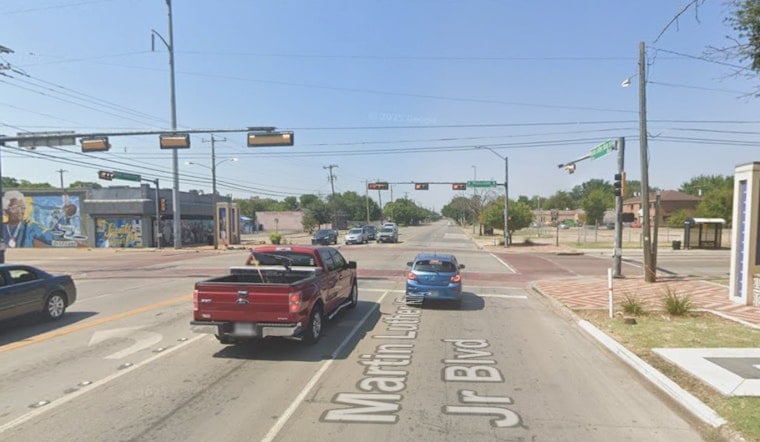
Dallas is starting multimillion-dollar safety work along Martin Luther King Jr. Boulevard in South Dallas and Oak Cliff, tapping a $21.8 million federal grant to redesign a roughly 2.5-mile stretch of roadway that the city's Vision Zero effort has deemed part of its High Injury Network. The Dallas City Council has approved drawing on the grant, and transportation improvement work is expected to begin this month.
The funded stretch runs from Fair Park south to East 11th Street, where Martin Luther King Jr. Boulevard turns into Cedar Crest Boulevard, according to The Dallas Morning News. The U.S. Department of Transportation selected the corridor for the grant and announced the $21.8 million award in December 2023, drawn from the Safe Streets and Roads for All program created under the Bipartisan Infrastructure Law, which distributed $817 million across 385 local safety projects nationwide that cycle, according to The American Presidency Project.
The money will roll out in phases. Just under $1.7 million is earmarked for planning, early design work and environmental review, a phase expected to run through December 2027, per the Dallas Morning News report. An engineering firm, to be chosen after the agreement is executed, will produce a schematic design and secure environmental clearance before further phases — which still need federal authorization — advance the project toward construction. The city manager can execute the agreement with the U.S. Department of Transportation and Dallas Area Rapid Transit, and the grant requires at least a 20% local match; Dallas could contribute up to $5.2 million across the entire project, while DART would provide $200,000. Construction must wrap within five years of the grant contract's execution, and the project overall is estimated to finish by July 2031.
Why This Stretch of Road Made the Cut
The corridor's selection wasn't arbitrary. Before the grant was awarded, safety evaluations by the City of Dallas and the North Central Texas Council of Governments found that Martin Luther King Jr. Boulevard had the highest rate of pedestrian-involved crashes anywhere in North Texas, with five severe pedestrian injuries recorded along the corridor in the preceding two years, according to FOX 4 Dallas. Dallas and the Council of Governments separately found the roadway among the area's worst for fatal and severe injury crashes overall.
The road also serves as a critical connector — it's the primary walking route to the MLK Jr. DART light rail station, a public library, health centers and grocery stores in the area. Dallas' Vision Zero Action Plan, formally adopted in 2022 after a 2019 council resolution, set a target of cutting traffic fatalities and serious injuries in half by 2030, built on city crash data showing that 60% to 62% of severe collisions happen on a High Injury Network comprising just 7% of city streets.
What Changes on the Ground
Under the plan reported by CultureMap Dallas, engineers intend to put the corridor on a road diet, shrinking it from five traffic lanes — currently two in each direction plus a center turn lane — down to four between Fair Park and Interstate 45, freeing up space for protected bike lanes and wider sidewalks. The broader package of transportation fixes includes upgraded crossings, new traffic signals, curb ramps, bicycle lanes, speed management strategies, and technology to monitor near-miss incidents and collect data on how the improvements perform. The project will also retrofit a bridge to accommodate pedestrians, and the funding is expected to improve access to DART bus stops and rail stations along the route.
The Dallas transportation department said the project will improve safety and mobility options for the South Dallas/Fair Park community, per the Dallas Morning News. Nationally, three out of four pedestrian traffic fatalities occur during dark or low-light hours between sunset and sunrise, according to National Highway Traffic Safety Administration data reported by FOX 4 Dallas, a statistic that underscores why lighting upgrades are built into the grant package.
A Corridor With Deep Ties to Transit Ambitions
City Councilmember Adam Bazaldua and local transit planners have connected the MLK Boulevard redesign to bigger transit goals, framing the federal safety grant as groundwork for a future streetcar line linking South Dallas, Fair Park and downtown Dallas, according to CultureMap Dallas. Hoodline previously reported on the South Dallas streetcar plan, which envisions a possible alignment extending from the downtown convention center down Botham Jean Boulevard and east along MLK Boulevard.
Dallas has also kicked off a separate Malcolm X Boulevard corridor study, launched in 2024, that is seeking community input as the city continues to examine walkability across South Dallas neighborhoods. The city says it has already completed or funded sidewalk fixes and upgraded traffic signals elsewhere as part of its broader Vision Zero push.
The Bigger Picture on Dallas Streets
The MLK corridor project arrives against a grim backdrop. Texas Department of Transportation records show Dallas logged 71 pedestrian fatalities in both 2023 and 2024, with pedestrians accounting for nearly one-third of all Dallas traffic deaths despite representing only 1% to 2% of total trips, according to Frenkel Firm. A separate analysis of state crash data found Dallas County logged 280 traffic fatalities in 2025, giving it the highest traffic fatality rate among Texas' six most populous counties, per Angel Reyes & Associates.
Sidewalk conditions compound the danger. A City of Dallas mobility survey found that nearly 80% of responding residents identified broken or damaged sidewalks as a primary barrier to walking, while 72% cited missing sidewalk segments as a main safety concern, the Loewy Law Firm reported. The city maintains more than 4,500 miles of sidewalk, but legacy gaps continue to push pedestrians into traffic lanes on high-speed corridors.
The MLK Boulevard project follows a separate, smaller federal award: in September 2024, Dallas secured a $506,102 grant from the Federal Motor Carrier Safety Administration to fund Dallas Police Department Traffic Unit enforcement and commercial vehicle monitoring along high-crash Vision Zero corridors, as Hoodline previously reported. Dallas Police Traffic Unit officers have issued more than 1,600 citations in High Injury Network locations since 2021, underscoring that the city is pairing physical retrofits like the MLK project with continued enforcement as it works toward its 2030 Vision Zero target.





