

























































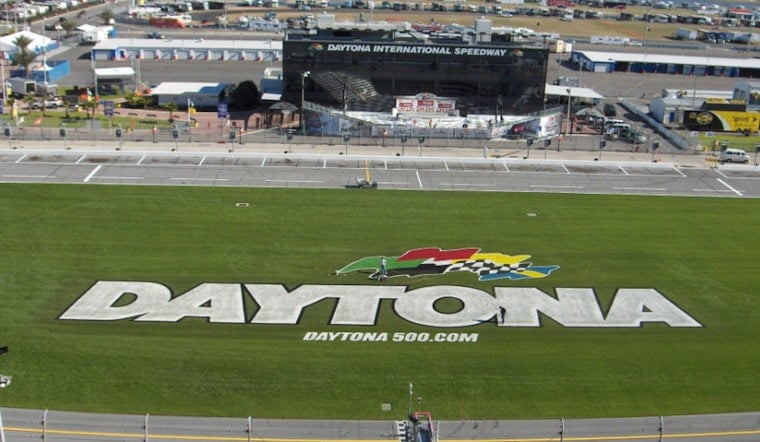
Daytona International Speedway is about to host the race that decides who makes NASCAR's playoffs, and it all kicks off Saturday evening when the Coke Zero Sugar 400 serves as the final regular-season race of the season. The 2.5-mile tri-oval in Daytona Beach, Florida, has built its reputation on chaos and drama, and this weekend's field of drivers is fighting for a chance to lock up one of the sport's coveted postseason spots before the door closes.
Noah Gragson, who will compete in this weekend's race, described the track's unpredictable nature in blunt terms. According to WFLA, Gragson said Daytona is “almost like a 200 mile an hour chess match” and added that the track has “never had a bad race.” That kind of superspeedway unpredictability is exactly why NASCAR moved the event off its old Independence Day weekend slot back in 2020, turning it into the season's cutoff race and, as track leadership noted at the time, creating the potential for dramatic walk-off playoff qualification moments, according to WFTV.
A Track Built for Speed and Spectacle
The tri-oval itself is part of Daytona's rotation of nine major races each year, and the speedway can hold roughly 100,000 people, according to track officials cited by the report. Steep banking — 31 degrees in the turns and 18 degrees at the tri-oval's start-finish line — was intentionally engineered decades ago so fans in the grandstands could watch the entire circuit, a design choice traced back to track founder Bill France Sr. in 1957, per the ARCA Menards Series. That geometry is also what fuels the high-speed drafting packs and multi-car pileups the track is famous for.
The venue's current form owes a lot to the $400 million “Daytona Rising” project, completed in January 2016, which transformed the frontstretch into a modern 101,500-seat motorsports stadium complete with 11 football-field-sized concourse social areas, 40 escalators, and 17 elevators, according to Barton Malow. The 2.5-year makeover kept races running on schedule even while crews rebuilt the nearly mile-long grandstand structure. Inside the track's 180-acre infield sits the 29-acre Lake Lloyd, a man-made lake formed in 1958 when crews excavated millions of tons of dirt to build the banked turns — the pit filled naturally thanks to the local water table and was named for community leader J. Saxton Lloyd, according to Headline Surfer.
Friday's Warm-Up Sets the Stage
Before Saturday's main event, the O’Reilly Auto Parts Winn-Dixie 250 kicks things off Friday night with 38 drivers competing, and that race also determines spots in the 12-team postseason Chase. Coverage of the Winn-Dixie 250 begins with pre-game programming at 7 p.m. and airs on The CW Tampa Bay, per WFLA's report. Saturday's Coke Zero Sugar 400 coverage also starts at 7 p.m., airing on News Channel 8.
Track president Frank Kelleher, who has led the speedway since April 2021, said the venue is trying to make it easy for families and young people to attend. Kelleher previously served as NASCAR's senior vice president and chief sales officer and grew up working in his family's tire and auto repair business in Scranton, Pennsylvania, according to NASCAR.com. That access-focused approach shows up in the ticket prices: tickets for the Coke Zero Sugar 400 are available for under $100, and the venue permits fans to bring their own food and beverages on-site.
Field of 41 Chasing 40 Spots
This year's Coke Zero Sugar 400 entry list features 41 cars competing for just 40 starting spots in the 160-lap, 400-mile race, with unchartered cars needing to qualify on speed to make the grid, according to NASCAR.com. That squeeze adds another layer of tension to a race already carrying playoff stakes for winless drivers hoping to punch their ticket with a single victory.
Superspeedway racing has a track record of rewarding underdogs. Spire Motorsports notched its first-ever Cup Series win at Daytona when driver Justin Haley took the rain-shortened Coke Zero Sugar 400 back on July 7, 2019, during just the team's first full season of Cup Series competition, the team recalled in its race advance. It's the kind of history that keeps fans watching until the checkered flag, no matter who's leading with two laps to go.
Bigger Than Just a Race Weekend
Daytona International Speedway isn't just a sports venue — it's an economic engine for Volusia County and the state. The track generates more than $800 million in direct and indirect annual economic activity for Florida, while NASCAR-related operations statewide produce $1.7 billion annually, according to a Florida State University study cited by Central Florida Public Media. That same study found NASCAR operations support nearly 22,000 jobs and generate $136 million in state and local tax revenue.
Fans heading to the track this weekend will also notice a brighter show after dark. The speedway recently installed a facility-wide Musco LED lighting system with synchronized RGB color effects, cutting lighting energy use by roughly half — an upgrade Hoodline previously reported ahead of this summer's night racing schedule. Pre-race entertainment is also on tap, with country duo LOCASH booked to perform a frontstretch concert ahead of Saturday's driver introductions, according to the Daytona Beach Area Convention & Visitors Bureau.





