

























































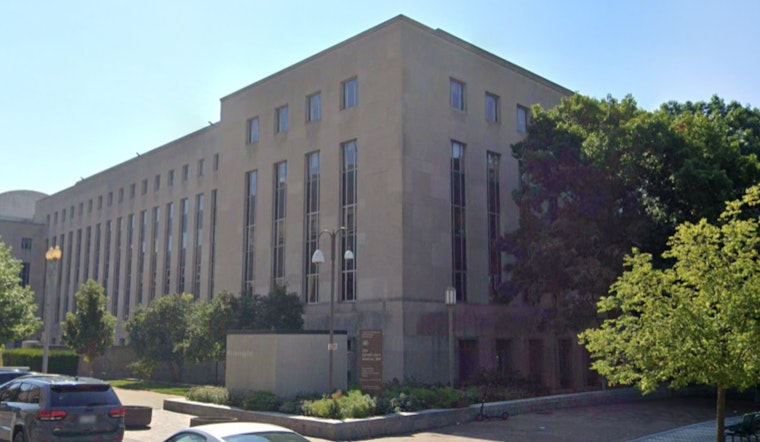
A Washington, D.C. jury was deep into deliberations over a sprawling robbery and carjacking case last month when someone reached into the breast pocket of a jacket entered into evidence and pulled out a folded piece of paper containing white powder. The jacket belonged to Shamell Naquan Joyner, who stood accused of robbing 10 convenience stores and gas stations and carrying out armed carjackings across the Washington region. What jurors found that day — apparent drugs and a Chinese Yuan banknote no one had previously flagged — threatened to unravel a month-long federal trial just as it neared its conclusion.
According to 6abc Philadelphia, jurors discovered the suspected drugs and the foreign currency inside a jacket and sweatshirt that had been taken from a stolen Toyota Joyner was accused of using in the crime spree. The clothing was key evidence placing Joyner at two robberies committed on May 2, 2023. Neither the U.S. Attorney's Office, law enforcement, nor Joyner's own defense team had known about the Yuan bill or the powdery substance before jurors found them during deliberations on July 22, 2026, the outlet reported.
Some of the white powder spilled inside the jury room as jurors repackaged the paper and notified court staff, according to The Economic Times. Prosecutors and U.S. District Judge Rudolph Contreras, who presided over the case, said the white powder appeared to be drugs, per 6abc's reporting. The FBI declined to comment on how its agents had missed the items, and a spokesperson for the U.S. Attorney's Office did not directly answer questions about how the evidence oversight occurred.
A Trial Already Built on a Foreign Banknote
The discovery echoed testimony jurors had already heard. A victim of a May 2, 2023 robbery at a Connecticut Avenue 7-Eleven testified that a wallet stolen from him contained a Chinese Yuan banknote he had kept as a souvenir from a college study abroad trip, according to the same 6abc account. Police had previously seized two other Yuan bills from the center console of the stolen Toyota, which officers with the D.C. Metropolitan Police Department captured a few days after the alleged robberies, according to the Department of Justice.
Judge Contreras wrote that the court shared Joyner's own amazement that law enforcement had failed to uncover the Yuan bill, the note, and the powdery substance in the jacket before it was ever admitted at trial. He instructed jurors that the Chinese bill and the apparent drugs were not evidence in the case and told them they could set aside what they had found. Joyner was never charged with drug possession in connection with the discovery.
Defense Sought a Mistrial, Judge Questioned Every Juror
Defense attorney John Liolos of New York filed two separate motions for a mistrial during deliberations, arguing the discovery amounted to improper extraneous evidence reaching the jury. Judge Contreras denied both motions in a memorandum opinion issued after individually questioning all 12 jurors, determining they could remain impartial despite the unadmitted items, according to court records reviewed by CaseMine. Jurors told the court they could set aside the bill and the suspected drugs and continue weighing the case on the evidence properly before them.
Liolos was one of as many as nine lawyers who represented Joyner over the course of the federal prosecution, while three prosecutors handled the case for the government at trial. Joyner's trial began with jury selection on June 29, 2026, and jurors heard testimony over 10 trial days across roughly a month before receiving the case to deliberate on July 21, 2026.
A Spree Across Three Jurisdictions
Federal prosecutors alleged Joyner robbed stores and gas stations across central Washington, Maryland, and Northern Virginia during a spree of armed robberies and carjackings in the spring of 2023. Investigators said Joyner fired two shots at employees during an April 12, 2023 armed robbery at Falcon Fuel in Northwest D.C. and that a store clerk was shot in the leg during an April 17, 2023 robbery in Alexandria, Virginia, according to the Department of Justice. A cooperating witness testified that Joyner paid him in drugs the night he allegedly held up a gas station, and the Justice Department argued a separate witness testified that Joyner stole money during armed robberies of four convenience stores.
Joyner was originally charged in an 18-count indictment in September 2023 before federal prosecutors, led by Assistant U.S. Attorneys Paul V. Courtney and Justin Song, unsealed a 28-count superseding indictment in August 2024 that expanded his potential mandatory minimum sentence from 52 to as much as 90 years in prison. D.C. Metropolitan Police officers arrested Joyner on May 2, 2023, in the 400 block of Condon Terrace SE while he sat in the driver's seat of a stolen Toyota RAV4 that contained the handgun used in the robbery spree.
Split Verdict Still Carries Decades Behind Bars
After a week of deliberations, jurors reported on July 27, 2026 that they could not agree on 15 of the 28 counts, covering five alleged armed robberies and one carjacking. Judge Contreras ended deliberations and accepted a partial verdict, finding Joyner guilty of 13 criminal charges, including an armed robbery in mid-April 2023 in downtown Washington and four armed robberies and one carjacking committed on May 2, 2023, in Northwest Washington and Maryland.
Even without convictions on all 28 counts, a spokesperson for the U.S. Attorney's Office said the verdict would result in a 31-year mandatory minimum sentence. Under federal law, 18 U.S.C. § 924(c) imposes mandatory minimums of seven years for brandishing and 10 years for discharging a firearm during a crime of violence, and those terms must run consecutively to any underlying robbery or carjacking sentence, according to Sosinsky Law. Final judgment in the case is not yet set in stone, and Joyner's defense attorneys have not appealed his conviction. The jury's inability to reach a verdict on more than half the counts underscores the broader difficulty federal prosecutors in Washington have faced in securing convictions on every count of complex, multi-incident spree indictments.





