

























































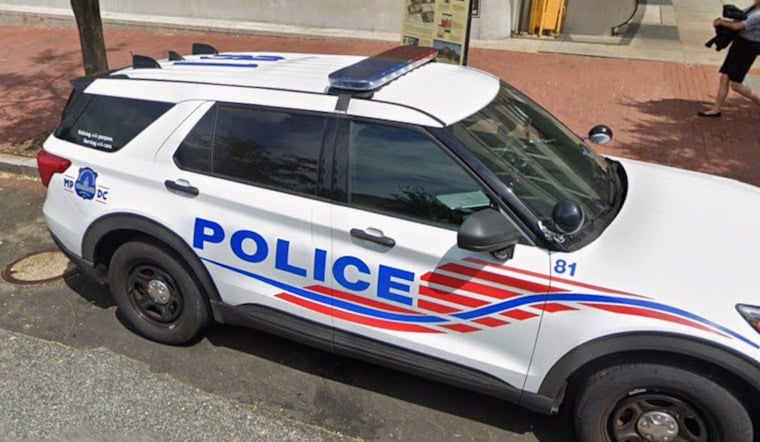
A woman in Washington, D.C. called 911 after discovering a used condom containing a fluid-like substance on her car door handle, an incident she believes was carried out by her own downstairs neighbor. She told police she suspects the same man has stalked her on roughly five separate occasions, according to a Metropolitan Police Department report.
The woman reported the incident near 2nd Street NW, where cellphone footage she provided to investigators reportedly showed the neighbor wandering around the area and appearing near her car whenever she stepped outside, as reported by WJLA. The Metropolitan Police Department confirmed that a woman found a condom containing a fluid-like substance on her car door handle, though the department has not said whether any arrests have been made in the case.
A Pattern the Woman Says Stretches Back Months
The woman's allegation that her neighbor stalked her about five times is central to how investigators and prosecutors will eventually evaluate the case, if it moves forward. Under D.C. Code § 22-3133, criminal stalking requires a pattern or course of conduct occurring on at least two separate occasions directed at a specific individual that causes reasonable fear for safety or severe emotional distress, according to legal guidance compiled by Scrofano Law, PC. Five alleged incidents, if substantiated, would clear that statutory threshold several times over.
A first-time conviction for misdemeanor stalking in the District carries a penalty of up to 12 months in prison, a fine of up to $2,500, or both, under D.C. Code § 22-3134, per legal reference site FindLaw. Those penalties can escalate to as much as five years behind bars if the offender violated a protective order or has a prior stalking conviction within the past decade. Separately, D.C. Code § 22-404 covers simple assault, which encompasses intentionally causing or attempting unwanted physical contact or menacing behavior and is punishable by up to 180 days in jail and a $1,000 fine — a charge prosecutors could weigh alongside stalking depending on how the biological evidence is classified.
Surveillance and Digital Evidence in Play
The area around 2nd Street NW falls within MPD's First District, specifically Patrol Service Area 102, a zone covered by city neighborhood crime cameras under the department's CameraConnect DC initiative, according to information published by 1D Citizens Advisory Council. Investigators in similar cases often pair private cellphone video, like the footage the woman turned over, with municipal camera feeds to corroborate a victim's account. It remains unclear whether officers have pulled footage from that network for this specific case or whether DNA testing has been sought for the fluid-like substance found on the condom.
Placing bodily fluid on a vehicle's door handle is not an isolated tactic nationally. In May 2024, the Santa Rosa Police Department in California arrested a suspect for vehicle tampering and battery after he smeared ejaculate on a woman's car door handle and recorded her reaction, with officers later finding a used condom inside his own vehicle during a traffic stop, according to the City of Santa Rosa. And in April 2025, police in Valparaiso, Indiana arrested a 78-year-old registered sex offender for placing a used condom containing semen on the passenger-side door handle of a woman's car parked at a Target, a case where store surveillance video and the suspect's own admissions helped establish intent.
Legal Options Beyond a Criminal Case
Because MPD has not said whether the neighbor has been arrested or charged, the woman's most immediate legal recourse may lie outside the criminal system. D.C. residents who believe they are being stalked can petition D.C. Superior Court for a civil Anti-Stalking Order, which can include an emergency temporary order granted without prior notice to the accused for up to 14 days, per Burnham & Gorokhov. Those petitions are handled under a civil standard of proof in the court's Domestic Violence Division, meaning a victim does not need police to file criminal charges before seeking protection.
D.C. Superior Court regulations also mandate that crime victims report stalking or harassment to law enforcement within seven days, or obtain a temporary anti-stalking order, to remain eligible for D.C. Crime Victims Compensation support, according to D.C. Courts. That timeline underscores why the woman's decision to call 911 immediately after finding the condom carries legal weight beyond the immediate criminal investigation, potentially preserving her access to counseling and financial assistance through District programs.
The District also operates the 24/7 DC Victim Hotline at 1-844-4HELPDC and maintains specialized MPD reporting protocols for residents facing stalking or safety threats, according to the D.C. Department of Human Resources. Official guidance for stalking victims instructs them to preserve physical evidence, retain communications, and document every unwanted encounter — steps that mirror what the woman in this case has already done by handing over cellphone footage to investigators.
Part of a Larger Pattern Nationally
The allegations also land within a broader public health picture. Data from the CDC's National Intimate Partner and Sexual Violence Survey, published in 2025, indicates that roughly 1 in 6 women in the United States experiences stalking during her lifetime, according to the Centers for Disease Control and Prevention. The allegations against the woman's neighbor remain under investigation, and it is not yet known whether prosecutors will pursue stalking, simple assault, or other charges in connection with the case.





