

























































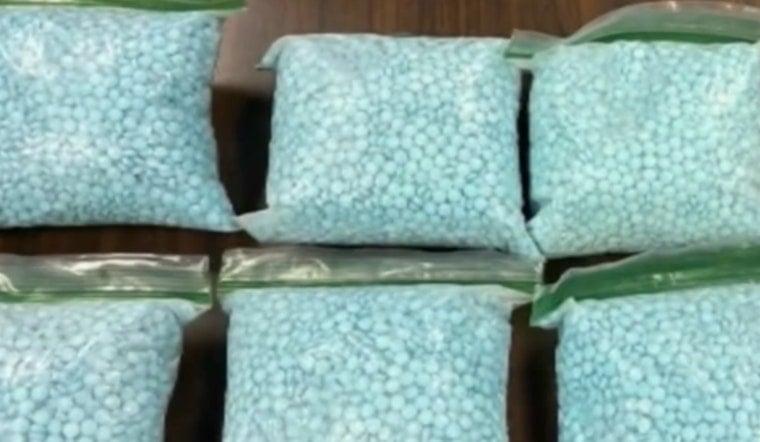
Denver police seized 30,000 fentanyl pills as part of a new enforcement operation aimed squarely at the dealers supplying the city's drug supply. The bust, confirmed Monday, marks the public debut of a joint push between local and federal agents to choke off the flow of counterfeit pills before they reach Denver streets.
The Denver Police Department is working alongside the U.S. Drug Enforcement Administration's Rocky Mountain Division on the effort, dubbed Operation Overdose Intercept, according to CBS News. The initiative targets drug dealers directly and is designed to reduce overdose deaths by pulling illicit fentanyl out of circulation before it can be sold, according to the City and County of Denver, which officially launched the operation Monday.
The scale of the seizure is hard to overstate. The DEA estimates a lethal dose of fentanyl is just 2 milligrams — small enough to sit on the tip of a pencil — meaning the 30,000 pills taken off Denver streets represent thousands of potentially fatal doses that will never reach a user.
A City Already Losing Hundreds to Fentanyl Each Year
The operation lands against a grim backdrop. Preliminary data from the Denver Office of the Medical Examiner found 563 people died of drug-related overdoses in the city in 2025, an increase of nearly 100 deaths from 2024 and just short of the city's record of 598 set in 2023. Fentanyl alone drove much of that toll: preliminary figures from the Denver Department of Public Health and Environment showed fatal fentanyl overdoses rose nearly 25 percent in 2025 to 346 deaths, up from 277 the year before.
Colorado's numbers moved in the opposite direction of the rest of the country. While drug overdose fatalities declined nationwide in 2025, preliminary state data showed Colorado's overdose deaths climbing to 1,813 that year, up from 1,640 in 2024. Hoodline previously reported on how the state's fentanyl crisis kept intensifying even as national deaths dropped.
Colorado's Highways Become Pipelines for Counterfeit Pills
Federal officials have pointed to geography as a major driver of the state's outsized seizure numbers. DEA officials said Interstate 25 and Interstate 70 through Colorado have earned a reputation as fentanyl pill superhighways, funneling counterfeit pills through the region at rates disproportionately higher than most of the country, per reporting from the Denver Gazette.
That corridor effect shows up in the raw numbers. Between January 1 and mid-2026, the DEA's Rocky Mountain Field Division seized nearly 3.2 million illicit fentanyl pills across its four-state region, with more than 2.5 million of those recovered in Colorado alone. The prior year was even larger in scope: law enforcement agents seized roughly 6.7 million fentanyl pills in Colorado during 2025, accounting for more than 14 percent of the 47 million fentanyl pills the DEA seized nationwide.
Building on a Year of Record-Setting Busts
Monday's seizure follows a string of major interdictions in the region. In November 2025, federal and local authorities uncovered the largest single counterfeit pill seizure in Colorado history after a bidder on an abandoned storage unit in Highlands Ranch discovered 1.7 million fentanyl pills along with 12 kilograms of fentanyl powder. Hoodline also covered a Centennial traffic stop this year that turned up 33,000 pills and 40 pounds of meth, and a separate case in which Denver police charged two dealers whose distribution was tied to fatal overdoses.
Colorado's legal framework has also shifted to meet the crisis. Under House Bill 22-1326, enacted in May 2022, possession of just 1 to 4 grams of any compound containing fentanyl is classified as a Level 4 drug felony, carrying penalties of up to one year in jail and two years of probation. The law lowered the threshold for felony charges, a change that continues to shape how prosecutors handle cases stemming from operations like the one announced Monday.
As Operation Overdose Intercept moves forward, it joins a broader local response that has included expanded treatment access, including a walk-in clinic Hoodline reported on that offers Suboxone to Denver residents. Whether the new enforcement push can meaningfully slow the death toll remains to be seen, but for now, 30,000 fewer pills are in circulation on Denver's streets.



