

























































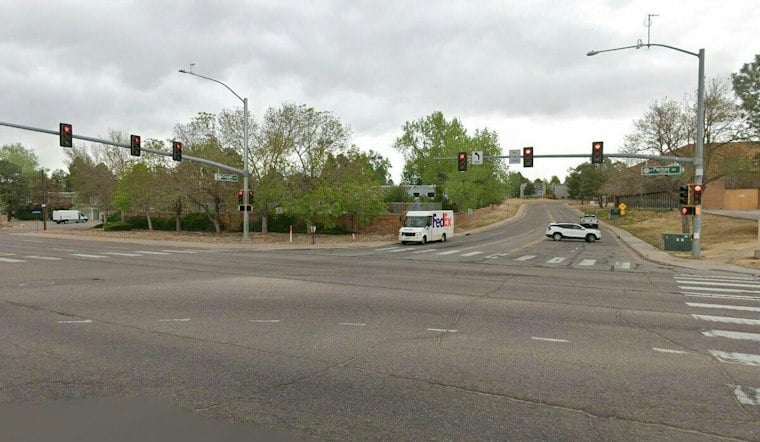
A cellphone sale near Parker Road and East Cornell Avenue turned into a reported menacing involving a firearm last Thursday, and Aurora police say a drone ended up doing much of the chasing. Officers say the aircraft located a group of suspects after they fled the area, trailed them into a local thrift store, and ultimately helped bring the encounter to a close without incident.
According to the Aurora Police Dept
, officers first received information about the reported menacing during a meetup to sell a phone near Parker Road and East Cornell Avenue. From there, the department says its Drone as a First Responder program took over the search, locating the suspects after they had already fled the scene and keeping eyes on them as they entered the thrift store. Police say officers ultimately took the suspects into custody without incident once they exited their car, and that the response helped recover additional evidence, including a replica firearm allegedly used during the incident.
Aurora police say the drone response, paired with a law-enforcement partnership, helped keep the community safe during the encounter.
How Aurora's Drone Program Describes Its Own Limits
Aurora police have faced questions from residents about how far this kind of aerial surveillance can reach, and the department has pushed back on the idea that drones are watching backyards or tracking ordinary residents. As reported by cbsnews.com, a department representative said, “We can't go over and fly it over your house. Look into your backyard that is completely fenced off,” framing the technology as tied to specific calls rather than open-ended monitoring.
That same report notes Aurora police described the drone program as focused on responding to criminal activity, not passive observation. The department also said flight information released to the public can be delayed, explaining that “they are delayed for reasons, obviously, to protect our active investigations.” As for footage pulled as evidence, police said retention decisions stay in-house, since “the retention of that is up to us,” with evidence video moved into a separate departmental system.
A Regional Pattern Taking Shape Across Colorado
Aurora is not alone in leaning on drones to beat patrol cars to a scene. Denver's drones-as-first-responders pilot, which launched in mid-October 2025, has already logged real numbers: the two Skydio drones flew 297 times between October 15 and December 9, 2025, including 199 calls for service, according to the Denver Post. In 80 of those 199 calls, the drone was the sole police response, and the outlet reported the aircraft beat patrol officers to the scene 88% of the time.
Denver's drones have also conducted seven “event overwatch” flights, including over a protest. Per cbsnews.com's separate coverage of the Denver pilot, the department reported its drones had been sent to 215 service calls, including weapons-related offenses, with pilots providing critical information to officers on the ground in 95% of missions. The outlet also quoted police describing the system as one that isn't used as a passive surveillance tool.
Other Colorado Departments Are Watching Closely
Colorado Springs has run its own drone-first-responder effort for roughly a year, using it to reach certain crime scenes faster than patrol units can, according to cpr.org. That outlet also reported that Commerce City, Castle Rock and Arapahoe County all have similar programs underway or in development. The Atlas of Surveillance counts 123 real-time crime centers operating nationwide.
In Washington state in September, Auburn Police used a Skydio drone first responder system to track a vehicle tied to a road-rage incident involving a firearm, according to the Auburn Reporter.
A federal description from the Department of Homeland Security frames the broader concept behind these systems: a Drone as First Responder setup relies on prepositioned drones at launch stations that can be deployed remotely and rapidly to an incident. For Aurora, the Thursday call near Parker Road and East Cornell Avenue stands as the department's latest example of that model in action, even as questions about identities, charges and the broader scope of the city's program remain unanswered for now.





