

























































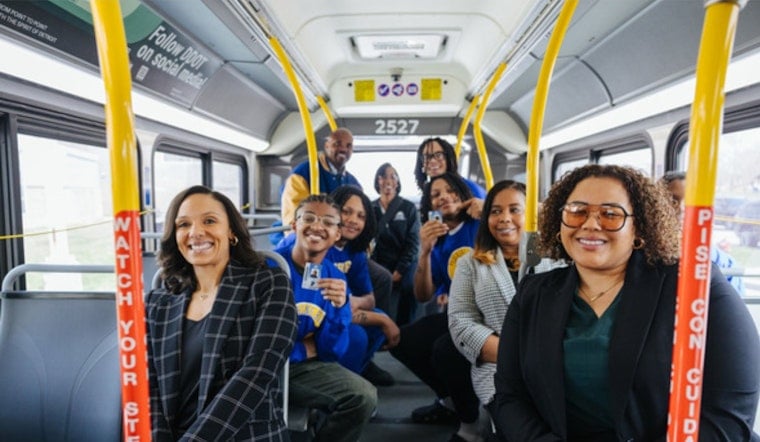
Detroit Mayor Mary Sheffield announced that the city's pilot program offering free DDOT bus rides to K-12 students will become permanent, locking in a benefit that has already doubled student ridership since it launched earlier this year. The program, called Ride to Rise, lets any Detroit student in a public, charter, or private school ride city buses at no cost by showing a valid student ID, and it now carries $1 million in state budget funding to keep it running long-term.
Sheffield first launched Ride to Rise on April 6 as a 24/7, year-round pilot, part of what the city described as a broader push to eliminate barriers to education, according to the City of Detroit. As reported by The Detroit News, Sheffield said the city should remove barriers and show students it is invested in their success. Student ridership on DDOT buses doubled between the pilot's April launch and late July, according to transit officials cited by WDET.
Why City Buses Matter for High Schoolers
The stakes are high because Detroit Public Schools Community District does not provide general yellow school bus service for most high schoolers, making DDOT the primary way an estimated 14,000 district high schoolers get to class. Yellow bus service in the district is generally limited to K-8 students living more than three-quarters of a mile from school or those with specialized education plans, per the district's own transportation guidance. That gap is why free, reliable city transit carries so much weight for a district still working to get kids into classrooms.
Before Ride to Rise, DPSCD had been purchasing monthly 31-day DDOT bus passes directly for eligible high school students. Shifting that cost onto the city freed up district dollars that leadership redirected into other attendance initiatives, according to Chalkbeat Detroit's reporting on the district's finances. The district has struggled with chronic absenteeism and falling enrollment, and now counts about 49,000 students currently enrolled, according to the Detroit News report.
A Persistent Absenteeism Problem
DPSCD recorded a chronic absenteeism rate of 60.9% during the 2024-25 school year, an improvement from roughly 70% in earlier post-pandemic years but still a central operational challenge, according to the Michigan Chronicle. Michigan itself ranked sixth highest in the nation for chronic absenteeism in 2025, with 29% of K-12 students statewide missing at least 10% of school days, per a report cited by Mid-Michigan NOW. That statewide backdrop helps explain why Detroit officials have layered multiple financial strategies onto the transit fix.
Separately, during the 2025-26 academic year, DPSCD paid nearly 84% of its high schoolers — roughly 12,800 students — up to $1,000 in $100 gift cards for maintaining regular attendance, measured in weekly cycles, according to Chalkbeat Detroit. Superintendent Nikolai Vitti urged families not to dismiss the importance of children attending school on the first day, per the Detroit News. DPSCD is set to begin its new school year on August 24, and Sheffield has urged parents to enroll their children before then.
New Ambassadors and a Fall Rideshare Pilot
To support the newly permanent program, the Detroit administration is training 50 transit ambassadors who will ride DDOT buses during peak times before and after school to help students get to and from class safely. City officials also said Ride to Rise is piloting rideshares this fall for a handful of schools with the highest chronic absenteeism, per the Detroit News. Beyond commuting to school, the program allows students to travel to jobs, sports, after-school programs, and other destinations.
City officials have also pointed to health access as part of the broader attendance push. The Detroit Health Department offers vision and hearing screenings, vaccines, and other health care support, while Delta Dental provides some free care to children under 21. Luke Shaefer said accessible health care is crucial for children to do well in school, according to the Detroit News.
A Regional Shift in Student Transit
Detroit's move builds on regional momentum: on May 1, the Suburban Mobility Authority for Regional Transportation launched its own year-round free fare program for K-12, community college, and university students across Wayne, Oakland, and Macomb counties, as Hoodline previously reported. Regional transit leaders framed that expansion as an effort to eliminate county-line fare barriers for students traveling to class or work.
The initial April rollout of free student transit also sparked debate at Detroit City Council, where Council Member Gabriela Santiago-Romero called for expanded youth spaces downtown to prevent overpolicing following an influx of teenage visitors, according to Chalkbeat Detroit. To help absorb the growing ridership, Detroit's municipal transit budget set aside $30 million in 2026 for DDOT to put 45 new buses into service, order 80 additional buses, and install 175 new benches and 100 upgraded shelters citywide, according to Transportation Riders United.





