

























































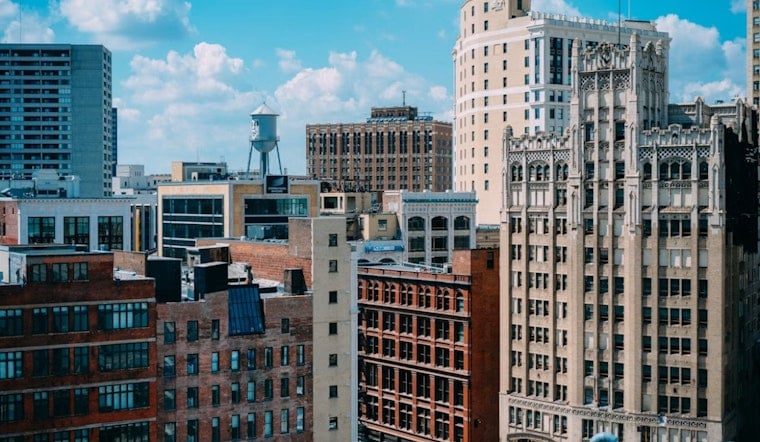
Detroit kicks off its 16th annual Month of Design throughout September, with mostly free events spanning an architectural installation on the city's east side, a signature after-dark party in Eastern Market, and a studio crawl in Bloomfield Hills. The festival leans into the theme “Design Moves the Future,” spotlighting how artists, designers and entrepreneurs are using design to help communities navigate change.
Detroit remains the sole UNESCO-designated City of Design in the United States, a distinction tied to its history of inventing industrial design, according to Axios. The city is part of a global collaborative network that prioritizes creativity as a driver for civic challenges and economic growth. Design Core Detroit runs the annual event, which includes exhibitions, panels, product debuts, tours and hands-on workshops across the city.
Signature Party Returns to Eastern Market
Eastern Market After Dark, described as the festival's signature event, takes place on September 17 from 6 pm to 11 pm, per the same Axios report. The evening blends food, drinks, design installations, and displays from local businesses and artists. Organizers advise attendees to arrive early, since parking fills up fast.
Another flagship offering, a hands-on furniture-building workshop, runs September 12 and 13 from 1 pm to 5 pm at Chroma, located at 2937 E. Grand Blvd. in Detroit. The workshop, led by designer Tony Printz, offers participants the chance to build and customize their own table and stool.
An Installation on Borders and Belonging
On the city's east side, an architectural installation titled “Between Your Love and Mine” explores the U.S.-Canada border as a place for cultural exchange rather than division. It runs from September 3 through September 30 at Little Village, 1265 Parkview St. Little Village is a cultural district anchored by The Shepherd, a converted century-old Romanesque church that now houses art galleries, public greenspace, and the Black Art Library, according to Library Street Collective, whose co-founders Anthony and JJ Curis spearheaded the district's revitalization of historic East Side structures into community cultural venues.
Cranbrook Grads Open Their Studios
Outside the city proper, Cranbrook Academy of Art's open studio event, called Live/Work, takes place September 19 from noon to 5 pm at 39221 Woodward Ave. in Bloomfield Hills. The event shows how graduates' work supports economic opportunities and community engagement, giving the public a direct look at how design training translates into local careers. Nearly 50 percent of Cranbrook Academy of Art graduates choose to stay and set up permanent working studios in the Detroit area after graduation, according to Cranbrook Academy of Art, connecting alumni working in 3D design, fiber arts, and architecture directly with local residents and buyers.
A Festival Built on Economic Scale
The numbers behind Detroit's design identity are considerable. Design industries across Michigan employ more than 45,000 people and generate roughly $2.5 billion in annual wages, with metro Detroit holding the highest concentration of commercial and industrial designers in the country, per UNESCO. That legacy traces back to Detroit's role as the historic center of American automobile manufacturing and midcentury modernism, which laid the groundwork for today's industrial design ecosystem.
Design Core Detroit itself circulates more than $250,000 into the city's creative economy each year through the festival, with over 86 percent of project funding awarded to BIPOC-led small businesses and production vendors, according to Design Core Detroit. The organization subsidizes open-call application fees and pairs local designers with host venues at no cost, aiming to keep participation broad. Design Core traces back to 2010, when it was founded by the College for Creative Studies and Business Leaders for Michigan as the Detroit Creative Corridor Center before rebranding under its current name in 2018.
A Wider Reach Than Ever
Last year's festival drew more than 250 artists and designers across 95 citywide events, pulling in over 60,000 total attendees, according to Detroit Month of Design. This year's open call for event proposals ran from February 23 through April 19 and marked a deliberate shift away from conceptual design theory toward practical, real-world community problem-solving, organizers said. The goal was to surface projects showing how local designers build resilience and innovate across Detroit's neighborhoods.
That practical focus has already paid off for at least one local designer. In a spring partnership with Grand Rapids-based ArtPrize, Design Core Detroit hosted Pitch Night Detroit, where five local finalists presented five-minute pitches to a five-juror panel. Designer Sarah Adnan won the competition, earning a $10,000 grant and a high-visibility venue placement for the fall 2026 ArtPrize competition, a connection that shows how the Month of Design platform links Detroit designers to statewide funding and major exhibitions.
Detroit received its UNESCO City of Design designation on December 11, 2015, becoming the first and only U.S. city to join the global UNESCO Creative Cities Network alongside 31 other design capitals, according to Rethinking The Future. The designation requires active participation in global design exchanges and using creative design as a driver for sustainable and equitable urban development. With most Month of Design events free and open to the public, organizers are betting that this year's practical, neighborhood-focused theme will keep that mission visible on Detroit's streets throughout September.





