

























































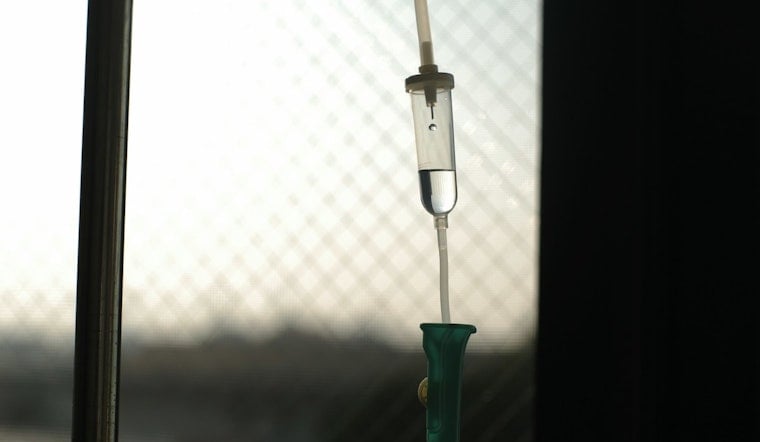
Chuck Manski, a Northwestern University economist, stopped taking the immunotherapy drug nivolumab after six months in 2022, even though the FDA-approved protocol called for a full year of treatment for his advanced melanoma. The monthly infusions had left him with thyroid damage and severe dryness in his eyes, lips and mouth. His decision to quit early has become part of a growing national argument among doctors, researchers and economists over whether cancer patients are routinely given more drug than they actually need.
Manski's case is one of several detailed by the Chicago Sun-Times, which reports that a study of 29 expensive cancer drugs estimated the minimum necessary dosages could have saved the U.S. healthcare system roughly $31 billion in 2024. The same reporting notes that cancer drug revenue to doctors and hospitals climbed from about $9 billion in 2010 to nearly $36 billion in 2024, with immunotherapy drugs accounting for about half of that profit. Nivolumab, sold as Opdivo, is one of the drugs at the center of the debate, alongside pembrolizumab, sold as Keytruda.
A Drug Company Incentive Problem
The core tension, according to the dossier of research behind this reporting, is that cancer drugs were historically developed under a maximum tolerated dose model built for toxic chemotherapy, while newer targeted therapies and immunotherapies often reach peak effectiveness at far lower doses. Pharmaceutical companies have little commercial reason to fund trials proving that less of their own drug works just as well. The FDA launched Project Optimus in 2021 specifically to push manufacturers toward evidence-based dosing rather than simply escalating to the highest tolerable amount, but the agency usually cannot compel drugmakers to conduct dose-ranging studies once a drug is already approved, per the Sun-Times report.
University of Chicago oncologist Dr. Mark Ratain has been one of the most persistent voices pushing for lower doses. He co-founded the nonprofit Value in Cancer Care Consortium in 2017 with former ASCO chief executive Dr. Allen Lichter specifically to run trials that pharmaceutical companies won't fund, according to The Cancer Letter. A 2018 trial Ratain led found that taking 250 milligrams of the prostate cancer drug abiraterone with food produced the same biomarker reductions as the standard 1,000-milligram dose taken on an empty stomach, cutting per-patient drug costs by 75%, according to the National Cancer Institute. Per the Sun-Times, Ratain has called pembrolizumab “the lifeblood of American hospitals.”
Trials Testing Whether Less Drug Works Just As Well
Dr. Michel van den Heuvel is leading a lung cancer study in Utrecht, Netherlands, comparing standard nivolumab dosing with a dose up to 50% lower, the Sun-Times reports. Julie Gralow is leading a separate $11 million trial comparing standard nivolumab against four lower dosage levels, including 20- and 40-milligram doses that amount to one-sixth or one-twelfth of the recommended amount. She is also leading a trial testing lower starting doses of Kisqali and Ibrance in breast cancer patients. Indian oncologists, meanwhile, found that as little as one-twelfth of the labeled nivolumab dosage had a powerful impact on several cancers, a finding discussed by Dr. Amol Patel in studies examining 20- or 40-milligram biweekly doses.
Oncologists in Canada, Israel and Sweden already use lower doses or shorter and less frequent courses of nivolumab and pembrolizumab, the newspaper's reporting notes. Dana-Farber Cancer Institute researchers are evaluating whether patients doing well after 27 weeks of pembrolizumab can stop treatment rather than continuing for six additional months. Dr. Garth Strohbehn has said less frequent dosing saves money, reduces veteran visits and opens up infusion slots, and Veterans Affairs hospitals have reported saving $1.5 million over two years through less frequent pembrolizumab dosing, plus roughly a 10% reduction in prior pembrolizumab costs through a separate pilot program.
Patients Caught Between Symptoms and Insurers
Kelly Shanahan developed profound fatigue within weeks of starting Ibrance in 2021, and she experienced her symptoms lifting after lowering her dosage, according to the same reporting. Dr. Kathy Miller starts metastatic breast cancer patients on 400 milligrams of Kisqali daily for three weeks with one week off, even though the drug's label recommends 600 milligrams daily — and insurers have challenged her lower-dose prescriptions as a result. Kisqali costs at least $16,000 a month at cash price, the Sun-Times reports, while a 2022 Vanderbilt University study found that 30% of Medicare cancer drug prescriptions went unfilled.
The financial strain extends beyond insurance disputes. Allegra Warfield sold her house and belongings and moved from Palm Desert, California, to Durham, North Carolina, while paying a $6,000 monthly insurance premium, according to the newspaper's account. Nationally, 43% of U.S. adults reported skipping medication because of cost in the past year, the report states.
Billions in Revenue Riding on the Status Quo
The money at stake for drugmakers is enormous. Merck sold nearly $32 billion worth of pembrolizumab last year, according to the Sun-Times, with the drug accounting for almost half of Merck's total drug sales and carrying FDA approval for more than 40 cancer conditions. KFF data shows pembrolizumab was the single largest drug expenditure in Medicare Part B in 2023, with federal spending reaching $5.6 billion, up from $2.7 billion in 2019. Bristol Myers Squibb has received $10 billion from nivolumab, while Ibrance, Verzenio and Kisqali generated $4.1 billion, $5.7 billion and $4.8 billion respectively for Pfizer, Eli Lilly and Novartis.
Merck spokesperson Julie Cunningham said pembrolizumab's dosage recommendations were based on extensive testing, according to the Sun-Times report. The reimbursement structure itself may discourage change: Medicare doctors receive an additional 6% of a drug's average price for each infusion, a formula tied to the Medicare Prescription Drug, Improvement, and Modernization Act of 2003 that ties provider revenue directly to drug price and volume, according to AJMC. Hospitals also lean on the federal 340B Drug Pricing Program, created in 1992 to subsidize care for low-income patients, which let safety-net systems purchase $66.3 billion worth of outpatient drugs at steep discounts in 2023 while billing insurers at full price, per the Health Resources and Services Administration. In July 2026, the Centers for Medicare & Medicaid Services proposed cutting Medicare reimbursement for 340B-acquired drugs starting in 2027, a move aimed at trimming $4.55 billion in Medicare outpatient drug spending in its first year, according to Targeted Oncology.
Signs of Regulatory Movement
There are indications the system is shifting. A September 2025 study in JCO Oncology Advances found adoption of Bayesian dose-optimization models in Phase I oncology trials jumped from 48% in 2021 to 75% in 2024, according to ASCO Publications. The FDA issued nonbinding dosing-study guidelines in 2024 and has approved lower-toxicity dosing regimens for fam-trastuzumab deruxtecan, tarlatamab, zongertinib and sunvozertinib, the Sun-Times reports. A new patient-centered dosing initiative is now seeking data on dosage reductions and outcomes directly from drug companies.
The stakes of getting dosing right were on display at the ASCO annual meeting on May 31, 2026, at McCormick Place, where a study found pancreatic cancer patients taking daraxonrasib lived a median of 13 months — nearly twice as long as chemotherapy patients — and the audience gave the drug a prolonged standing ovation, according to the Sun-Times. Advocates argue that cancer dose optimization studies could save billions of dollars while preventing severe side effects like the ones Manski endured, though the newspaper's reporting makes clear that changing decades of pricing and reimbursement incentives remains an open fight.





