

























































Downtown Cleveland is about to get a new, if temporary, answer to its grocery problem. Starting September 1, North Union Farmers Market will set up shop every Tuesday at Mall B, running from 10:30 a.m. to 1:30 p.m. through October 6, giving office workers and residents a lunchtime option to buy fresh produce in a part of downtown that has gone without a full-service grocery store for the first time in more than a decade.
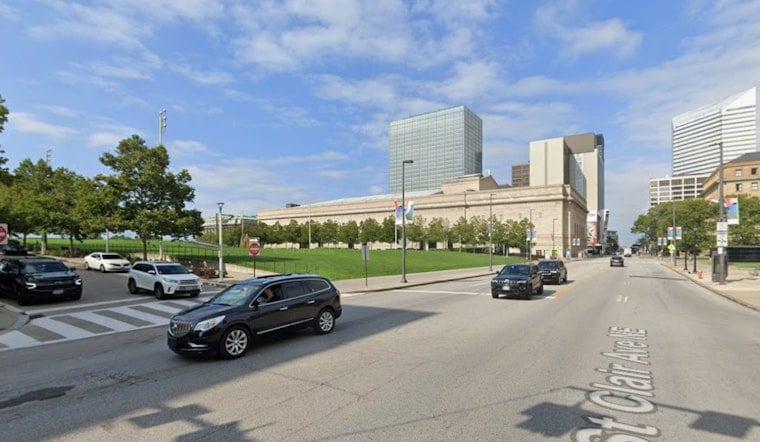
The city announced the six-week pilot in a press release, saying North Union Farmers Market will operate downtown from September 1 to October 6, according to the Cleveland Scene. Mall B sits at 1 St. Clair Ave N.E., a civic greenspace atop the underground Huntington Convention Center of Cleveland, overlooking Lake Erie and adjacent to Public Auditorium. The market will feature local farmers, food producers and small businesses as vendors, and organizers say it will also include bands and chefs.
Harriette Watford Lowenthal said the market will create another convenient way for residents, downtown employees and visitors to connect with local farmers and food producers, adding that it will bring fresh food directly into the heart of the city. Matt Cole, Cleveland's HR director, said the city plans to test how the market works in the downtown atmosphere, and that it could expand into a longer-running market in 2027 if the test goes well.
Heinen's Exit Left a Hole Downtown
The market's arrival comes weeks after Heinen's closed its store at East 9th and Euclid on July 31, ending an 11-year run in the landmark Cleveland Trust rotunda and leaving downtown without a full-service grocer, as Hoodline reported in its story on Heinen's exit from the rotunda. City Hall records reported by Cleveland Scene showed the store was losing roughly $1.5 million a year, weighed down by $470,000 in annual rent, $320,000 in private security costs, $434,000 in property taxes, and foot traffic that never recovered after the pandemic.
Despite the closure, Heinen's offered reassignments to all 77 downtown employees across its 18 other Northeast Ohio locations, avoiding layoffs. The grocer, a Cleveland-based, family-owned chain founded in 1929, had opened the downtown store in 2015 as one of the anchors of the neighborhood's residential comeback.
SNAP, Produce Perks and Local Growers
The Mall B market will accept a range of food assistance benefits, including SNAP/EBT with Produce Perks dollar-for-dollar matches up to $25, along with WIC, Senior Farmers Market Nutrition Program, and Family Fruit & Vegetable Coupon Program vouchers, per the city's announcement. Some of the produce for sale will come from crops grown directly inside Cleveland city limits through Food Sovereignty Cleveland and its network of urban farms, tying the downtown market to the city's broader push to expand hyper-local food production.
North Union Farmers Market brings decades of experience to the pilot. Founded more than 30 years ago, the nonprofit already runs a regional network across Northeast Ohio, with flagship markets at Shaker Square, Crocker Park, Cleveland Clinic Main Campus, University Hospitals, Lakewood, Chagrin Falls and Van Aken District. In 2024 alone, the organization incubated more than 350 small businesses, including 100 local farmers and 130 food purveyors, supported over 10,000 acres of Ohio farmland, and distributed more than $120,000 in food assistance benefits.
One of Two Downtown Markets Now Running
The new Tuesday market joins Downtown Cleveland, Inc.'s Public Square Farmers Market, which launched earlier this summer and runs every Thursday at 5 p.m. Together, the two markets represent downtown civic groups' attempt to patch a gap in fresh food access using recurring outdoor markets rather than a traditional supermarket. Whether that patchwork can realistically substitute for a full-service grocer remains an open question, since the Mall B market's three-hour weekday window makes it more of a lunchtime pop-up than a daily shopping destination.
Still, the numbers behind Heinen's departure help explain why city officials are leaning on nonprofit-run markets rather than another brick-and-mortar chain for now. High rent, security, and tax costs made the downtown grocery model difficult to sustain even for an established regional player, while North Union's lower-overhead, vendor-based approach offers a nimbler, if more limited, alternative while Cleveland continues working to attract a permanent replacement.





