

























































Duquesne University has broken ground on a five-story, 82,000-square-foot health sciences facility at the corner of Forbes Avenue and Magee Street, a $68 million project set to replace a former campus parking lot and open in fall 2028. The building will house the John G. Rangos, Sr. School of Health Sciences, consolidating academic programs currently scattered across multiple locations on campus into a single hub between UPMC Cooper Fieldhouse and the Forbes Parking Garage.
According to WPXI, the Rangos School has spent 35 years building degree programs in physical therapy, occupational therapy, physician assistant studies, athletic training, public health, health administration, and speech-language pathology. Those programs will finally share one roof once construction wraps. Per TribLIVE, the site sits directly across Forbes Avenue from McGinley Hall and the Nasuti College of Osteopathic Medicine, which opened in 2024, creating a centralized health education hub in Uptown that also complements the nearby UPMC Mercy Vision Institute.
A Building Designed for Hands-On, Cross-Discipline Training
The station's report describes a facility designed for hands-on learning, collaboration and innovation, with nine specialized labs, two simulated hospital bays, several exam rooms for patient training, and traditional classrooms meant to foster interprofessional education across health disciplines. Street-level clinical spaces will house Duquesne's Speech-Language-Hearing Clinic, which handles roughly 5,000 patient visits each year, giving the building a direct community service role beyond the classroom.
The project cleared a key regulatory hurdle when the Pittsburgh Planning Commission unanimously approved the site design and building plans in January, ahead of this week's groundbreaking. It also picked up state financial backing: in July, Governor Josh Shapiro's administration awarded Duquesne $1 million from the state's Redevelopment Assistance Capital Program for the facility, part of a broader $134 million regional economic development allocation, following advocacy from State Senators Jay Costa and Wayne Fontana and State Representative Aerion Abney. Fontana said he supported the project because he expects it to catalyze continued economic growth in Uptown.
New President's First Major Capital Project
David J. Dausey, an epidemiologist and former provost who officially took office as Duquesne's 14th president on July 1, presided over the groundbreaking. He succeeds Ken Gormley, who moved into the chancellor role after launching the health corridor initiative that culminates in this building. It marks Dausey's first major capital project since taking the university's helm, and it lands on a campus of nearly 8,200 undergraduate and graduate students at a university founded in 1878.
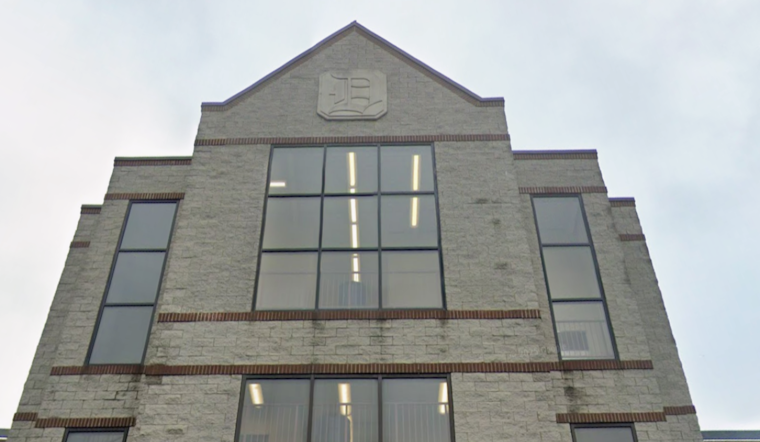
The new facility caps a multi-year building push along Forbes Avenue in Uptown, following the renovated UPMC Cooper Fieldhouse in 2021, an 11-story student residence hall in 2024, and the osteopathic medical school building in 2024 — the same building whose new exterior signage Hoodline covered earlier this year. Together, the projects have reshaped the stretch of Forbes Avenue into what university officials describe as a centralized health education corridor.
Healthcare's Outsized Role in the Local Economy
The timing lines up with broader labor trends in the region. According to the Pennsylvania Department of Labor & Industry's 2026 economic profile, Education and Health Services is the largest private sector category in Allegheny County, accounting for 18.5% of total local unemployment compensation claims. Against that backdrop, Duquesne's decision to consolidate its health programs — while keeping a working clinic open to the public — ties the university's expansion directly to the region's dominant industry.


