

























































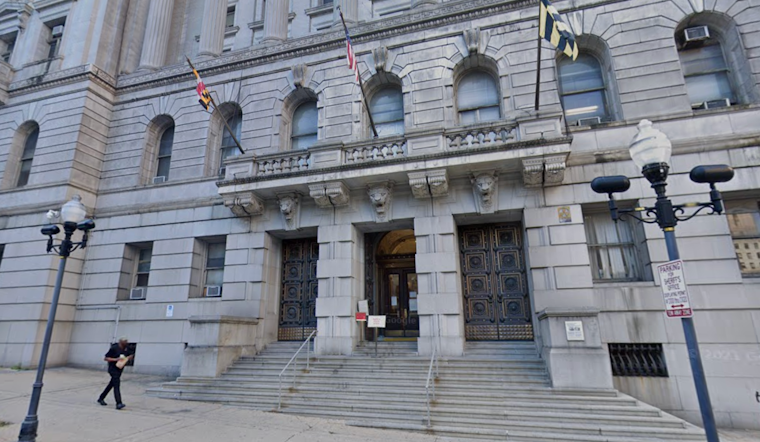
A 36-year-old man accused of shooting another man in the face during a bizarre street confrontation in East Baltimore has rejected a plea offer that would have sent him to prison for 30 years, setting up a three-day trial next month just weeks before a legal deadline that could force prosecutors to act. Keith Ray Jr. appeared before Baltimore City Circuit Court Judge Melissa K. Copeland on August 8 and turned down the state's offer, which called for 60 years suspended to all but 30, followed by five years of supervised probation.
The case stems from a shooting just before 1:45 a.m. on March 17 at the intersection of Sinclair Lane and Erdman Avenue, according to Baltimore Witness. Court documents cited by the outlet allege that a pedestrian — later identified as Ray — walked in front of a couple's vehicle as it turned left onto Erdman Avenue, pulled out a handgun, and fired at the car, shattering the driver-side window and striking the male victim in the face. The victim lost control of the vehicle, which sped up out of camera view before crashing into a fence several hundred feet from the shooting location.
Hoodline previously reported that police closed Erdman Avenue between Sinclair Lane and Federal Street on March 17 while detectives and crime lab technicians processed the scene and photographed the heavily damaged vehicle. The wounded victim ran to the Crown gas station at 4201 Erdman Avenue for help, and his girlfriend flagged down Baltimore police on the 4300 block of Erdman Avenue. Officers were called to the 4200 block of Erdman Avenue at 1:53 a.m., with a ShotSpotter alert notifying police six minutes before they arrived, per the report.
How Investigators Zeroed In On Ray
Police say video footage from the Crown gas station allegedly showed Ray inside the store before the shooting, and separate footage showed him leaving the station and crossing Erdman Avenue shortly before the confrontation with the victim's vehicle. A police department flyer led to Ray's identification on March 24, according to the same report. Court documents said the victim believed Ray was after him, though the underlying motive for the confrontation has not been publicly detailed.
Ray was described in charging materials as having an average build, a large nose, and a missing front tooth, and was reportedly wearing a black North Face jacket, a hoodie, and light blue jeans at the time of the shooting. He faces charges including attempted first-degree murder, use of a firearm in a violent crime, first-degree assault, and illegal possession of a regulated firearm.
The Rejected Deal and What It Would Have Meant
The plea offer Ray turned down carried a concurrent 20-year sentence for firearm use, with the first five years without parole; a concurrent 15-year sentence for illegal firearm possession, with the first five years also without parole; and a concurrent 15-year sentence for first-degree assault. Had he accepted, Ray would also have been required to register as a gun offender and stay away from the victim, terms that carry their own set of long-running obligations. Under Baltimore City Code Article 19 Subtitle 60, known as the Gun Offender Registration Act, anyone convicted of a qualifying firearm offense must register in person with police within 48 hours of release or conviction and re-register every six months for up to five years — a requirement enforced under state law with penalties of up to a year in jail and $1,000 per day of non-compliance for failing to comply.
Defense attorney Natalie Finegar informed the court that her client rejected the plea, according to the Baltimore Witness account. Finegar is a veteran Baltimore defense attorney and former Deputy Public Defender for the city with more than 30 years of experience in complex criminal cases. Prosecutors told the court that all discovery had been shared with the defense and that they expect to call approximately four to five witnesses at trial.
A Trial Clock Tied to the Hicks Rule
Counsel agreed to a three-day trial beginning October 26 in Baltimore City Circuit Court, a date scheduled roughly three weeks before Ray's statutory Hicks deadline in November. Under Maryland Criminal Procedure § 6-103 and Maryland Rule 4-271 — the so-called Hicks rule stemming from a 1979 court ruling — criminal charges in circuit court must go to trial within 180 days of a defendant's or attorney's first court appearance unless an administrative judge grants a continuance for good cause, according to legal explainers of the rule. That constitutional speedy-trial protection leaves little room for the court to push the date further without risking dismissal of the case.
Ray will be tried before Judge LaZette C. Ringgold-Kirksey, who spent more than 16 years as a prosecutor in the Baltimore City State's Attorney's Office, rising to Division Chief of the Gun Violence Enforcement Division before her 2022 judicial appointment, according to a profile of the circuit court bench. Judge Copeland, who oversaw the docket call where Ray rejected the plea, serves as Judge-in-Charge of the Criminal Division for the Circuit Court for Baltimore City and previously spent 12 years as an Assistant State's Attorney herself.
Case Unfolds Amid a Citywide Drop in Shootings
The prosecution comes as Baltimore City has recorded a historic decline in gun violence this year. Through early August, the city had logged 60 homicides and 187 non-fatal shootings, a 25.9 percent drop in homicides compared to the same period in 2025, according to Baltimore Fishbowl. City officials reported that July marked the lowest monthly homicide total for the month in 25 years, with just seven homicides recorded.
Police have also pointed to rising clearance rates and aggressive gun seizures as part of the shift. The Baltimore Police Department reported a 54 percent clearance rate for non-fatal shooting investigations through the first half of 2026, a 12-percentage-point jump over the same period last year, per the department's mid-year crime report. Officers seized 1,189 firearms citywide through August 1, including 123 untraceable ghost guns, and made 743 gun arrests, the Fishbowl report noted.
The Erdman Avenue corridor itself has seen repeated violence in recent months. An off-duty Baltimore police officer was grazed by gunfire in the 2100 block of Sinclair Lane on July 12, an incident Hoodline reported drew homicide detectives to take over the investigation. It remains unclear whether the defense will challenge the video identification evidence from the Crown gas station or whether prosecutors will call additional witnesses beyond the four or five they've indicated, questions that are likely to shape the three-day trial set to begin October 26.





