

























































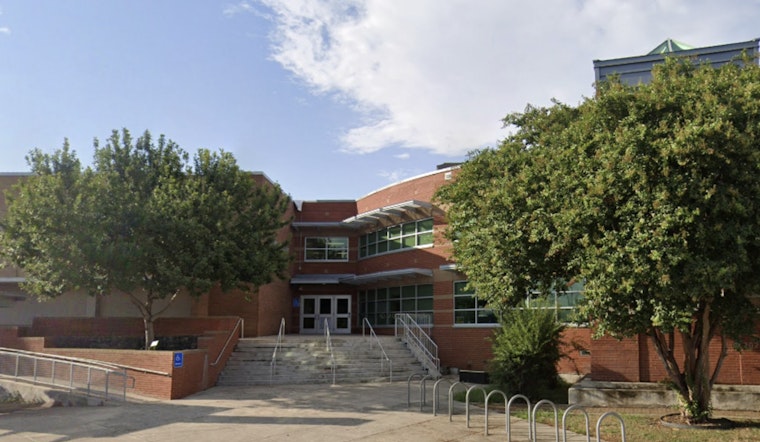
Students at Thomas Edison High School in San Antonio say some classrooms have felt more like a greenhouse than a place to learn, with thermostat readings in the school's health care building hitting 80 degrees or higher and one classroom packed with more than 30 students trying to focus through the heat. The complaints have piled up since the start of the school year, students say, as San Antonio ISD crews work to fix cooling problems that have flared up in isolated pockets across the district.
One Edison student told WOAI News 4 San Antonio that the heat and humidity inside made classrooms feel worse than being outdoors, and another student said the discomfort has been distracting, describing a mix of reduced attention and overstimulation brought on by the sweltering rooms. A third student said they wished teachers did not have to run fans in class just to make the heat bearable. The complaints come as San Antonio has seen outside temperatures of 100 degrees or higher for several days running, and a recent heat advisory only made the indoor conditions worse, according to the station's report.
SAISD has acknowledged the cooling issues in isolated areas across the district and says it is prioritizing HVAC repairs, per the same account. In the meantime, the district has set up portable cooling units, moved students out of affected classrooms as needed, and asked staff to close blinds and report concerns as they arise, with officials saying they are adding support where necessary.
A Pattern That Predates This Semester
This is not the first time cooling equipment has buckled under San Antonio's climate this year. The Young Women's Leadership Academy experienced air-conditioning problems in 2025 after a chiller failure, and in May 2024, SAISD had to cancel classes at two schools because of an AC failure, the station notes. Edison students now expect the August heat to linger for several more weeks, meaning the current strain on classroom cooling systems is unlikely to ease soon.
The struggles at Edison sit inside a much larger financial and infrastructure problem for San Antonio ISD. A May 2024 assessment by district leaders estimated that fully repairing and replacing aging HVAC systems across all SAISD facilities would cost more than $300 million, according to Texas Public Radio, a figure that far exceeds the district's available capital funds. Superintendent Jaime Aquino has noted that budget constraints force SAISD to lean heavily on portable chillers during peak weather rather than permanent fixes.
Voter-Approved Bond Money Already at Work
Edison High, a campus that has operated for nearly 70 years, was allocated funding under SAISD's voter-approved $1.3 billion 2020 bond for major renovations, including a full HVAC system replacement, as reported by the San Antonio Report. By January 2026, the district had spent $95 million of that bond money on HVAC upgrades across more than 80 buildings and had put a districtwide preventive maintenance program in place, including routine filter changes, coil cleanings and system greasing. Many SAISD campuses, part of a 125-year-old network, still rely on 1970s-era “two-pipe” HVAC systems that struggle to adjust quickly when weather swings hard in either direction, according to KSAT, which reported that the district has allocated $77 million to upgrade systems at 41 campuses with plans for 12 more by 2028.
Those aging systems have failed in both directions. In January 2024, a severe cold front caused widespread boiler and heating failures that forced SAISD to close all 98 district campuses for several days and led to the resignations of two top operations officials, as Hoodline previously reported. SAISD implemented mandatory extreme-weather protocols afterward, requiring custodians to conduct daily classroom temperature checks starting at 5 a.m. and to follow a tiered response that can include spot coolers, moving students to different classrooms, or busing them to cooler campuses.
Not Just an Edison Problem
The heat trouble extends beyond SAISD's borders. Neighboring Northside ISD saw its own early-school-year cooling breakdowns this month at Pat Neff Middle School and Harlan High School, as heat index values across San Antonio reached 107 to 110 degrees during the opening weeks of the 2026 school year. Texas Administrative Code guidelines recommend that occupied public school classrooms and offices stay between 72 and 76 degrees during summer months, a benchmark that Edison's reported 80-degree readings clearly exceed.
The stakes go beyond comfort. A landmark study of 10 million U.S. high school students by the National Bureau of Economic Research found that each 1-degree Fahrenheit increase in school-year average temperature without classroom air conditioning cuts student learning by 1 percent, with three times the negative impact on low-income and minority students. Researchers found that school-day heat exposure disrupts instructional time, while functioning air conditioning almost entirely eliminates that learning penalty.
SAISD is now asking voters to weigh in on the district's broader facilities crisis. In August 2026, the district proposed a $600 million bond package and tax rate election to fund modernizations, security upgrades and facility repairs, according to Texas Scorecard. The proposal comes as the district navigates a $51 million structural deficit and enrollment that has dropped from more than 52,000 students in 2016 to roughly 40,000 today. For now, Edison students and staff are left waiting on portable units and open blinds while the district's crews try to keep pace with a heat wave that shows no signs of breaking.





