

























































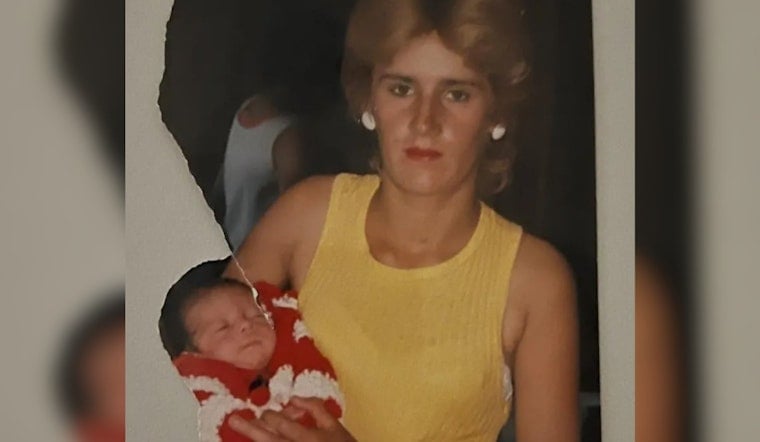
El Cajon homicide detectives are asking the public for help solving the 1998 murder of Alicia Ledezma Sanchez, a woman whose body went unidentified for 27 years until DNA testing confirmed who she was last October. Sanchez was found dead in a ravine near Avocado and Chase avenues on August 13, 1998, and investigators say they still do not know who killed her or why.
According to the San Diego Union-Tribune, El Cajon Police Department Detective Pedro Meza said seemingly minor details or previously insignificant information could still be valuable to the investigation. Sanchez, a Mexican national who had left Mexico to work in the United States, was identified last year through a DNA match confirmed with her son, according to the same report. At the time she died, El Cajon homicide investigators could not positively identify her, and the case sat unresolved for decades.
A Body Without a Name for 27 Years
When Sanchez's remains were discovered in the ravine, forensic examinations found she was severely decomposed and had likely been dead for up to six weeks, according to Newsweek. Investigative records show her cause of death was determined to be homicide by beating, though police have not publicly disclosed suspect leads or a motive, per the Times of San Diego.
She was 30 years old at the time of her death and is survived by three adult children, grandchildren, and siblings, per the City of El Cajon. In 2003, the El Cajon Police Department Cold Case Unit sent the unidentified woman's skull to a forensics lab in an attempt to create a facial reconstruction, but that effort produced no leads. Investigators later extracted DNA from her remains in 2008 and searched the Combined DNA Index System, again without a match, before entering her case into the National Missing and Unidentified Persons System in April 2019, according to DNA Solves.
Genetic Genealogy Finally Cracks the Case
The break came after the department's volunteer Cold Case Unit partnered with forensic laboratories Othram Inc. and Parabon NanoLabs beginning in May 2022 to perform advanced genome sequencing and phenotyping, an effort detailed by Santee Patch. Genetic genealogy traced her ancestral line to the Tumbiscatío region of Michoacán, Mexico, where a genealogist's social media post in a local Facebook group led a nephew to contact authorities about his mother's long-lost sister.
The El Cajon Police Department posted the unidentified woman's story on social media last August, and a potential family member contacted the department after seeing it. A subsequent DNA test confirmed the relationship between Sanchez and her son that October, finally giving investigators a name to attach to the case they had carried for a generation.
What Police Are Still Looking For
At the time her remains were recovered, Sanchez was wearing Dockers pleated pants, black leather lace-up Route 66 shoes in a size 6.5, black knee-high stockings, and a men's size XL light blue T-shirt printed with Woodruff Warriors 20 Year Reunion 1971-1991, according to the Union-Tribune. She also wore a silver herringbone bracelet, a detail police hope someone might still recognize.
Detectives are now asking anyone with information about Sanchez's activities, associates, or the events leading up to the discovery of her body to come forward. Meza said investigators remain committed to pursuing all available leads and bringing clarity and justice to the case. Anyone with information can contact the El Cajon Police Department Investigation Division at 619-579-3320 or the department's Cold Homicide Unit by email at [email protected]. Tips can also be submitted anonymously to San Diego County Crime Stoppers at (888) 580-8477 or online at sdcrimestoppers.org.
Part of a Countywide Pattern
Sanchez's identification fits into a broader pattern across San Diego County, where agencies have increasingly turned to investigative genetic genealogy to crack cold cases that once seemed permanently unsolvable. The San Diego County Sheriff's Department used similar DNA techniques to identify 1986 murder victim Claudette Powers in May 2023, part of an office that oversees roughly 400 unsolved homicide and missing person cases.
Prosecutors have shown they will still pursue these cases in court even decades later. In June 2026, the San Diego County District Attorney's Office secured a 25-years-to-life sentence for Randall Oyler in a 1990 cold-case murder after DNA recovered under the victim's fingernails led to his identification. For Sanchez's family, that kind of resolution remains the goal — but for now, El Cajon investigators continue to seek justice and solve the case surrounding her death, nearly three decades after she was buried in a ravine without a name.



