

























































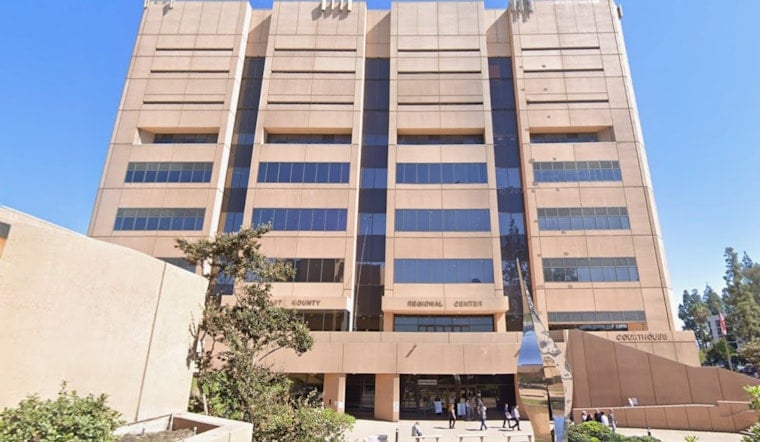
A preliminary hearing that began this week at the El Cajon Courthouse will determine whether former Chaldean Catholic Bishop Emanuel Shaleta stands trial on 16 embezzlement and money laundering charges tied to roughly $272,000 in cash rent payments collected from a church tenant. Shaleta, 69, once a high-ranking leader of St. Peter Chaldean Catholic Cathedral in El Cajon, is accused of directing that rent be paid in cash rather than by check, then quietly replacing the missing money using a separate charity account that required only one signature to access.
The hearing testimony, as reported by NBC 7 San Diego, laid out how Rayadh Gaboola, who operates the church's banquet hall and hosts weddings, meetings and other events there, paid rent by check until March 2024. Gaboola paid $33,990 in rent that year and, like other tenants of the social hall, paid more than $30,000 a month. According to the outlet's reporting, church secretary Christine Dawisha testified that Shaleta instructed her to tell Gaboola to start paying in cash instead, and that she then delivered those cash payments to Shaleta at his direction.
Dawisha told the court she questioned none of it because of her position within the church hierarchy. “Mr. Shaleta is my boss. Whatever he asks, I follow,” she testified, according to the same NBC 7 San Diego account. She said Shaleta told her, “We need the cash for the needy in Iraq,” to explain why the rent needed to come in cash rather than through the usual channel.
How the Money Allegedly Moved
Rent payments were normally deposited by check into the church renovation account, the outlet reports. But once the cash started flowing to Shaleta directly, he allegedly wrote checks for the exact rent amounts out of a separate account meant to help the needy, then deposited those reimbursement funds into the renovation account to paper over the gap. Dawisha testified that Shaleta told her one signature was sufficient on those checks because of the special nature of the needy account — even though church policy requires two church leaders to sign checks of that type.
Garvin Garmo, another witness, testified that no church bank account was actually exempt from the two-signature policy, undercutting the justification Shaleta reportedly gave for the single-signature reimbursements. The outlet also reports that Shaleta told Garmo the matter was internal. Prosecutors have not said where the cash itself came from, and the reimbursement checks were signed only by Shaleta.
The scheme reportedly started unraveling after a financial adviser flagged discrepancies in the church's bank accounts. Dawisha testified she notified members of the church's financial committee a few months after the cash arrangement began, and that Shaleta had also asked her to move money between various church and diocese accounts to cover the missing rent payments.
Arrest at the Airport, Charges at Arraignment
Shaleta was arrested at San Diego International Airport in March, with prosecutors alleging he was preparing to board a plane headed out of the county at the time and had more than $9,000 in cash on him when he was taken into custody. At his arraignment, prosecutor Joel Madero alleged that cash provided to Shaleta had simply vanished and that money moved between bank accounts was intended to conceal the embezzlement, according to NBC 7 San Diego. Madero also alleged that Shaleta gave unreasonable explanations for where the money had gone.
According to CBS 8 San Diego, Shaleta pleaded not guilty at his March 9 arraignment to 17 felony counts, including eight counts of embezzlement, eight counts of money laundering, and an aggravated white-collar crime enhancement, with bail set at $125,000 and his passport surrendered. That state enhancement applies to fraud or embezzlement schemes involving a pattern of taking more than $100,000, and it carries additional prison-sentence exposure upon conviction, the station reported. Shaleta remains out of custody and faces up to 15 years in state prison if convicted on all charges.
Resignation, Vatican Oversight and a Rejected Plea
The financial case unfolded alongside major changes atop the Eparchy of Saint Peter the Apostle, the San Diego-based Chaldean diocese that has jurisdiction over 19 western states and serves an estimated 70,000 Catholics, according to Catholic-Hierarchy. The Vatican accepted Shaleta's resignation from the diocese, and following that resignation on March 10, Pope Leo XIV appointed Iraqi-born Bishop Saad Sirop Hanna as Apostolic Administrator to govern the eparchy.
Shaleta was born in Fishkhabour, Iraq, in 1956, was ordained a priest by Pope St. John Paul II in 1984, and was appointed bishop of the San Diego eparchy by Pope Francis in August 2017, per the same AP News account. El Cajon is home to more than 15,000 Chaldean Americans and Iraqi refugees, making it one of the largest Chaldean diaspora communities in the country outside of Metro Detroit, according to reporting compiled by CalMatters and Voice of San Diego, underscoring how central St. Peter's parish is to that community.
Immediately before this week's preliminary hearing, Shaleta rejected a proposed plea deal from prosecutors that could have granted him probation rather than state prison time in exchange for pleading guilty to reduced charges, according to Catholic news outlet The Pillar. That outlet has also reported that Shaleta appears to be the first sitting U.S. diocesan bishop ever arrested and jailed on felony criminal charges tied to financial crimes. The Pillar separately reported in February that a Vatican-ordered canonical inquiry reviewed private investigator evidence alleging Shaleta made frequent late-night trips to a Tijuana brothel using an exclusive patron shuttle, a set of personal-conduct allegations that ran parallel to the financial investigation but are distinct from the criminal charges he now faces.
The preliminary hearing testimony is expected to last two days and is expected to conclude today, when a judge will decide whether there is enough evidence to send the case to trial. San Diego County Sheriff's investigators originally opened the financial crimes investigation in August 2025 after a church representative submitted documentation flagging suspicious transactions, according to AP News.




