

























































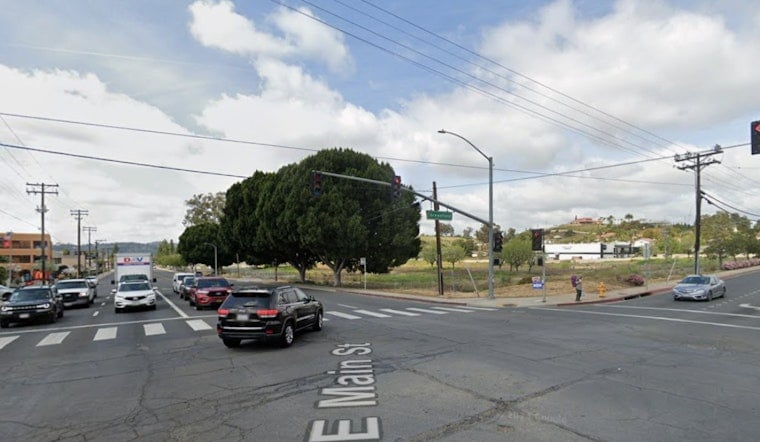
El Cajon city leaders voted unanimously on July 28 to direct staff to analyze legal, financial, land-use and policy options for a 25-acre Kaiser Permanente site that has sat empty since 2002, including the possibility of the city acquiring the land outright. The vacant parcel, at the southwest corner of Greenfield Drive and East Main Street, has attracted homeless people in the two decades it has remained undeveloped despite Kaiser's long-stated intent to build a regional medical campus and hospital there.
The council's move, first detailed by The San Diego Union-Tribune, puts possible acquisition of the Kaiser property alongside other tools city staff have been told to study, including legal options aimed at forcing progress on a project that has languished since Scripps Memorial Hospital East County shuttered on the site in 2002. Mayor Bill Wells said he is beginning to worry about the property and described it as an eyesore in the middle of a city that is largely built out, according to the Union-Tribune. Wells said he wants to again consider legal options to force the project forward, per the same report.
Kaiser bought the land after Scripps closed the 162-bed hospital that previously stood there, and the site's development has remained part of Kaiser's long-term capital plan ever since, per the Union-Tribune. A city staff report cited by the Union-Tribune said the site has economic, employment, housing and public-benefit potential and represents one of El Cajon's most significant remaining development opportunities. In 2022, El Cajon officials passed an ordinance requiring Kaiser to develop a comprehensive plan for the entire site before construction could begin, the paper reported.
Kaiser Says It Remains Committed, But Offers No Timeline
Kaiser spokesperson Kerry Forde said the company continues to evaluate the property's potential and remains committed to the health and well-being of patients in El Cajon and East County San Diego, according to the Union-Tribune. Forde added that Kaiser remains willing to work collaboratively with El Cajon regarding the property's future development, the paper reported. Kaiser currently operates two primary outpatient medical offices in El Cajon, located on Travelodge Drive and East Main Street, rather than the inpatient hospital many residents have been waiting on.
Deputy Mayor Michelle Metschel put the council's frustration bluntly, telling the Union-Tribune that promises don't build. The council has already floated other paths for the land: it considered rezoning the property from medical to residential use in 2025, according to the paper's reporting, before returning to the idea of pressing Kaiser toward its original hospital plans.
Why East County Leans So Heavily On One Hospital
East County has essentially one hospital, Sharp Grossmont in La Mesa, per the Union-Tribune's reporting on the council's deliberations. A Sharp HealthCare fact sheet confirms Sharp Grossmont operates 562 licensed beds and manages one of California's busiest emergency departments, logging more than 110,000 patient visits a year while serving an East County population of roughly 500,000. That reliance on a single acute-care facility has fueled growing frustration from residents in surrounding communities over long emergency room wait times and limited acute care access, as reported by Santee Pulse.
Kaiser has not stood still elsewhere in the county. KPBS reported that Kaiser opened a seven-story, 433,000-square-foot hospital in San Marcos in August 2023, equipped with up to 206 beds after a $526 million investment, its third full-service medical center in the county. Data from the California Department of Health Care Access and Information show Kaiser now serves more than 630,000 members in San Diego County primarily through that San Marcos facility along with its Kearny Mesa and Grantville hospitals, leaving East County members without a Kaiser inpatient option of their own.
A Broader Push On Stalled Real Estate
The Kaiser vote was not an isolated action. During the same July 28 meeting, the El Cajon City Council also directed staff to analyze acquiring Parkway Plaza, an 80-acre enclosed shopping mall facing commercial distress, Hoodline reported in its earlier coverage of the city's plan for the mall. Together, the two votes suggest a broader municipal strategy to intervene on large, underutilized properties rather than continue waiting on private owners.
El Cajon's land constraints help explain the urgency. U.S. Census Bureau data show the city has about 103,000 residents packed into just 14.5 square miles, with a median household income of $77,462 and a poverty rate exceeding 16%, making large infill parcels like the Kaiser site unusually rare and valuable. The city has also leaned on other stopgap infrastructure to ease hospital strain, including a 14,000-square-foot 24/7 mental health crisis hub that opened this spring to evaluate psychiatric and substance-use patients and reduce emergency room overcrowding.
What Eminent Domain Would Require
If El Cajon ultimately pursues acquiring the Kaiser land through eminent domain, state law sets a specific bar. Under California Code of Civil Procedure Section 1245.220, as summarized by the Peterson Law Group, a city cannot file an eminent domain lawsuit until its governing body holds a public hearing and formally adopts a Resolution of Necessity establishing that the project serves public necessity. That process would require El Cajon to prove in court that the public health need outweighs Kaiser's private property rights, a legal hurdle the city has not yet cleared.
Whether that fight becomes necessary remains an open question. It is unclear whether Kaiser will accelerate its own development timeline in response to municipal pressure or resist any condemnation effort through legal channels. The council's directive comes as its own membership is shifting, with 24-year Councilman Gary Kendrick, the longest-serving elected official in San Diego County, announcing his withdrawal from his reelection bid this month for health reasons.





