

























































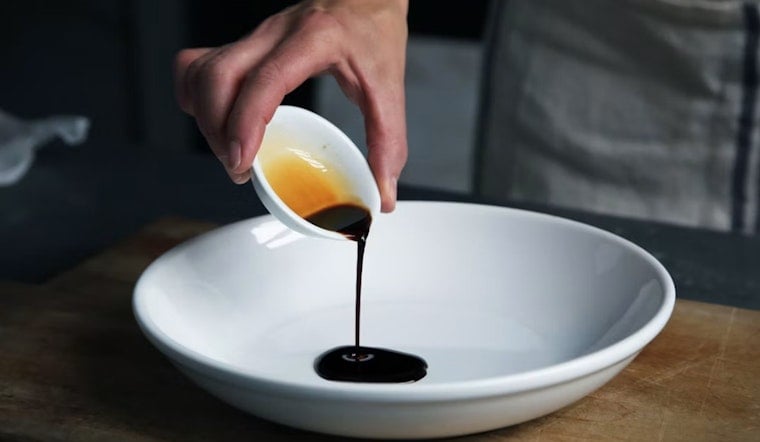
A former Heinz executive has turned a search for authentic, centuries-old soy sauce into a growing Denver food business, stocking cedar-barrel-aged shoyu from Japan on the shelves of local specialty grocers for around $12 a bottle. Todd Martin's line, Kioke Reserve, is now available at Denver-area shops including Pete's Fruits and Vegetables, Littleton Meats, and Congress Park Market, bringing a soy sauce style that today accounts for less than 1 percent of Japan's total production to American shoppers.
As reported by Westword, Martin visited roughly 600 producers before settling on the brewery he now distributes for in the United States, a shoyu maker that has been run by the same family for eight generations. The soy sauce is aged in kioke, the Japanese word for wooden barrel or tub, a method that dates back over 400 years but was largely displaced in the 20th century by faster, cheaper steel and plastic tanks. Martin told the outlet that less than 1 percent of soy sauce is made that way today, and that his goal is simple: “I'm trying to get people to eat better food.”
The brewery behind Kioke Reserve is Naogen Shoyu, founded in 1825 in Kanazawa's historic Ono soy sauce district, according to NAOE Miami. The Ono district developed into one of Japan's five historic soy sauce brewing centers starting in the 17th century, drawing on pure mountain runoff from Mount Hakusan and coastal access for shipping finished shoyu, per Taste Cooking. Westword describes the brewery simply as a 200-year-old operation on Japan's west coast, with Martin serving as its exclusive U.S. distributor.
Why Wooden Barrels Still Matter
During Japan's Edo period, all soy sauce was fermented in wooden kioke barrels, but industrial shifts to steel and plastic tanks over the following century pushed traditional barrel brewing to the margins, according to Musubi Kiln. Wooden barrels were largely abandoned because they cost more to build and maintain and produce soy sauce far more slowly than industrial equipment. Cedar kioke barrels also develop their own microflora over decades of continuous use, with naturally occurring yeasts and lactic acid bacteria living inside the wood grain, according to Hokkai Kioke Soy Sauce, a fermentation detail that industrial steel vats simply cannot replicate.
That decline has spurred a broader preservation push in Japan. On Shodoshima island, fifth-generation brewer Yasuo Yamamoto founded the Kioke Craft Revival Project to train craftsmen in building and maintaining cedar barrels before the skill disappeared entirely, bringing together brewers, chefs, and carpenters to construct new large cedar tubs, according to Wabunka. Kioke Reserve's product lineup has also drawn expert attention from Keiko Kuroshima, recognized as the world's first female soy sauce sommelier and one of only three certified soy sauce sommeliers in the world, per Hakko Hub.
What's on Denver Shelves
Kioke Reserve's lineup goes beyond traditional soy sauce, per the Westword report. The company sells a ginger-flavored soy sauce, a sansho variety made with Chinese numbing spices, a gluten-free tamari, and a lower-sodium option, with a yuzu-flavored line in development. The low-sodium version achieves a 40 percent sodium reduction compared to conventional soy sauce by incorporating kelp stock and mirin alongside the traditional barrel aging, maintaining umami depth that thinner low-sodium sauces often lack, according to a listing on eBay.
Every bottle is made with non-GMO soybeans, wheat, domestic sea salt, and water filtered through volcanic rock, the same Westword article notes. Martin launched Kioke Reserve on Amazon first to gauge demand before expanding into physical grocery shelves, and he now promotes the brand through samples and tastings at craft food fairs, farmers markets, and specialty grocery shops around Denver, often featuring chicken and vegetables brushed with the flavored sauces. Martin told the outlet the timing feels right, saying the category is ready for something authentic.
A Denver Retail Scene in Transition
Kioke Reserve's arrival on Denver shelves lands at a bittersweet moment for the city's independent grocery scene. Pete's Fruits and Vegetables, one of the specialty markets now stocking the brand, lost its longtime owner in July when 79-year-old Pete Moutzouris passed away after running the Hilltop neighborhood market for more than 40 years, according to CBS News. The market has long been a community fixture known for fresh produce, Greek specialties, and a local meat counter.
Denver's growing profile as a hub for natural and gourmet food brands also formed the backdrop for this launch. The city hosted Newtopia Now this month, a national trade event organized by Informa Markets to spotlight emerging conscious, natural, and gourmet specialty food brands, according to Natural Products Insider. In Japan, the 200-year-old Kanazawa brewery's partnership with Kioke Reserve drew its own attention in July, when national public broadcaster NHK aired a television feature on the export of traditionally brewed shoyu to the U.S., marking the brewery's first-ever national TV appearance, per a Kioke Reserve social media post.
What remains unclear is how Kioke Reserve manages its supply chain from Kanazawa to Denver, how price-sensitive Colorado shoppers will respond to a roughly $12 bottle of soy sauce compared to mass-market brands, and whether Martin plans to push distribution beyond the Denver market into larger regional or national natural grocers. For now, the brand's most immediate footprint remains a handful of specialty shops around the city, each carrying a taste of a brewing tradition that, per Martin's own account to Westword, barely survives anywhere else.





