

























































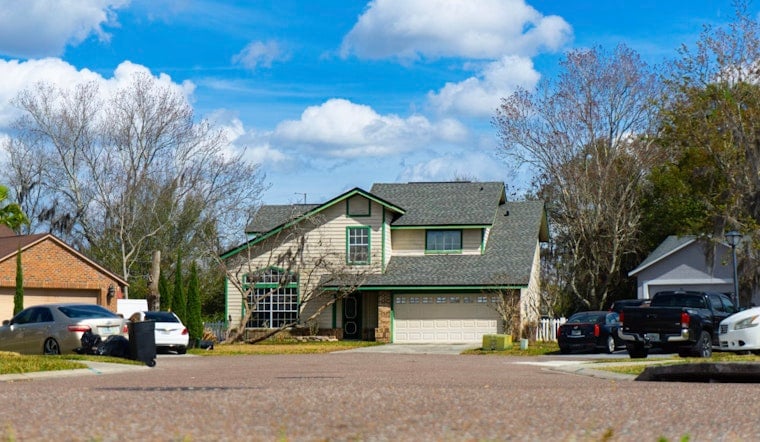
Adding a single bedroom to a home can mean a monthly payment jump of nearly $21,000 in one Florida city, according to a new national analysis, while homeowners in a small Illinois city might barely notice a difference of $16. The gap illustrates just how unevenly America's housing costs are distributed as families weigh whether to move up in bedroom count or stay put and renovate instead.
The findings come from a study by financial technology company Lower, which analyzed more than 1 million active single-family home listings across 255 U.S. cities with populations of at least 100,000, as reported by ABC 17 News. Lower captured its listings data on July 15, 2026, and calculated dollar and percentage premiums by comparing median list prices for two-, three-, four-, and five-bedroom homes in each market. The analysis required a minimum of 10 active listings in each bedroom tier to be included, and it ultimately produced full monthly payment estimates for 251 cities with complete property tax and homeowners insurance data.
Fort Lauderdale, Florida, posted the largest bedroom-upgrade premium in the entire study, with an estimated $20,991 monthly increase tied to adding a bedroom, per the same report. The city's four-bedroom-to-five-bedroom purchase-price premium alone reached $3.1 million. That extreme jump lines up with Florida's insurance climate broadly, where statewide homeowners premiums averaged $8,292 a year in 2025, an 18% increase over 2024 and the highest in the nation, according to Insurify.
Why Coastal Florida Costs So Much More
Fort Lauderdale's broader housing market backs up the scale of the premium. As of August 2026, three-bedroom rental apartments in the city averaged $4,556 a month, and $1,500 a month wasn't even enough to rent a studio, according to Apartments.com. Housing costs in Fort Lauderdale sit 76% above the national average by that same measure, a backdrop that helps explain why moving up even one bedroom tier there carries such an outsized cost compared to other metro areas.
Carlsbad, California, offered another striking example, though on a smaller scale than Fort Lauderdale. The study found an estimated $5,662 monthly payment increase for homeowners moving from a two-bedroom to a three-bedroom home there. That's tied to a median list-price jump of roughly $900,000, since the median sale price for single-family homes in Carlsbad reached $1.6 million in mid-2026, according to Redfin.
Midwestern Markets Show a Different Reality
On the opposite end of the spectrum, Midwestern cities showed monthly bedroom-upgrade costs ranging from just $16 to $39, the analysis found. Peoria, Illinois, sat at the very bottom nationally, with an estimated $16 monthly premium for an additional bedroom. That's because the median single-family home in Peoria sold for just $139,167 in mid-2026, according to Zillow — lower base valuations that keep both mortgage payments and assessed property taxes from climbing sharply when a household needs more space.
Nationwide, the study found that moving from a two-bedroom to a three-bedroom home requires a median 35.3% increase in home price, adding an estimated $648 to the typical monthly housing payment. Moving from three to four bedrooms carries a typical purchase-price premium of $115,100, a 30.4% price increase that adds roughly $764 a month. Stepping up from four to five bedrooms brings a typical premium of $123,005, a 25% price increase that adds about $812 monthly. Notably, the study also identified 19 cities where typical three-bedroom homes are actually listed below the median price of comparable two-bedroom homes.
How the Numbers Were Calculated
The estimated monthly housing payments in the analysis assume a 30-year conventional fixed-rate mortgage at 6.250% and a 5% down payment, and they include principal, interest, property taxes, and homeowners insurance. Property tax estimates draw on effective tax rates from the U.S. Census Bureau's 2024 American Community Survey, while homeowners insurance estimates use average annual premiums from The Zebra. Those mortgage assumptions track closely with prevailing conditions; average 30-year fixed rates hovered around 6.2% to 6.3% in mid-2026, a slight decline from 2024–2025 averages but still elevated compared with pre-2022 levels, according to The Zebra.
The analysis carries some important limitations. It does not account for differences in square footage, lot size, age, condition, or other property characteristics between listings, and it reflects current listing prices rather than final sale prices. One-bedroom homes were excluded entirely because many markets lacked enough listings for a meaningful comparison. The full analysis and distribution of the story were credited to Stacker.
The Renovate-Versus-Move Calculation
These figures help explain a broader shift already visible in how Americans are choosing to get more space. Building a bedroom addition onto an existing house costs an average of $100 to $155 per square foot, or about $50,000 for a standard room, in 2026 — but it offers homeowners an estimated return on investment of 50% to 75%, according to FastExpert. That math increasingly looks appealing next to a new mortgage: American homeowners spent more than $600 billion on home renovations in 2024, a 50% increase from pre-pandemic levels, with median household spending reaching $20,000 as families choose remodeling over moving, per AmeriSave.
The pressure is also structural. Rising rates and prices have already reshaped who owns a home at all — the U.S. homeownership rate dropped to 65.1% in early 2025, driven by record-high monthly mortgage payments that pushed 848,000 additional households into renting in 2024 alone, according to the Joint Center for Housing Studies at Harvard University. Nationwide, U.S. homeowners insurance rates climbed a cumulative 46.8% between 2020 and 2025, reaching a national annual average of $2,395, per LendingTree — a cost increase that compounds every bedroom-tier jump, not just those in storm-prone coastal markets.
Builders appear to be responding to the squeeze as well. Three-bedroom floor plans remained the most common layout among newly started single-family homes in 2024 at 47%, while the share of four-bedroom homes fell for a third consecutive year to 32.4%, according to Census Bureau data cited by Eye On Housing. Whether that trend toward smaller floor plans continues, and whether local zoning changes aimed at adding family-sized housing supply take hold, remain open questions for the housing market going forward.



