

























































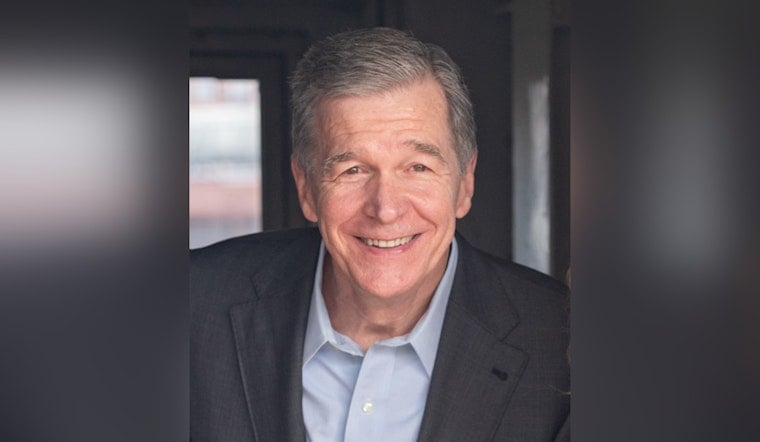
Six years after North Carolina schools shut their doors for in-person classes, a single diary entry from Dr. Anthony Fauci is back in political circulation, this time as a weapon in the state's marquee 2026 U.S. Senate race. The entry describes a 45-minute phone call on June 29, 2020, in which Fauci advised then-Gov. Roy Cooper to delay an announcement on reopening North Carolina schools by two weeks. Republican Senate nominee Michael Whatley's campaign is now citing that call as evidence that Cooper's pandemic-era choices harmed a generation of students.
The diary entry surfaced as part of a massive trove: more than 1,141 pages of Fauci's pandemic-era notes released by U.S. Sen. Rand Paul ahead of Fauci's Senate committee testimony, according to the News & Observer. Fauci wrote that Cooper was “agonizing because he wanted to do the right thing,” and the entry recounts that Cooper, along with senior adviser Julia White and then-DHHS Secretary Mandy Cohen, spoke with Fauci that day about the dilemma of when and how to bring students back into classrooms. Cooper had ordered North Carolina schools closed to in-person classes back on March 16, 2020, and by late June was weighing when to reverse course, with a decision expected at a July 1 news conference. Instead, per the same account, Cooper delayed that announcement by a day to June 30 and ultimately unveiled his plan two weeks later than originally scheduled.
What Fauci Actually Advised
Fauci's advice, as recorded in his own diary, was to delay North Carolina's school-reopening announcement rather than to keep classrooms closed indefinitely. Mandy Cohen, who was DHHS secretary at the time, recalled the June 29 recommendation in an August 2020 WBTV interview cited in the News & Observer's reporting. When Cooper finally announced his plan on July 14, 2020, he gave districts a choice between reopening at reduced capacity with moderate social distancing or continuing remote instruction — the framework that became known statewide as Plan B and Plan C, according to EdNC.org.
Most North Carolina districts, including large urban systems, opted for fully remote Plan C to start the 2020-21 school year, per EdNC.org's tracking of district reopening plans, with many boards citing rising local transmission rates. As a result, most North Carolina students had limited or no in-person instruction during that entire school year. By August 2020, WRAL reported that the state's own Department of Health and Human Services had recommended reopening schools at full capacity with only minimal social distancing — guidance that arrived after many districts had already locked in remote-only plans for the fall.
How Republicans Rewound The Reels To 2021
It took until March 2021 for state lawmakers to force the issue. Cooper signed Senate Bill 220 into law that month after it passed the General Assembly unanimously, requiring every North Carolina public school district to offer in-person instruction options, with full in-person learning mandated for elementary grades. That bipartisan compromise is central to how Cooper's campaign frames the pandemic record now: the campaign says Cooper worked with federal and state public health experts to make decisions intended to keep people alive and safe, according to a Cooper campaign statement reported by the News & Observer.
Whatley's campaign sees it differently. DJ Griffin, speaking for the Whatley campaign, said voters should hold Cooper accountable in November and argued that North Carolina will take at least a generation to recover from the learning loss caused by school closures. Whatley himself, a Republican from Gastonia who chaired the North Carolina GOP from 2019 to 2024 and the Republican National Committee from March 2024 until stepping down in August 2025 to launch his Senate bid, is campaigning directly against Cooper for the seat being vacated by retiring Sen. Thom Tillis.
Does The Six-Year-Old Call Actually Move Votes?
Chris Cooper, a political science professor at Western Carolina University who is not related to the former governor, questioned whether the diary entry will meaningfully shift the race. He said the Fauci conversation is not new information and is unlikely to fundamentally change the election, even as he acknowledged Whatley will use it as evidence against Cooper's COVID-era decisions.
The dispute is landing against a backdrop of academic data that gives both campaigns ammunition. State test proficiency data show North Carolina schools were largely below pre-pandemic levels, according to the News & Observer's reporting. Department of Public Instruction accountability figures released in September 2025 put statewide proficiency at 55% for the 2024-25 school year, up from 54.2% the prior year but still short of the 58.8% baseline from 2018-19, per EdNC.org. At the same time, the state's four-year graduation rate hit a record 87.7% for 2024-25, marking a third straight annual increase, according to the Grand Pinnacle Tribune.
A Race Already Tightening
Roy Cooper, a Democrat from Raleigh who served as governor in June 2020, and Whatley are vying to replace Tillis in a state that hasn't sent a Democrat to the U.S. Senate since 2008. Polling in August 2026 shows the contest is close: a High Point University poll put Whatley within striking distance of Cooper, while a Carolina Journal survey showed Cooper holding a modest lead, according to Newsweek.
The Fauci diary saga has already rippled well beyond North Carolina. Fauci invoked his Fifth Amendment rights more than 100 times during a July 29 Senate Homeland Security Committee hearing over the diary entries, as PBS reported — a hearing Hoodline covered in Fauci diary Hill showdown coverage. The same trove included an entry describing a separate call with Ann O'Leary, chief of staff to California Gov. Gavin Newsom, who told Fauci that Newsom decided to close California schools, bars and restaurants after watching Fauci's television appearances, according to Forbes. Whether that broader national controversy ends up swaying North Carolina voters in November remains an open question that both campaigns are now racing to answer on their own terms.



.jpg)