

























































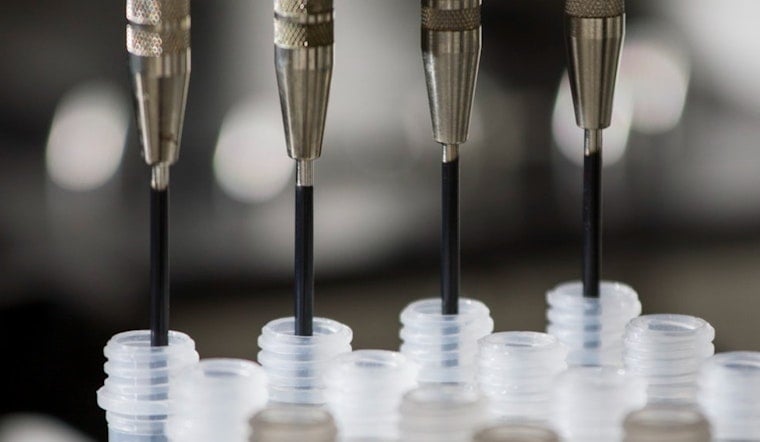
The FBI says it has completely wiped out a backlog of 1.81 million DNA samples that had piled up in its national processing system, a milestone the bureau's Louisville field office celebrated in late August 2026 by amplifying a post from FBI Director Kash Patel. The announcement touches Kentucky directly because FBI Louisville is among the field offices that pushed out Patel's message, even as the state's own crime labs continue to grapple with far longer, separate delays in testing local casework evidence.
According to a post shared by FBI Louisville
on X, the bureau said it inherited a massive DNA processing backlog that had kept critical information out of the system law enforcement relies on to help solve violent crimes across the country. The post credited the FBI Laboratory and the Criminal Justice Information Services Division with eliminating the backlog, and it credited President Trump's leadership for enabling changes that allowed the FBI to move resources where they were needed, upgrade DNA processing technology, and accelerate processing overall. Per the same post, the backlog dropped from 1.81 million samples to zero as of August 29, 2026.
The backlog itself is rooted in a federal legal mandate rather than casework tied to specific crime scenes. Under the DNA Fingerprint Act of 2005 and federal regulation 28 C.F.R. § 28.12, federal law enforcement and immigration agencies are required to collect DNA samples from federal arrestees, convicted felons, and non-U.S. persons detained under federal authority, with those samples submitted to the national CODIS database, according to the Federal Register.
Why the Backlog Grew So Large
The scale of that backlog traces back to a 2020 Department of Justice rule change that removed the Department of Homeland Security's discretion to exempt non-U.S. citizen detainees from mandatory DNA collection. That shift pushed the FBI's monthly DNA sample receipts from an average of 8,000 per month to more than 90,000 per month, per the Federal Bureau of Investigation. That volume overwhelmed lab capacity and helped drive the backlog toward the eventual 1.81 million-sample mark.
Addressing that surge required serious federal investment. The Department of Justice requested $204 million specifically for the FBI to tackle its DNA sample backlog in its Fiscal Year 2025 budget request, citing high volumes of migrant detentions and federal arrestee submissions as the driving factors, according to the U.S. Department of Justice. Reporting on the bureau's statement indicates the FBI cleared the backlog by adding laboratory equipment, reallocating internal personnel, upgrading tracking software, and streamlining business analytics across the FBI Laboratory and CJIS divisions, per The Gossip Wire.
What Clearing CODIS Actually Means
The FBI's Combined DNA Index System connects more than 200 public law enforcement crime laboratories across all 50 states, letting local, state, and federal investigators compare DNA profiles against evidence from unsolved crimes nationwide. Getting those 1.81 million samples processed and uploaded means more potential matches are now available to investigators working homicides, sexual assaults, mass shootings, and other violent crimes, since a backlog had kept that information out of the system law enforcement uses to help solve those cases.
It's worth noting what this milestone does not resolve. The National Institute of Justice defines a backlogged DNA case as any forensic casework evidence or database sample left untested more than 30 days after submission to a crime laboratory, according to the Office of Justice Programs. The federal number cleared by the FBI Laboratory Division consists largely of offender and detainee buccal swabs, not the crime scene evidence and sexual assault kits that state and local labs process separately.
Kentucky's Own Backlog Persists
That distinction matters for Kentucky, where FBI Louisville amplified the national announcement even as the state's own forensic labs continue facing evidence delays. As of May 2024, Kentucky State Police forensic labs averaged 9-month turnaround times for violent crime evidence and 13 months for sexual assault kits, driven by staffing and pay challenges, according to LEX 18. Those delays are a function of local lab capacity and funding, separate from the federal database backlog the FBI just eliminated.
State and local crime labs generally rely on different federal support altogether. The Bureau of Justice Assistance administers formula grants under the DNA Capacity Enhancement for Backlog Reduction Program specifically to help state and local labs expand their own CODIS processing capacity, a mechanism distinct from the FBI's internal laboratory operations. Even where basic database profiling has become more standardized, the more complex forensic work often used to crack cold cases hasn't gotten any cheaper.
A 2026 analysis by the non-profit Season of Justice found that advanced cold-case DNA testing costs, including whole genome sequencing and forensic genetic genealogy, surged as much as 300% between 2020 and 2025. That trend underscores that clearing a national database backlog is only one piece of a much larger, costlier puzzle facing investigators trying to close out unsolved violent crimes.
FBI Director Kash Patel has made frequent appearances tied to bureau operations and controversies in recent months, including a visit to Minneapolis field offices last year to emphasize interagency resource sharing. FBI Louisville's decision to spotlight the DNA backlog announcement fits a pattern of field offices amplifying Patel's messaging on bureau operations and results.





