

























































How the federal funding works
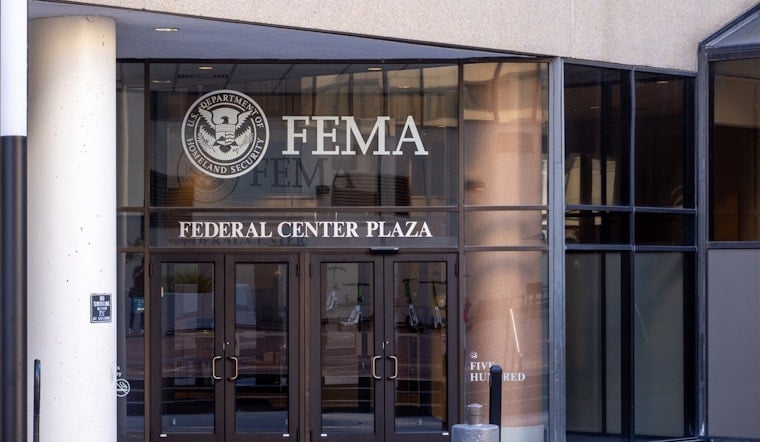
The latest package uses two FEMA programs with different purposes. According to FEMA, Public Assistance helps state and local governments, which lead their own recovery efforts, pay for work including public-building repairs, roads, critical infrastructure and public health and safety costs tied to disasters. Hazard Mitigation Grant Program money is aimed at reducing future damage through projects such as buying out hazard-prone homes and businesses, elevating structures, building safe rooms, improving drainage and upgrading utilities. As Fingerlakes1.com reported, FEMA coordinates directly with states on hazard mitigation projects.
Federal grants under Public Assistance typically cover at least 75 percent of eligible emergency response and infrastructure restoration costs, leaving state and local recipients responsible for the remaining quarter, per FEMA policy guidelines. Iowa's hazard-mitigation buyout program uses a separate three-way split: the federal government pays 75 percent, the state 10 percent and the local municipality 15 percent.
Utility repairs account for major awards
The largest individual repair awards go to electric utilities. Omaha Public Power District is set to receive more than $25 million for permanent repairs to its transmission and distribution infrastructure in Nebraska. The work follows a March 2025 blizzard that destroyed nearly 2,000 power poles statewide and caused the worst infrastructure damage in the utility's history, according to Nebraska Public Media. Nebraska recorded a state-record 22 high-wind warnings in early 2025, after record-setting storm outages in 2024. According to the Federal Energy Regulatory Commission, extreme weather events can severely damage infrastructure, including transmission lines, substations and generation units.
Missouri's City Utilities of Springfield has been approved for more than $9.5 million to permanently repair its electric transmission and distribution system. Severe storms on April 29 and June 29, 2025, drove the need: the first knocked out power for more than half of the utility's customers, while the second affected roughly 35 percent and broke 402 utility poles, according to the American Public Power Association. City Utilities serves more than 111,000 customers in southwest Missouri and has set aside nearly $10 million of its own money for grid hardening this fiscal year.
Flood mitigation targets homes and roads
Some of the funding is directed at removing properties from recurring flood risk. Urbandale, Iowa, will receive more than $3.3 million for property acquisitions, while Correctionville will get more than $670,000 for property acquisitions and floodproofing, according to Fingerlakes1.com. Once completed, acquired properties are permanently cleared of structures and converted into municipal green space.
The awards follow a lengthy process for many Iowa homeowners. Iowa Public Radio reported that nine communities affected by catastrophic June 2024 flooding along the Little Sioux and Big Sioux rivers sought more than $53 million for buyouts covering 267 residential properties, with some homeowners waiting upwards of 19 months for federal approval. Separately, Radio Iowa reported on the 75-10-15 federal, state and local cost split for Iowa buyouts.
Other awards address transportation infrastructure. Lyon County received more than $5.3 million to repair or replace roads and bridges, per Fingerlakes1.com's reporting, while Kansas' Linn County will receive more than $1.2 million for roads and culverts.
Smaller grants cover local readiness
The package also includes targeted projects outside the major utility and flood awards. Mountain View, Missouri, received more than $149,000 for a generator. Nebraska's Papio-Missouri River Natural Resources District will receive more than $142,000 to update its regional hazard mitigation plan. The district covers six Nebraska counties, including Douglas and Sarpy, according to the Papio-Missouri River Natural Resources District, and must renew its multi-jurisdictional plan every five years to keep local communities eligible for federal disaster funding.
The regional total
Taken together, FEMA has approved nearly $119 million for Iowa, Kansas, Missouri and Nebraska: $109 million through Public Assistance and more than $9.5 million through the Hazard Mitigation Grant Program. The funds cover downed power lines, public infrastructure, flood-prone property buyouts and projects intended to prepare for future severe weather.
This is not the first Region 7 disbursement of the year. KSDK reported that FEMA had already allocated more than $11 million in an earlier Midwest package, including over $1 million to St. Louis for tornado recovery, as severe convective storms battered Missouri throughout mid-2026. The $280 million in FEMA aid to Missouri hospitals is part of a broader pattern of federal recovery spending across the four states. FEMA awards are intended to assist communities recovering from hurricanes, severe storms, tornadoes, wildfires and other natural disasters while state and local governments lead the work on the ground.





